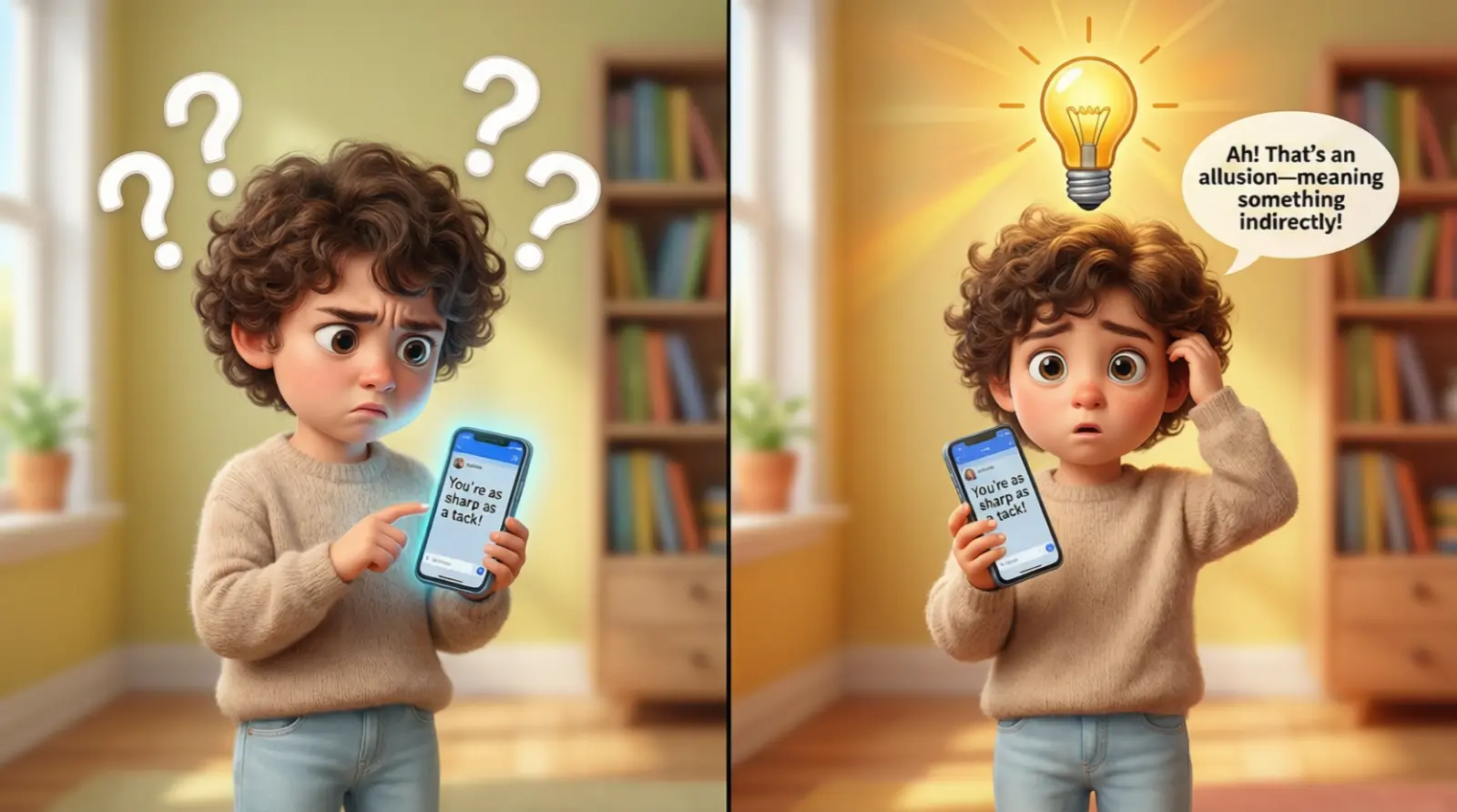
Have you ever been reading a caption, a book line, or even a casual text and thought, “Wait… that sounds familiar, but why?” 🤔
Maybe someone said, “This deadline is my Everest,” or “He really went full Romeo.” You know they’re not talking about mountains or Shakespeare—yet the meaning clicks instantly. That’s the power of allusion.
Many people encounter the word allusion for the first time in school or while Googling confusing text meanings online.
At first, it feels complicated, but once you understand it, you’ll realize you’ve been using allusions your whole life—without even knowing it.
Quick Answer:
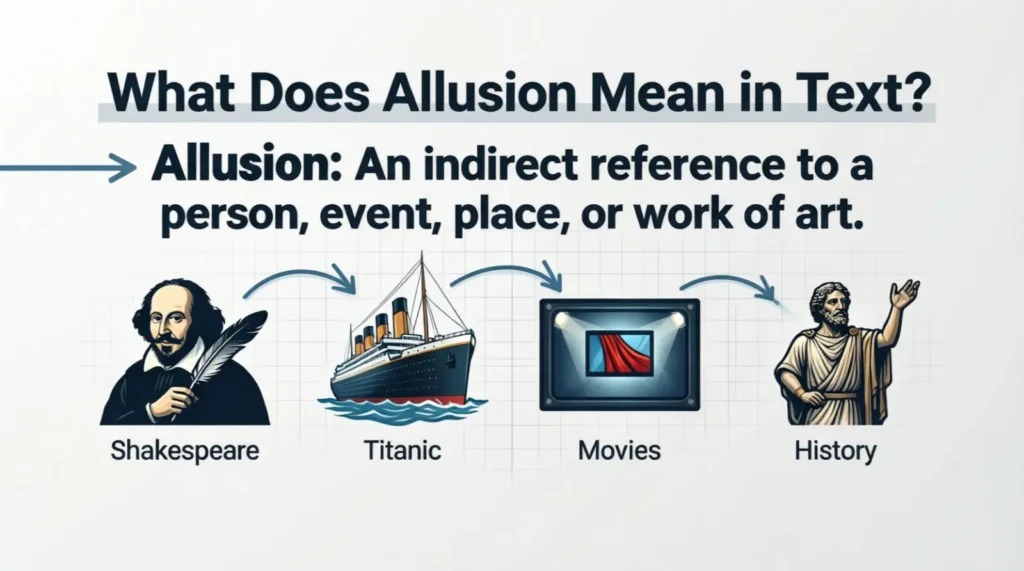
Allusion means an indirect reference to something well-known. It’s a clever, subtle, and often creative way of hinting at a person, event, movie, book, or idea without explaining it fully.
🧠 What Does Allusion Mean in Text?
In simple terms, an allusion is when someone refers to something indirectly, expecting the other person to recognize the reference.
Instead of spelling everything out, the speaker relies on shared knowledge—culture, history, movies, or trends—to get the message across.
Simple Explanation:
An allusion is a shortcut in communication. It saves time and adds meaning by pointing to something familiar.
Example Sentence:
“Don’t open that link—it looks like a Trojan horse.”
Here, the speaker isn’t talking about ancient Greece. They’re alluding to the Trojan Horse story, meaning something looks safe but is actually dangerous.
In short:
Allusion = indirect reference = subtle hint to something widely known
📱 Where Is Allusion Commonly Used?
Allusions are everywhere—and once you notice them, you can’t unsee them 👀
Common places allusions appear:
- 📚 Books & novels
- 🏫 School essays & exams
- 🎬 Movies, TV shows & scripts
- 🎶 Song lyrics
- 📱 Instagram captions
- 🐦 Twitter/X posts
- 💬 Text messages & chats
Tone & Usage:
- ✔️ Can be casual, witty, poetic, or intelligent
- ✔️ Very popular in pop culture & memes
- ❌ Not ideal when clarity is more important than creativity
Allusions work best when the audience shares the same cultural background—otherwise, the meaning can be missed.
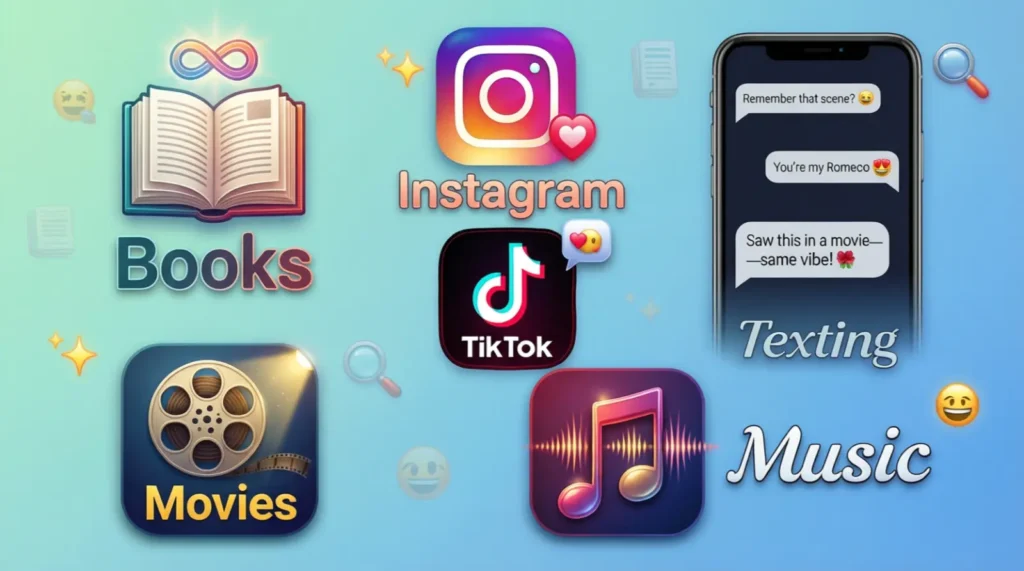
💬 Examples of Allusion in Conversation
Here are realistic texting-style examples that show how allusions naturally appear in daily chats 👇
1 Example
A: “How’s your week been?”
B: “honestly? feels like groundhog day 😩”
2 Example
A: “Are you sure you can handle that project?”
B: “i’ll try… but this feels like mission impossible 😅”
3 Example
A: “Why don’t you trust him?”
B: “last time i did, it was a titanic situation 🚢💔”
4 Example
A: “You really stayed calm during all that drama.”
B: “channeling my inner zen monk 🧘♂️”
5 Example
A: “That comeback was savage.”
B: “had to go full mic drop 🎤”
6 Example
A: “You look confident today.”
B: “main character energy only ✨”
These messages don’t explain the reference—but they don’t need to. That’s the essence of allusion.
🕓 When to Use and When Not to Use Allusion
Allusions are powerful—but timing matters ⏰
✅ When to Use Allusion
- Casual conversations with friends
- Social media captions & memes
- Creative writing or storytelling
- Humor, sarcasm, or exaggeration
- When your audience understands the reference
❌ When Not to Use Allusion
- Formal emails or business communication
- Legal, medical, or technical writing
- Emergency or urgent situations
- When clarity is more important than style
- When the audience may not recognize the reference
Context Comparison Table
| Context | Example Phrase | Why It Works |
|---|---|---|
| Friend Chat | “this feels like endgame 😄” | Casual & relatable |
| Social Media | “living my main character arc ✨” | Trendy & expressive |
| Work Chat | “This task is challenging.” | Clear & professional |
| “Please take time to review.” | Formal & direct |
🔄 Similar Slang Words or Alternatives to Allusion
If allusion feels too subtle, here are related terms you might see or use instead:
| Term | Meaning | When to Use |
|---|---|---|
| Reference | Direct mention | Clear communication |
| Hint | Small clue | Casual talk |
| Implication | Suggested meaning | Formal or analytical writing |
| Metaphor | Comparison | Creative writing |
| Symbolism | Representing ideas | Literature & poetry |
| Analogy | Explanation by comparison | Teaching & learning |
Each option varies in clarity vs creativity.
🧠 Why Allusions Are So Popular Today
Allusions have become even more popular because of:
- 📱 Meme culture
- 🎬 Shared movie universes
- 🌍 Global pop culture
- ⏱ Short-form content (TikTok, reels, tweets)
Instead of long explanations, people prefer quick references that instantly deliver meaning.
For example:
“This meeting could’ve been an email.”
That sentence itself has become a modern allusion 😄
❓ FAQs About Allusion
1. Is allusion a slang word?
No. Allusion is a formal language and literary term, though it’s often used casually.
2. Can allusion be used in texting?
Yes! Texts often include allusions to movies, memes, or trends.
3. Is allusion formal or informal?
It works in both, depending on context and audience.
4. Is allusion the same as a metaphor?
Not exactly.
- Allusion references something external
- Metaphor compares two things directly
5. Why do writers use allusion?
To add depth, emotion, humor, and meaning without long explanations.
6. Can allusion confuse people?
Yes—if the audience doesn’t recognize the reference.
📝 Final Thoughts
So, what does allusion mean? In simple words, allusion means an indirect reference to a well-known person, event, story, movie, or idea. Instead of explaining everything, an allusion relies on shared knowledge to deliver meaning quickly and creatively.
In texting, social media, and everyday conversation, allusions make messages more expressive, relatable, and fun—especially when both people understand the reference. Once you know what allusion means, you’ll start noticing it everywhere, from memes and captions to books and movies.
Used at the right time, an allusion can say more with fewer words—and that’s what makes it such a powerful part of modern communication ✨

I’m Emma Collins, a writer passionate about decoding slang, emojis, and the ever-changing language of the internet. I enjoy turning confusing phrases into clear, easy-to-understand explanations. My mission is to help readers stay in the loop with today’s digital lingo. When I’m not writing, I love exploring social media trends and chatting with friends about new expressions. I’m here to make learning modern language fun and simple!