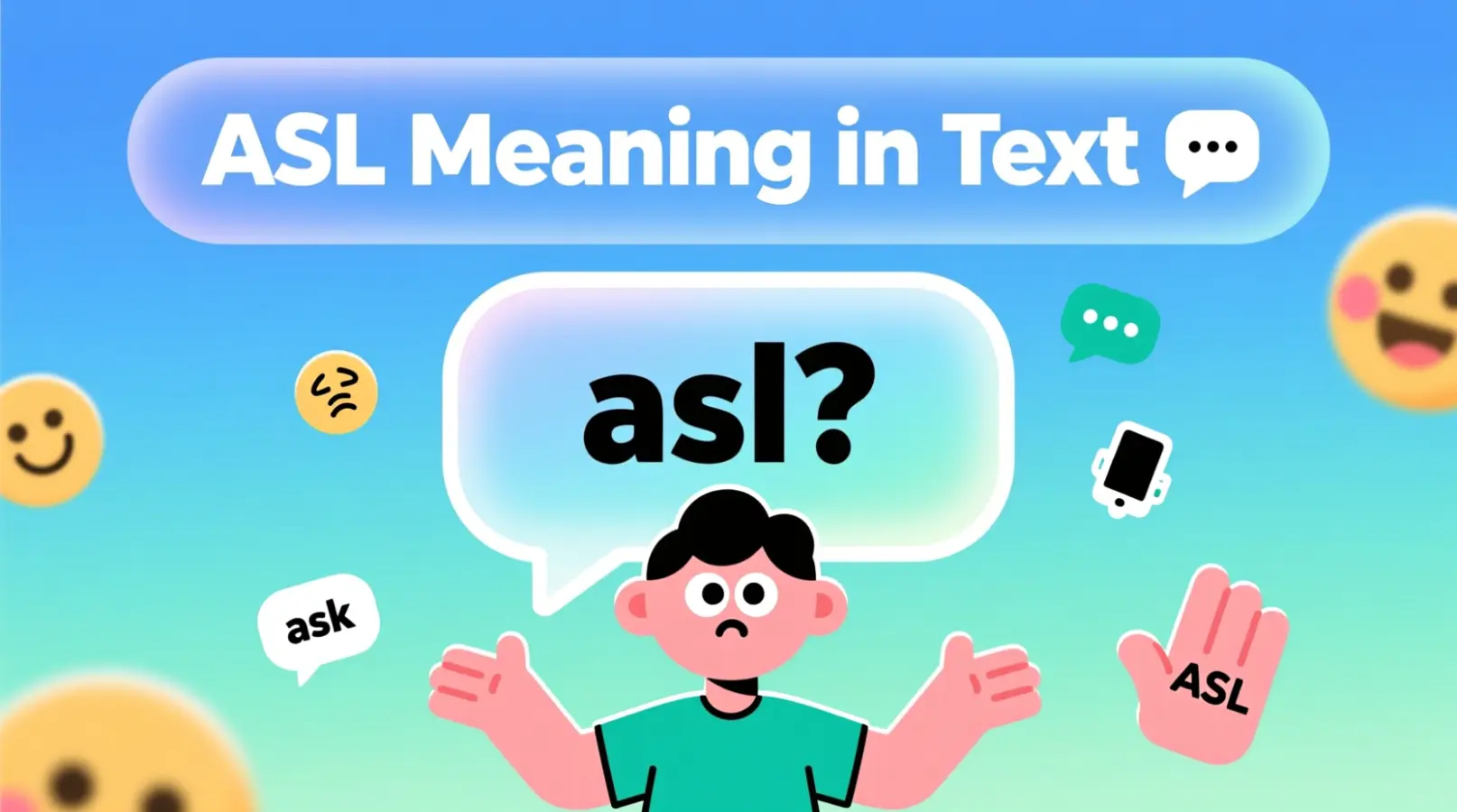
Scrolling through messages late at night, you spot someone typing “asl?” and pause. What could it mean? Is it a typo? A secret code? If you’ve ever felt confused seeing this in chats or online, you’re not alone. Text slang can be tricky, and “asl” is one of those short, mysterious abbreviations that sparks curiosity.
You might see it on messaging apps, in gaming chats, or even on social media DMs. At first glance, it seems like something cryptic, but once you know the meaning, it’s simple and useful. Learning it can make your online conversations smoother and help you connect with new people.
Quick Answer: ASL means “Age, Sex, Location.” It’s a casual way of asking someone about themselves in online chats, usually when meeting new people or making friends.
🧠 What Does ASL Mean in Text?
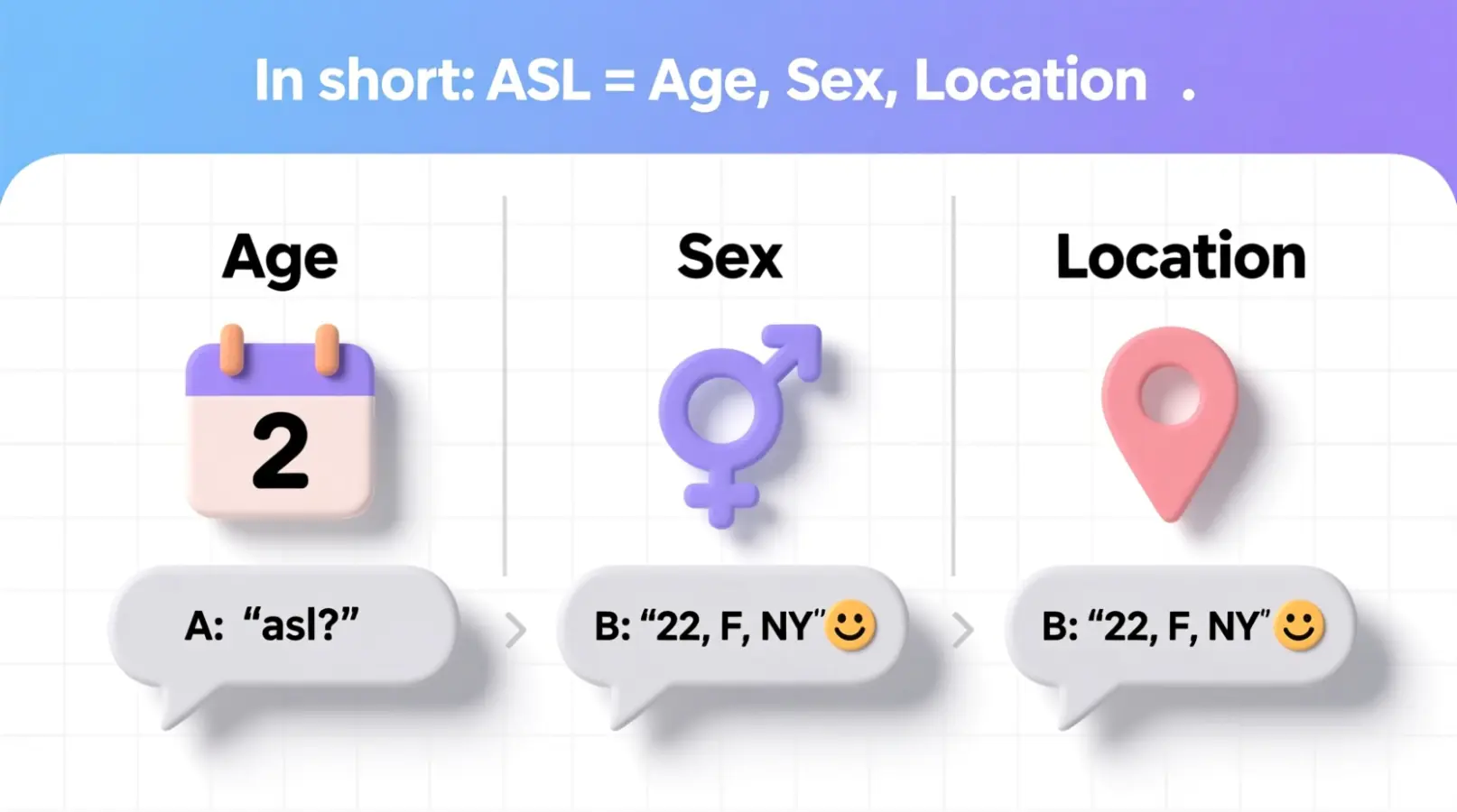
ASL stands for Age, Sex, Location. It’s a shorthand way of asking someone about their basic personal details. While it might feel a bit old-school today, it’s still widely recognized in online chatting communities.
Essentially, when someone types “asl?” they want to know:
- Age — How old you are
- Sex — Your gender
- Location — Where you live or where you’re messaging from
This abbreviation makes it easy to start conversations without writing long questions. It’s perfect for casual chats with strangers or online acquaintances.
Example:
- A: “asl?”
- B: “22, female, New York 🙂”
Here, B gives their age, sex, and location, making it simple for the conversation to continue naturally.
In short: ASL = Age, Sex, Location = asking someone’s basic details in a casual chat.
📱 Where Is ASL Commonly Used?
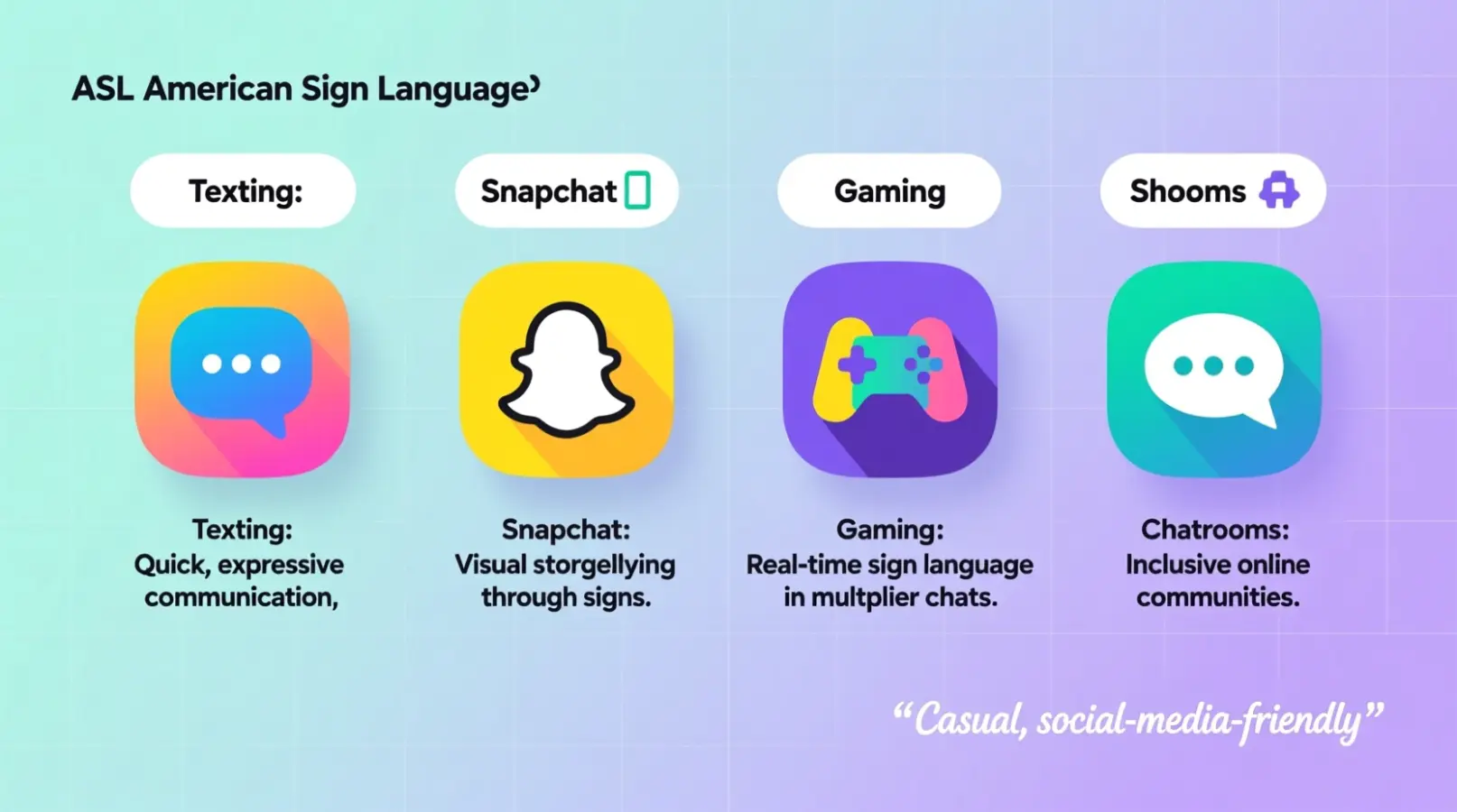
ASL is mostly seen in informal and social-media-friendly contexts. Here’s a breakdown of where you’ll commonly find it:
- 💬 Texting — Especially in informal group chats or private messages
- 📱 Snapchat & Instagram DMs — Used when connecting with new people
- 🎮 Gaming chats — Gamers asking about other players’ profiles or location
- 🧑💻 Chatrooms & Forums — Common on platforms like Discord, Omegle, and older forums
Tone: Casual, friendly, and informal. Avoid using it in professional emails, LinkedIn messages, or any context requiring formality.
Tip: If you’re meeting someone for the first time online, responding to ASL can be a fun icebreaker. Just make sure you’re comfortable sharing basic info!
💬 Examples of ASL in Conversation
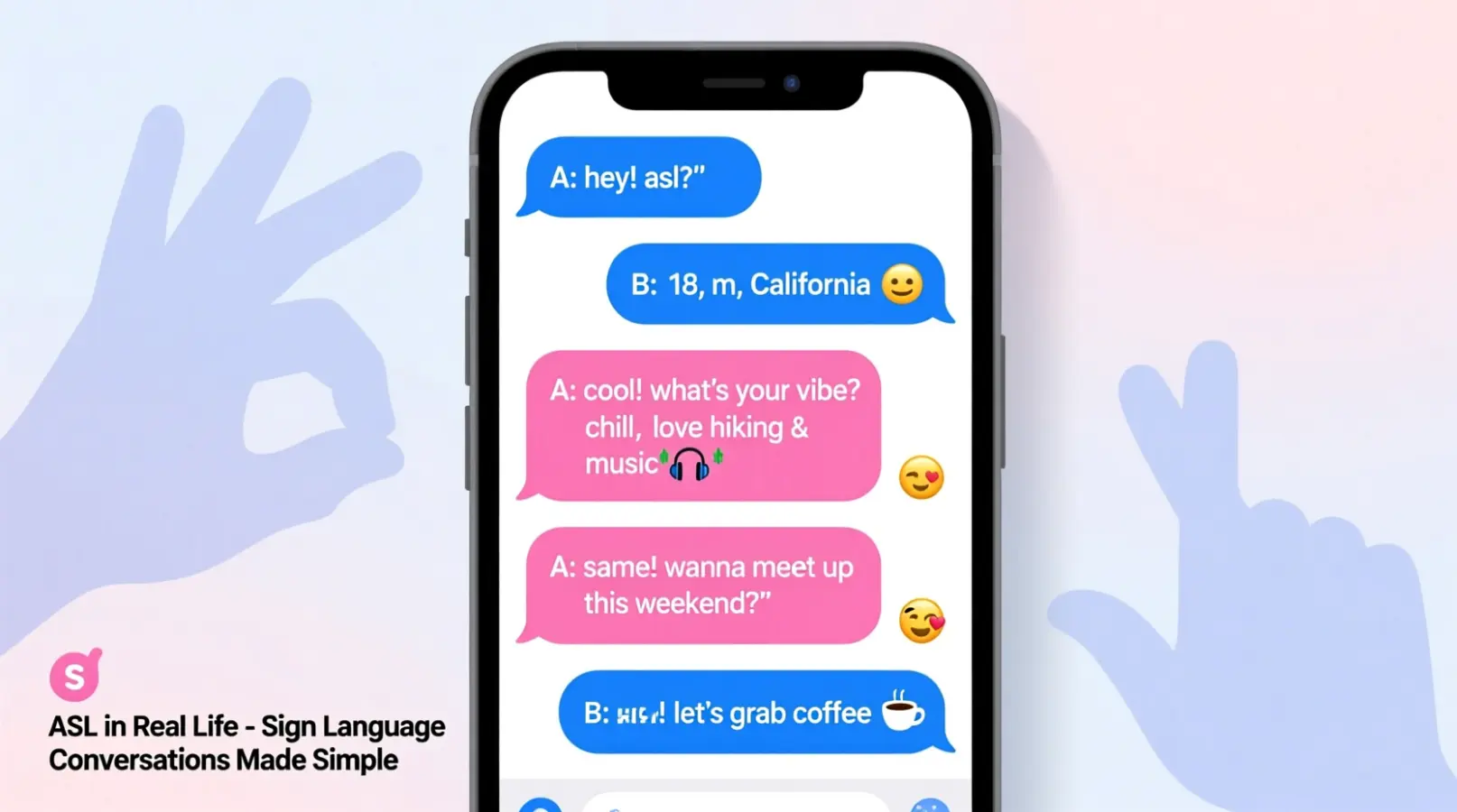
Here are some realistic chat examples to show how ASL is used naturally in texting:
- A: “hey! asl?”
B: “18, m, california 😎” - A: “asl?”
B: “20/f/tx 🙂” - A: “asl”
B: “25 male nyc, u?” - A: “yo asl?”
B: “19/f/uk, just chilling” - A: “asl?”
B: “21/m/toronto 🙂 u?” - A: “asl pls?”
B: “22 f la, wbu?” - A: “asl?”
B: “24/m/FL, you?”
Notice the short, lowercase, and emoji-friendly style. It’s casual, friendly, and keeps conversations flowing without long explanations.
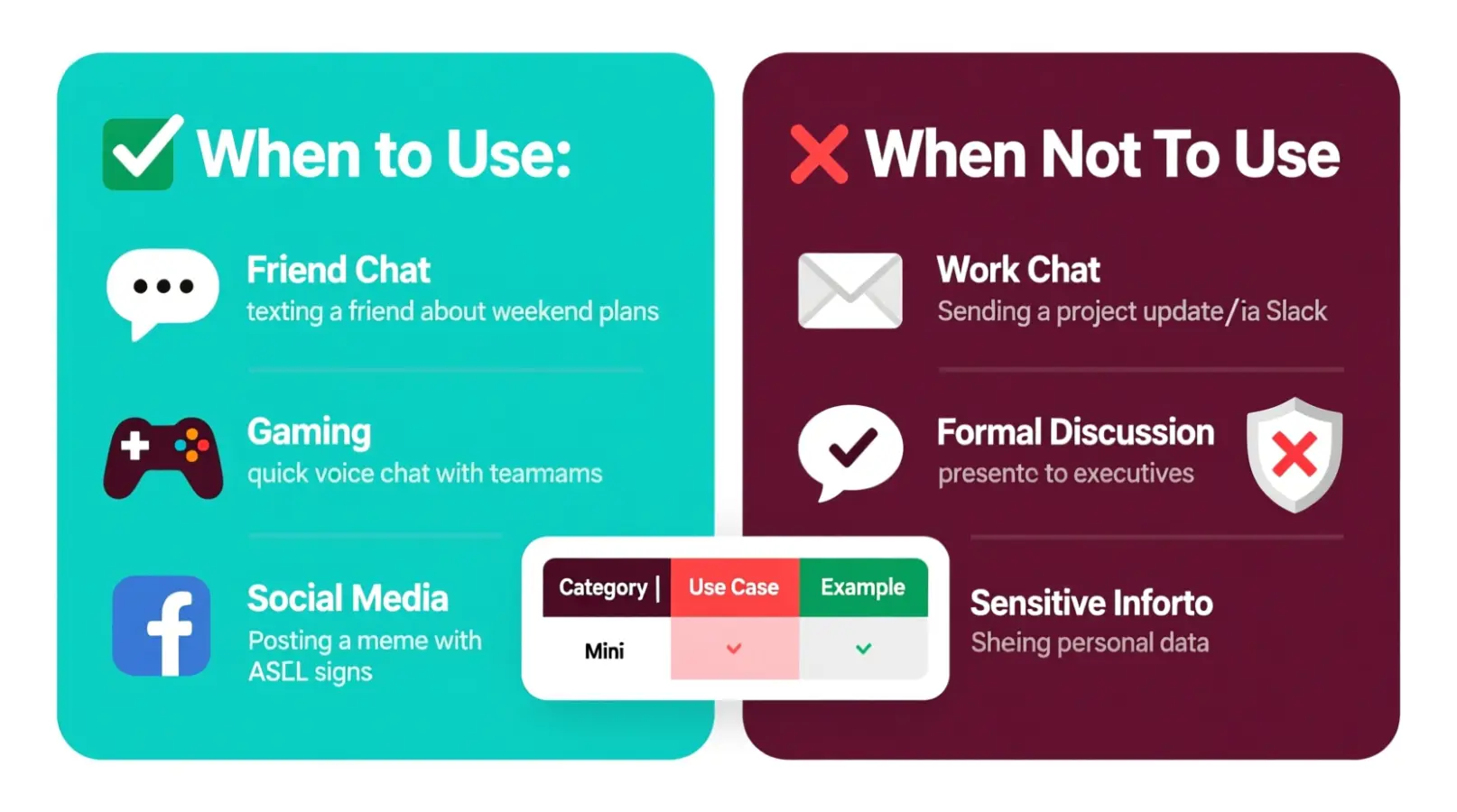
🕓 When to Use and When Not to Use ASL
✅ When to Use:
- Chatting with friends or online strangers casually
- Meeting new people in gaming or social apps
- Fun and informal social media conversations
- Quick icebreakers in chatrooms or forums
❌ When Not to Use:
- Work or professional emails
- Formal or serious discussions
- Sensitive or private conversations requiring discretion
- Any situation where sharing age, sex, or location may be unsafe
Comparison Table:
| Context | Example Phrase | Why It Works |
|---|---|---|
| Friend Chat | “No rush, asl? 😄” | Casual & friendly |
| Work Chat | “Take your time.” | Polite & professional |
| “Please take your time to review this.” | Formal & clear | |
| Gaming Chat | “asl? 22/m/UK” | Quick info sharing |
🔄 Similar Slang Words or Alternatives
There are other popular online slang words that work like ASL for casual chats:
| Slang | Meaning | When to Use |
|---|---|---|
| hru | How are you? | Casual texting with friends |
| wbu | What about you? | Friendly follow-up in conversation |
| brb | Be right back | Quick pauses in messaging |
| lol | Laugh out loud | Light-hearted chats |
| ttyl | Talk to you later | Casual goodbyes |
| idk | I don’t know | Informal questions or uncertainty |
Using these alongside ASL can make conversations more playful, modern, and relatable.
❓ FAQs About ASL
Q1: Is ASL flirty or just casual?
A1: ASL is mostly casual, but in some chats, it can be flirty depending on context. Usually, it’s just an icebreaker.
Q2: Can I use ASL on social media like Instagram?
A2: Yes, it works well in DMs or story replies. Avoid posting it publicly on professional profiles.
Q3: Is ASL considered outdated?
A3: Slightly. It was extremely popular in early 2000s chatrooms, but most online users still understand it.
Q4: Should I answer ASL with my real details?
A4: Only share what you’re comfortable with. You can give vague answers like “20/f/US” instead of city-level info for safety.
Q5: Are there alternatives to ASL?
A5: Yes, you can ask more specific questions like “How old are you?” or “Where are you from?” if you prefer clarity.
Q6: Can ASL be used in professional networking?
A6: No. It’s too casual for LinkedIn, email introductions, or formal settings. Stick to polite, clear language there.
Q7: Why do people still use ASL today?
A7: It’s quick, simple, and universally recognized in casual messaging — especially useful in gaming, chatrooms, and social apps.
Final Thoughts
Understanding ASL meaning in text can make your online conversations smoother and more engaging. While it might seem mysterious at first, ASL simply stands for Age, Sex, Location — a casual way to ask someone about themselves. It’s perfect for friendly chats, gaming discussions, or social media messages, but remember to use it appropriately and never share details you’re uncomfortable with.
By knowing when and where to use ASL, and seeing real conversation examples, you can confidently respond and keep your chats flowing naturally. Next time someone types “asl?” you’ll know exactly what it means and how to reply — making your online interactions more fun and stress-free!

I’m Emma Collins, a writer passionate about decoding slang, emojis, and the ever-changing language of the internet. I enjoy turning confusing phrases into clear, easy-to-understand explanations. My mission is to help readers stay in the loop with today’s digital lingo. When I’m not writing, I love exploring social media trends and chatting with friends about new expressions. I’m here to make learning modern language fun and simple!