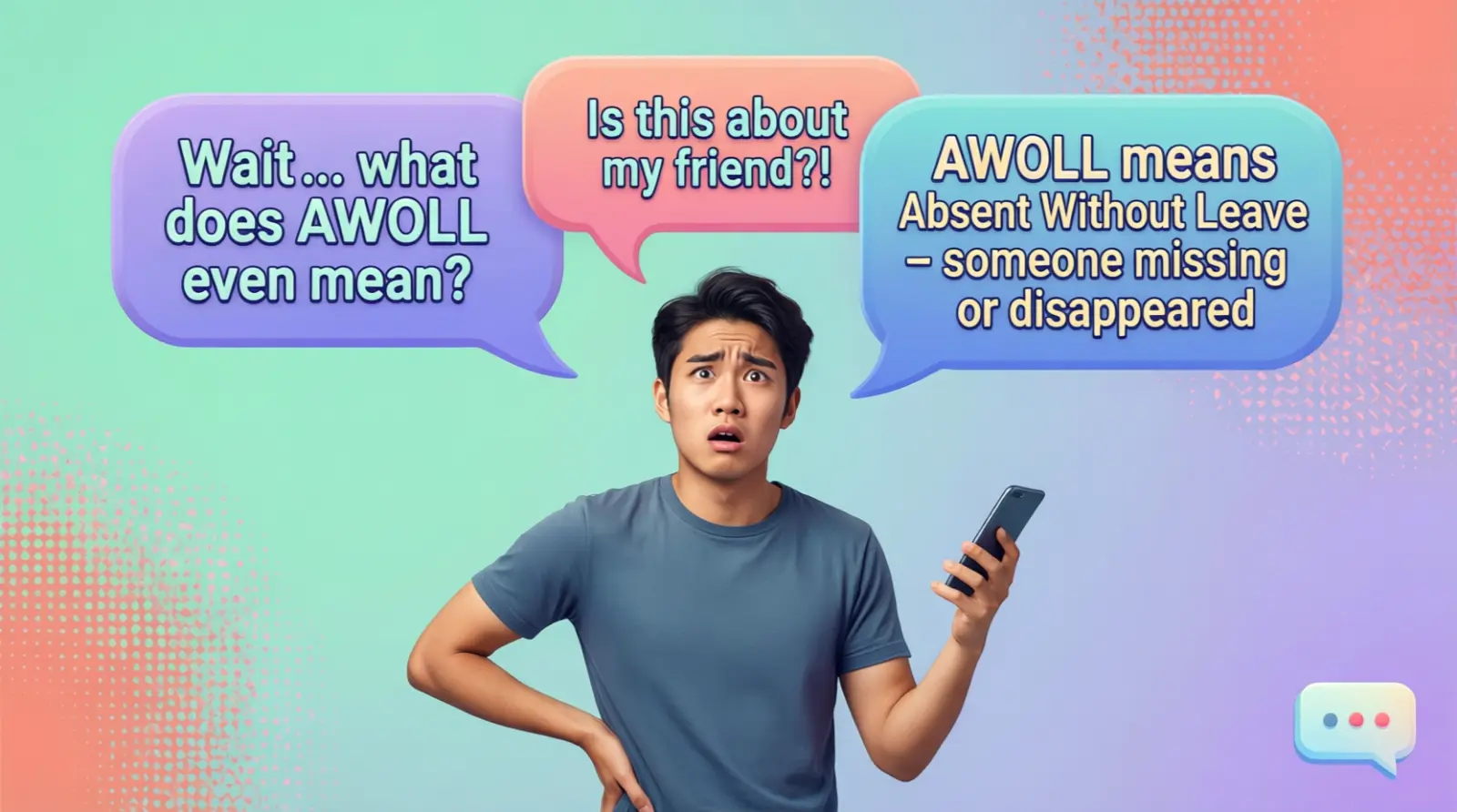
Have you ever been scrolling through a chat or TikTok comments and stumbled upon “AWOL,” and instantly wondered, “Wait, what does that even mean?” You’re not alone!
Slang can feel like its own secret language, and AWOL is one of those abbreviations that leaves people scratching their heads.
Quick Answer:
AWOL means “Absent Without Leave.” It’s a casual way of saying someone is missing, disappeared, or not showing up when expected. While it started as a military term, it’s now widely used in texting, social media, and casual conversations.
What Does AWOL Mean in Text? 🧠
AWOL originally comes from the military, where it literally means Absent Without Leave — when a soldier leaves their post without permission. But in texting and online chats, it’s used much more casually. It simply means someone is unexpectedly missing or has “disappeared” from a conversation or event.
Example in text:
“I haven’t heard from Sarah all day… she’s totally AWOL 😅”
In short:
AWOL = Absent Without Leave = Someone is missing or MIA in a casual way.
Where Is AWOL Commonly Used? 📱
AWOL is popular across many digital spaces, especially casual and social media contexts. Here’s where you might see it:
- Texting & Messaging Apps: iMessage, WhatsApp, Messenger
- Social Media: TikTok captions, Twitter posts, Instagram comments
- Gaming Chats: Discord, Fortnite, or MMO guild chats
- Email/Work? Rare — only in informal, friendly team chats
Tone: Mostly casual, social, or humorous. Not suitable for professional or formal contexts.
Examples of AWOL in Conversation 💬
Here are some realistic texting scenarios showing how AWOL is used:
1 Example
A: “Where’s John? He’s late again 😩”
B: “He’s gone AWOL lol”
2 Example
A: “Did Lisa show up to the party?”
B: “Nope, she’s AWOL tonight 😅”
3 Example
A: “I haven’t seen Mike online in days”
B: “Yeah, he’s AWOL 👀”
4 Example
A: “We need Alex for the game”
B: “AWOL as usual 😂”
5 Example
A: “Where’s everyone in the group chat?”
B: “Everyone’s gone AWOL 🙃”
When to Use and When Not to Use AWOL 🕓
✅ When to Use:
- Friendly chats with friends or family
- Casual social media posts
- Gaming or group chat updates
- Humorous or lighthearted situations
❌ When Not to Use:
- Professional or work emails
- Serious emergencies
- Formal announcements
- Legal or official communications
Comparison Table:
| Context | Example Phrase | Why It Works |
|---|---|---|
| Friend Chat | “No rush, he’s AWOL 😄” | Casual & friendly |
| Work Chat | “He hasn’t responded yet” | Polite & professional |
| “Please review the document” | Formal & clear | |
| Social Media | “Our group is AWOL today 😅” | Fun & relatable |
Similar Slang Words or Alternatives 🔄
| Slang | Meaning | When to Use |
|---|---|---|
| MIA | Missing In Action | Casual texting or gaming |
| Ghosted | Ignored/disappeared | Dating apps, texting |
| AFK | Away From Keyboard | Gaming chats, quick updates |
| Vanished | Suddenly gone | Casual texting or social media |
| No-Show | Didn’t appear as expected | Social gatherings, casual work |
FAQs About AWOL ❓
Q1: Is AWOL rude to say?
Not at all! It’s mostly casual and humorous, but context matters. Using it in a serious or professional setting can seem inappropriate.
Q2: Can AWOL be flirty?
Sometimes! For example, jokingly saying “you went AWOL 😏” can be playful in a texting or dating context.
Q3: Is AWOL formal?
No, it’s informal. Stick to professional terms like “absent” or “unavailable” in work emails.
Q4: Can AWOL be used outside texting?
Yes! Social media captions, gaming chats, and even casual spoken conversations can use AWOL.
Q5: What’s the difference between AWOL and MIA?
They are very similar. AWOL originally implies a bit of responsibility or expectation, while MIA is more neutral about someone being missing.
Final Thoughts
AWOL is a fun and casual slang that has made its way from the military into everyday texting and social media. It stands for “Absent Without Leave” and is a simple way to say someone is unexpectedly missing or has disappeared. Whether you’re chatting with friends, posting on TikTok, or joking around in a group chat, AWOL is an easy, relatable term to use — just remember to avoid it in formal or professional settings.
Next time you see someone AWOL in your messages, you’ll know exactly what it means and how to use it naturally in conversation!

- I’m Casey Morgan, a writer who loves breaking down internet slang and modern lingo into simple, relatable explanations. I’ve spent years studying how digital communication shapes the way we talk. My goal is to make every confusing phrase easy to understand. When I’m not decoding trends, you’ll find me sipping coffee and browsing social media for the next viral term.