Have you ever been scrolling through TikTok, Instagram, or your group chat and suddenly saw someone type, “no cap” or just “cap”?
You might have paused and thought, “Wait… what does that even mean?” Don’t worry, you’re not alone. Slang moves fast, and words like this can leave anyone scratching their head.
At first, I saw my friend reply to a story with “cap 😅” and thought it was some new emoji or weird typo. Turns out, it’s actually slang, and once you know it, you’ll start seeing it everywhere online.
Quick Answer:
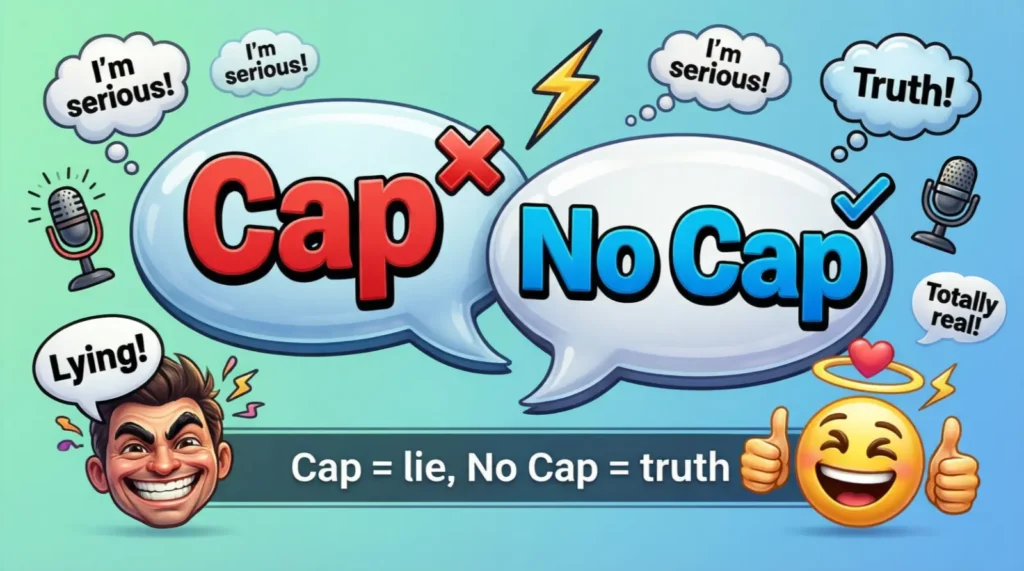
Cap means “lie” or “false”. It’s a casual, friendly, and often playful way of calling out something that isn’t true. When someone says “no cap”, they mean “I’m serious” or “I’m not lying”.
What Does Cap Mean in Text? 🧠
In modern slang, cap is used to describe a statement that is false or exaggerated. Think of it as saying someone is “fibbing” or “not telling the truth,” but in a casual, social-media-friendly way.
Example:
A: “I can run a mile in 3 minutes!”
B: “Bro, that’s cap 😅”
Here, B is playfully calling out A’s exaggeration.
When you see no cap, it flips the meaning: it’s a declaration of honesty. People use it to stress that they are being serious or truthful about something.
Example:
A: “This pizza is the best I’ve ever had, no cap 🍕”
In short:
Cap = lie = exaggeration or false statement
No cap = truth = being honest or serious
Where Is Cap Commonly Used? 📱
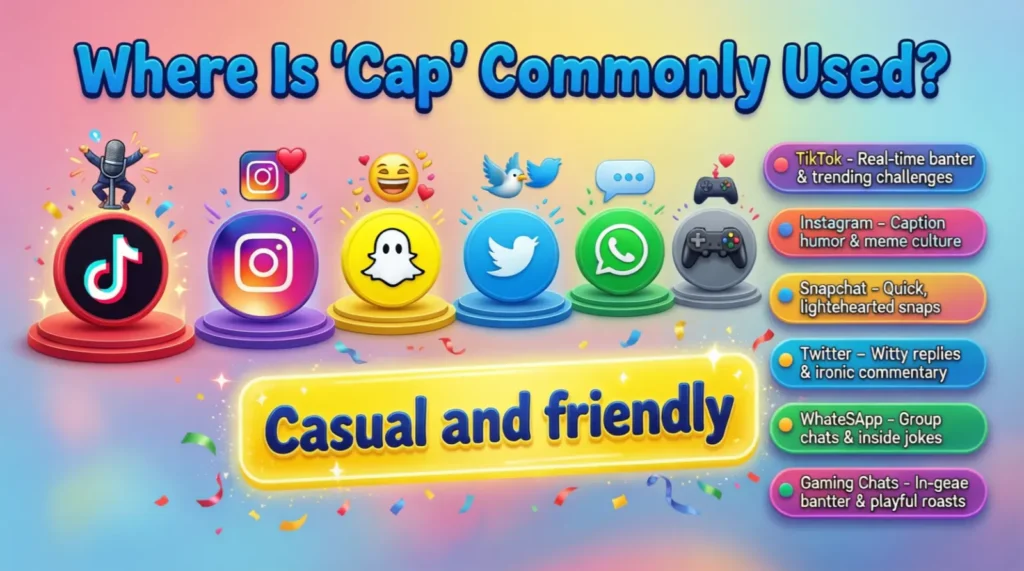
Cap and no cap are mostly seen in casual conversations online and among younger audiences. It appears frequently in:
- TikTok 📹 – Memes, challenges, and trending videos often feature the phrase “no cap” to emphasize honesty or exaggeration.
- Snapchat 👻 – Quick chat replies, streaks, or story reactions commonly use it.
- Instagram 📸 – People use it in captions, reels, or comment sections to confirm honesty or call out lies.
- Twitter/X 🐦 – Users often add “cap” to react to tweets that seem unbelievable or exaggerated.
- Texting & WhatsApp 💬 – Among friends, it’s used to tease, exaggerate, or agree on serious points.
- Gaming chats 🎮 – In competitive games, players might say “cap” to call out boastful claims about skills or achievements.
Tone: Casual, playful, and social-media–friendly. It’s best avoided in formal or professional writing.
💡 Pro Tip: On social media, pairing “cap” or “no cap” with emojis makes it feel even more relatable. Popular choices include 😂, 😏, 😅, or 🔥.
Examples of Cap in Conversation 💬
Here are 7 realistic chat examples you might see:
- A: “I finished all my homework in 5 minutes lol”
B: “cap 😏” - A: “I swear I’ve never eaten sushi before”
B: “no cap? 🤨” - A: “I can beat you in Fortnite easily”
B: “cap bro 😂” - A: “This Netflix series is the best ever”
B: “no cap, it really is 🔥” - A: “I met Drake yesterday 😎”
B: “cap or for real? 👀” - A: “I ran 10 miles this morning”
B: “cap, you barely ran 2 😆” - A: “That outfit looks amazing on you”
B: “no cap, thanks 😍”
Notice how cap is almost always playful, teasing, or emphasizing honesty depending on context.
When to Use and When Not to Use Cap 🕓
✅ When to Use:
- With friends or peers
- In social media posts or captions
- During casual texts or DMs
- To playfully call out exaggerations
- In gaming chats to comment on unbelievable claims
❌ When Not to Use:
- Professional emails or work chats
- Formal situations or serious conversations
- Academic papers, reports, or presentations
- Legal or official documents
| Context | Example Phrase | Why It Works |
|---|---|---|
| Friend Chat | “Bro, that’s cap 😂” | Casual & playful |
| Work Chat | “Take your time on the report” | Polite & professional |
| “Please review the attached doc” | Formal & clear | |
| Social Media | “This is the best movie ever, no cap 🎬” | Trendy & relatable |
| Gaming Chat | “That score is cap, you cheated 😆” | Casual & fun |
💡 Tip: Pairing “no cap” with a statement often strengthens your credibility among friends or online followers.
Similar Slang Words or Alternatives 🔄
If you like “cap,” you might also see these slang words:
| Slang | Meaning | When to Use |
|---|---|---|
| No lie | Truthful statement | Casual conversations |
| Bet | Agreement / challenge | Friendly or competitive chats |
| Facts | True statements | Casual texting or social media |
| Fr | For real / genuinely | Emphasizing honesty |
| Sus | Suspicious or questionable | Pointing out doubts |
| Lowkey | Secretly / quietly | Subtle emphasis |
These words often appear alongside “cap” in TikTok, Twitter/X, or Instagram captions, making your social media text feel modern and relatable.
The Origin of “Cap” 🕰️
Understanding the origin helps make sense of how it’s used today.
- African-American Vernacular English (AAVE): The term “cap” started in AAVE as a casual way to call out lies.
- Hip-hop & Rap: Artists began using it in lyrics to highlight exaggerations or call out fake claims.
- Mainstream adoption: With TikTok and Instagram, younger audiences worldwide adopted “cap” and “no cap” as everyday texting slang.
So, when you type “no cap”, you’re joining a trend that’s deeply rooted in pop culture and online communication.
FAQs About Cap ❓
Q1: Is “cap” rude?
Not usually—it’s playful or teasing. Context matters; with strangers, it may seem blunt.
Q2: Can “no cap” be used in professional chats?
No. Stick to casual, social-media, or peer conversations.
Q3: Where did “cap” come from?
It originates from African-American Vernacular English (AAVE) and became mainstream through hip-hop and social media.
Q4: Can you use “cap” in a sentence outside slang?
Yes, but it might confuse others unless they know the slang context. For example: “That’s total cap” in casual texting.
Q5: Is “cap” the same as lying?
Yes, but it’s lighter and more playful than accusing someone of lying seriously.
Q6: Why do people say “no cap” instead of “I’m serious”?
It’s trendier, shorter, and fits naturally in texting or social media captions. It also adds personality to your message.
Q7: Can older people use “cap”?
Yes, but it might feel forced if they’re not familiar with modern slang. Younger audiences use it more naturally.
Final Thoughts 📝
Understanding slang like “cap” can make texting and social media more fun and relatable. Remember, cap means “lie” or “false”, and no cap is used to emphasize honesty. Using it correctly shows that you’re up-to-date with modern online language and can communicate casually with friends or on social media.
If you’re scrolling through TikTok, replying to a friend on WhatsApp, or commenting on Instagram, knowing when to use cap or no cap helps you fit in with online conversations and adds a playful, authentic tone to your messages.
So next time you see someone say “cap”, you’ll know exactly what they mean—and maybe even use it yourself! 😎

I’m Sara Lexicon, a writer fascinated by words, slang, and how language evolves online. I love turning confusing phrases and trending terms into easy, fun explanations. My goal is to help readers understand and enjoy the language of the digital world. When I’m not decoding words, I’m exploring social media and discovering new ways people express themselves. I’m here to make modern language simple, relatable, and entertaining!