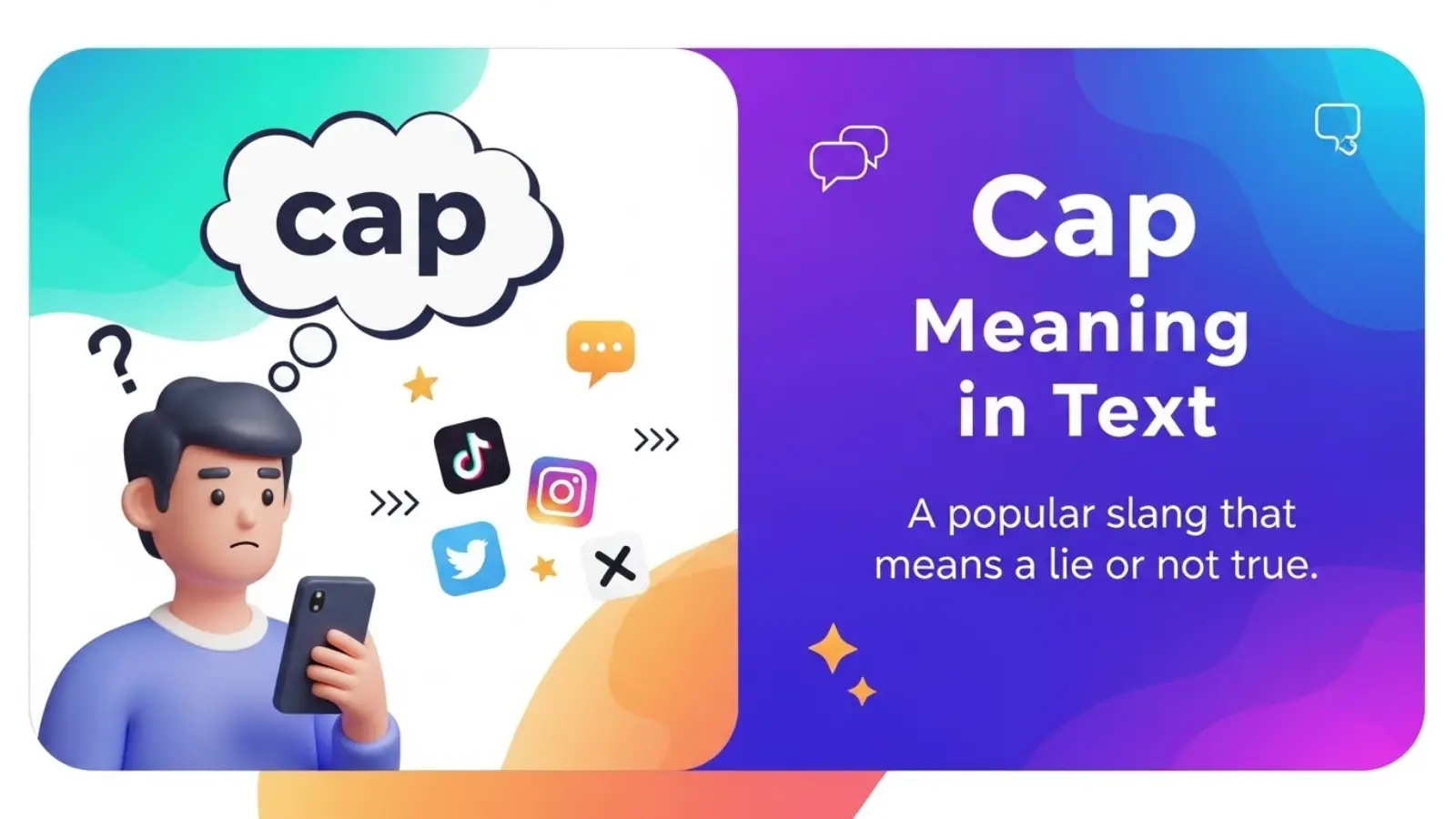
It usually happens like this: you’re chatting with a friend late at night, scrolling through social media, or reading comments under a viral post when someone replies with just one word — “cap.” At first, it feels confusing. Are they talking about a hat? Did autocorrect mess something up? Many people experience this exact moment of confusion when they first see cap used in text. Modern slang evolves fast, and keeping up can feel overwhelming. But once you understand it, you’ll start noticing cap everywhere — from TikTok comments to group chats.
Quick Answer: Cap means “lie” or “not true.” It’s a casual and playful way of saying that something sounds fake, exaggerated, or hard to believe.
🧠 What Does Cap Mean in Text?
In texting and online slang, cap is used to call out something that’s false, exaggerated, or misleading. When someone says “that’s cap,” they’re basically saying “I don’t believe you” or “you’re lying.” It’s not always meant to be harsh — most of the time, it’s playful or joking.
The slang comes from African American Vernacular English (AAVE) and became mainstream through hip-hop lyrics and internet culture. Over time, social media platforms helped spread it globally, making cap a common word among younger users.
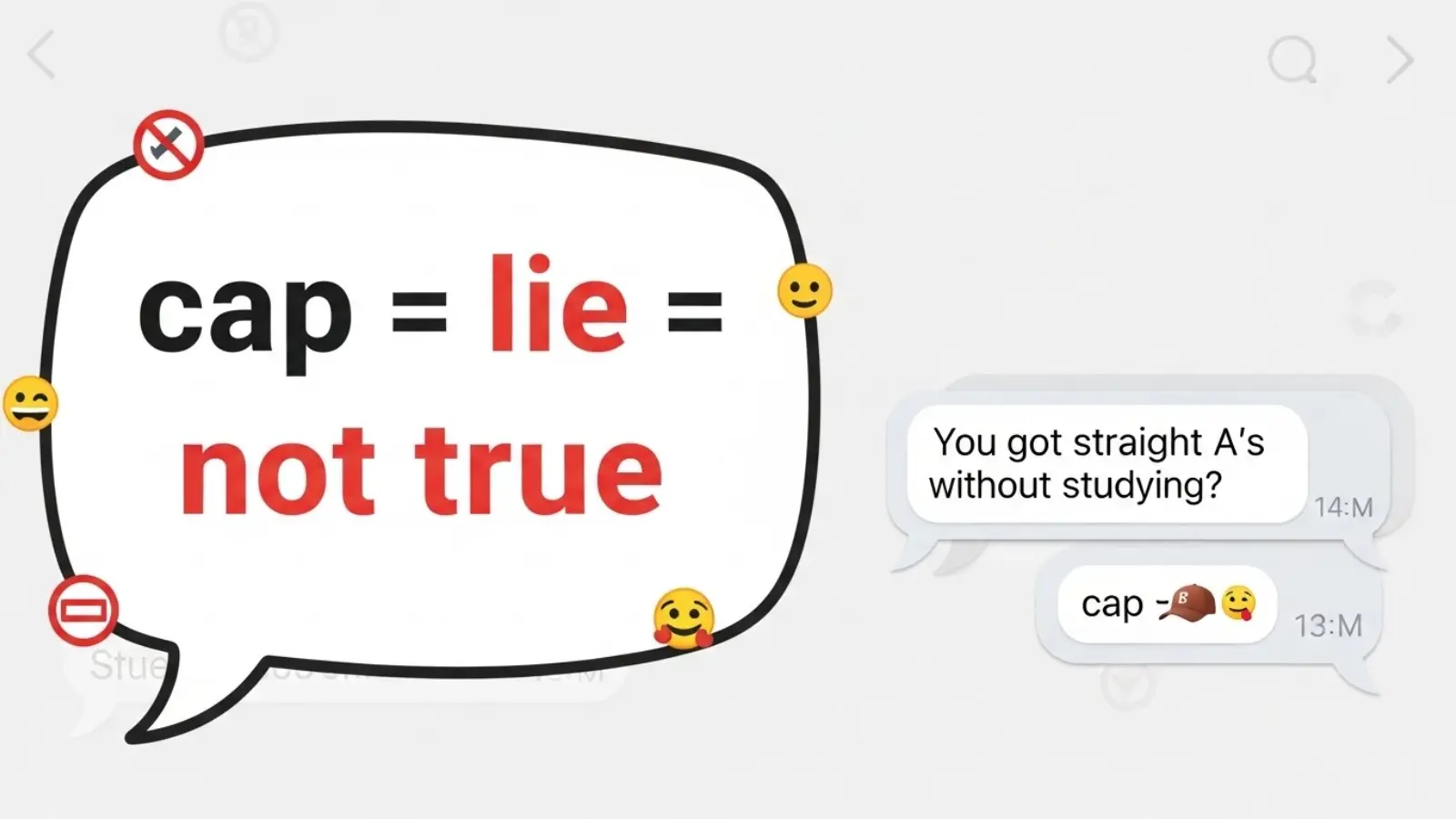
Simple example:
“you got straight A’s without studying? cap.”
In short: Cap = Lie = Not true or exaggerated.
📱 Where Is Cap Commonly Used?
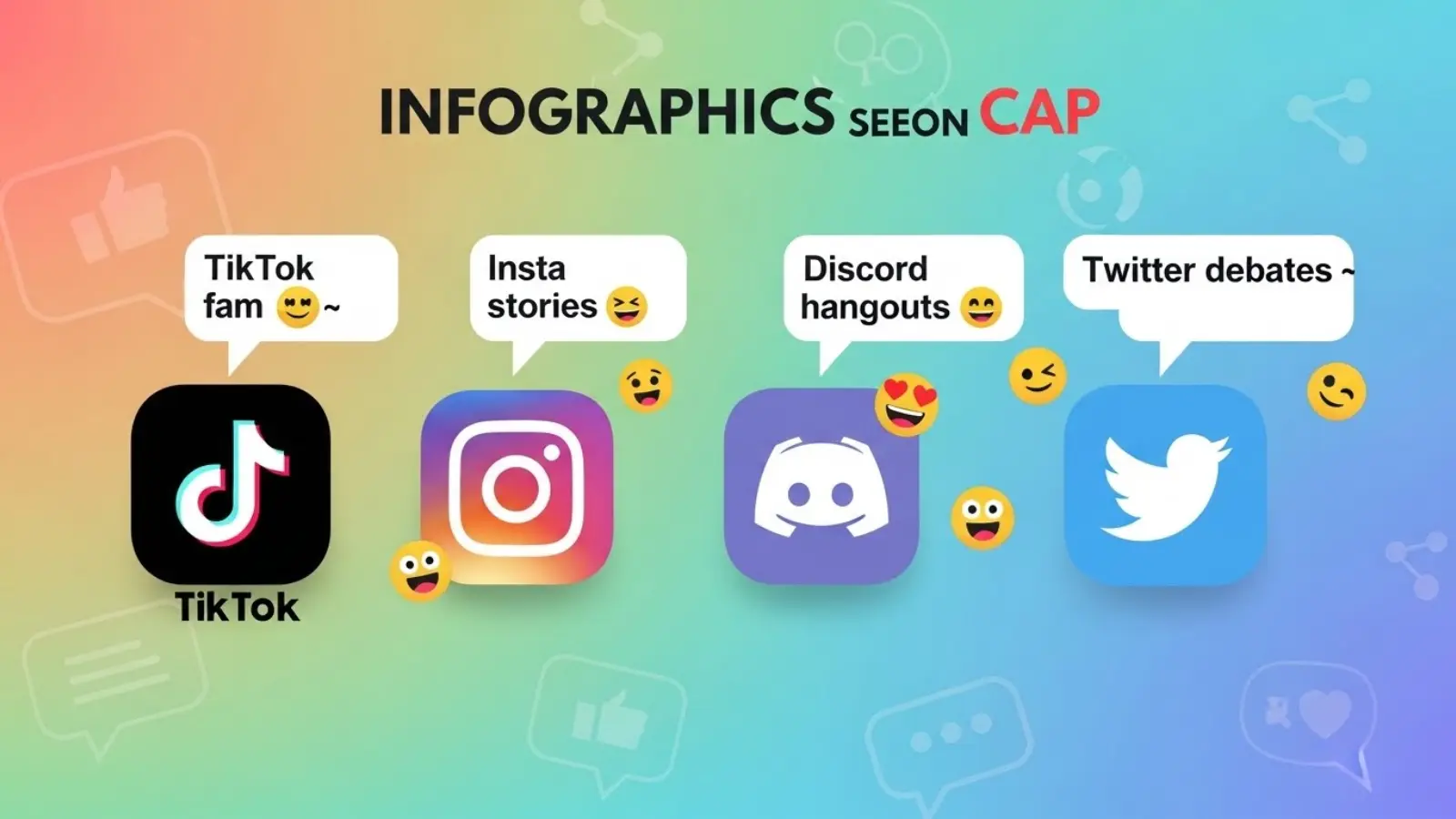
You’ll almost always see cap in casual digital conversations rather than formal settings. It’s popular across many platforms where short, expressive language is preferred.
Here’s where it’s most commonly used:
- 📲 Text messages with friends
- 🎵 TikTok comments and captions
- 📸 Instagram DMs, reels, and stories
- 🎮 Gaming chats and Discord servers
- 🐦 Twitter (X) replies and memes
- 💬 Snapchat messages
Tone & Style:
- ✅ Casual
- ✅ Playful
- ✅ Youth-friendly
- ❌ Not professional
- ❌ Not suitable for formal writing
If you’re talking to friends or joking online, cap fits perfectly. If you’re emailing a boss or teacher, skip it.
💬 Examples of Cap in Conversation
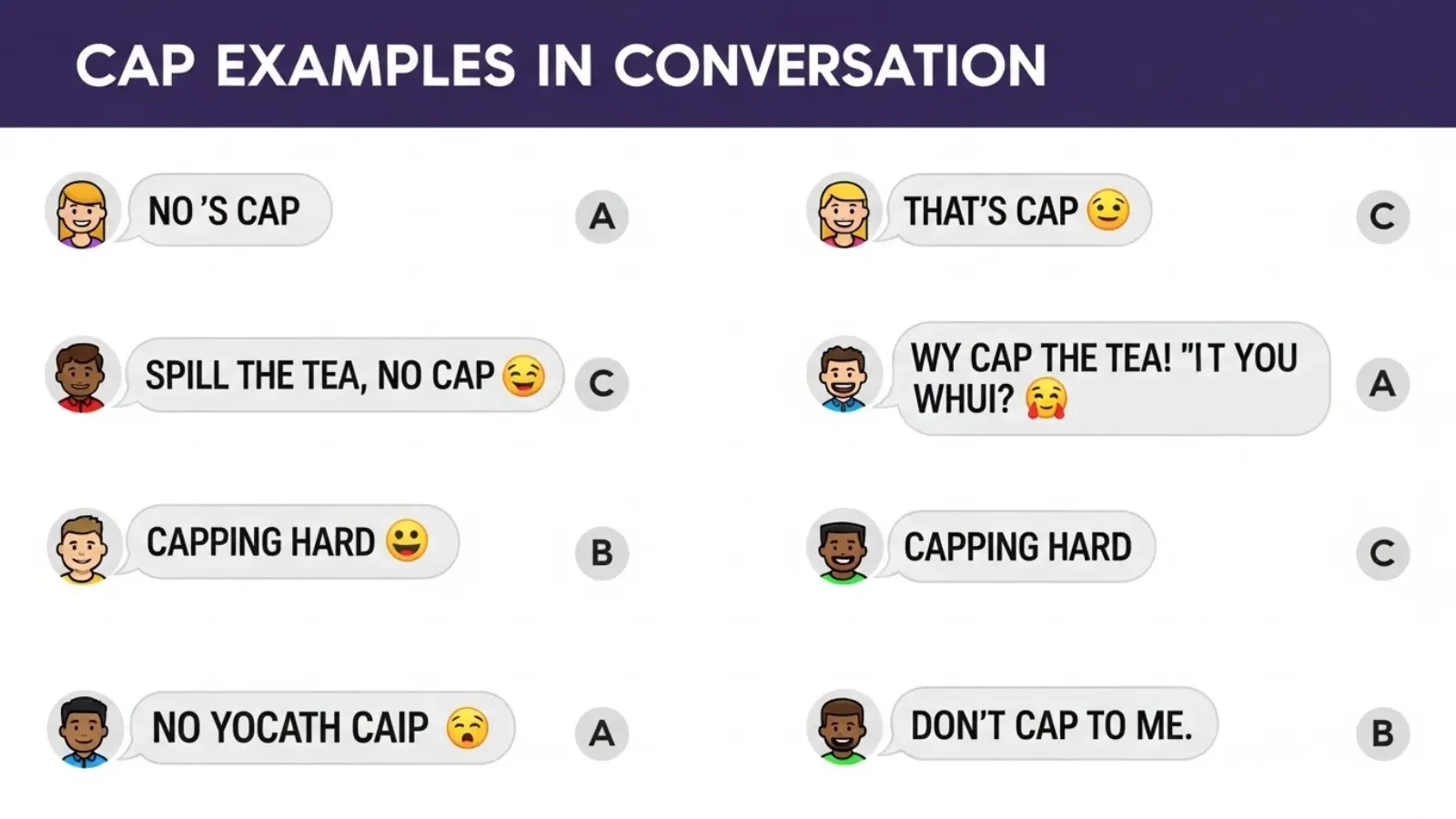
To really understand cap, it helps to see how people use it naturally. Below are realistic, everyday chat examples written in authentic texting style:
1 Example
A: i woke up at 5am to work out
B: cap 🧢😂
2 Example
A: this movie was the best thing ever
B: cap, it was mid
3 Example
A: i never use my phone before bed
B: that’s cap
4 Example
A: i’ll be there in 2 minutes
B: cap, you’re always late
5 Example
A: this level is super easy
B: cap bro, you keep dying 😄
6 Example
A: i don’t eat junk food
B: cap x100
7 Example
A: my internet never lags
B: cap 🧢
These examples show that cap is short, expressive, and often paired with emojis or humor.
🕓 When to Use and When Not to Use Cap
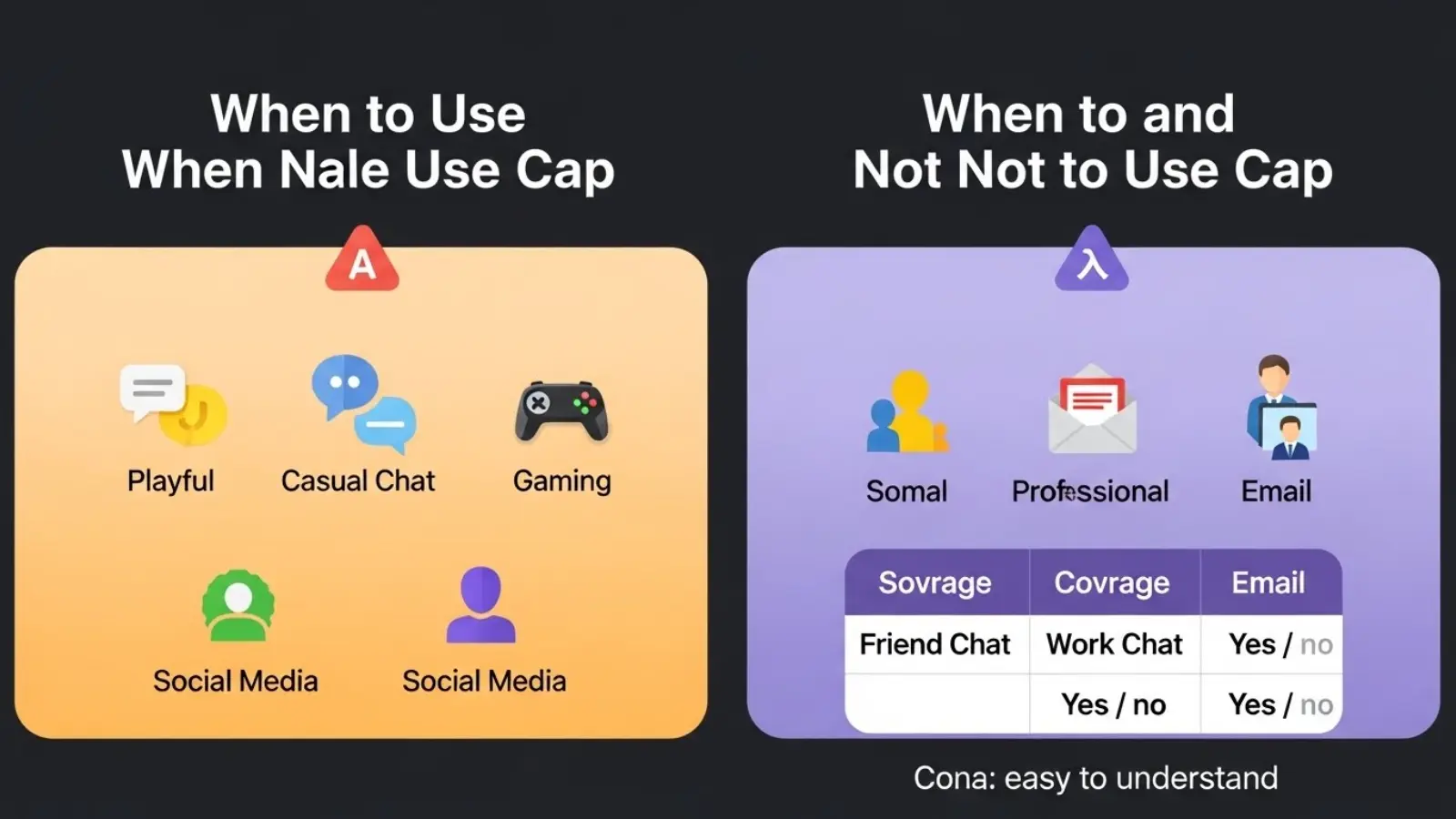
Like most slang, cap depends heavily on context. Using it at the right time makes you sound natural. Using it at the wrong time can seem rude or unprofessional.
✅ When to Use Cap
- Casual chats with friends
- Playful teasing or jokes
- Group chats and gaming chats
- Social media comments
- Reacting to obvious exaggeration
- Informal conversations with peers
❌ When Not to Use Cap
- Work emails or meetings
- School assignments
- Talking to teachers or elders
- Serious or emotional discussions
- Professional customer service chats
- Formal writing or presentations
📊 Context Comparison Table
| Context | Example Phrase | Why It Works |
|---|---|---|
| Friend Chat | “nah that’s cap 🧢” | Relaxed & playful |
| Group Chat | “cap, you didn’t do that 😄” | Friendly teasing |
| Work Chat | “That doesn’t seem accurate.” | Polite & professional |
| “Please clarify this information.” | Formal & respectful |
🔄 Similar Slang Words or Alternatives
If you don’t want to use cap, or you need something more appropriate for different situations, here are some common alternatives:
| Slang / Phrase | Meaning | When to Use |
|---|---|---|
| No cap | I’m serious / telling the truth | Emphasizing honesty |
| Lie | Not true | Neutral and direct |
| Fake | Not real | Casual or critical |
| BS | Nonsense | Very casual, can be rude |
| Exaggeration | Overstated | Semi-formal |
| Not accurate | Incorrect | Professional settings |
Using the right alternative helps you match your tone to the situation.
❓ FAQs About Cap Meaning in Text
What does “cap” mean in slang?
Cap means a lie or something that isn’t true. It’s used when someone doubts a statement.
What does “no cap” mean in text?
No cap means “I’m being honest” or “for real.” It’s used to emphasize truth.
Is cap rude to say?
Usually no. It’s playful and casual, but it can sound rude if used aggressively or in serious conversations.
Can adults use the word cap?
Yes, but it’s mostly popular among younger users and social media culture.
Is cap used only online?
Mostly yes. You might hear it spoken out loud, but it’s far more common in texts and online chats.
Does cap always mean lying?
Not always. Sometimes it means exaggerating or stretching the truth.
Is cap acceptable in school or work?
No. It’s best to avoid slang like cap in formal or professional environments.
🧠 Extra Tip: Why Cap Became So Popular
The reason cap became viral is simple — it’s short, expressive, and easy to understand. In a world where people prefer quick replies and reactions, slang like cap fits perfectly. Emojis, memes, and short-form content helped push it into mainstream usage. Today, knowing slang like cap helps you better understand online culture and conversations.
📝 Final Thoughts
Understanding cap meaning in text makes modern conversations much easier to follow. In simple terms, cap means a lie or something that is not true, while no cap means being honest or telling the truth. This slang is widely used in casual chats, social media, and online communities to express doubt or disbelief in a fun and quick way. While cap works perfectly with friends and informal conversations, it should be avoided in professional or serious situations. Once you know cap meaning in text and how it’s used, you’ll be able to understand and join today’s digital slang culture with confidence 🧢😊.
Discover More Posts:
MLM Meaning in Text Explained – Stop Guessing!
NRM Meaning in Text You Need to Know Today

I’m Sara Lexicon, a writer fascinated by words, slang, and how language evolves online. I love turning confusing phrases and trending terms into easy, fun explanations. My goal is to help readers understand and enjoy the language of the digital world. When I’m not decoding words, I’m exploring social media and discovering new ways people express themselves. I’m here to make modern language simple, relatable, and entertaining!