Scrolling through legal documents or court updates for the first time can feel like learning a whole new language.
You might stumble upon the term “disposed” and wonder, “Wait… does this mean the case is over?
Or just postponed?” Don’t worry, you’re not alone! Legal jargon can be tricky, but once you understand it, everything makes sense.
For example, imagine you’re reading a news headline: “The fraud case against Smith has been disposed.” You might pause and think, “Does this mean it was dismissed? Settled? Or did the judge rule in favor of someone?” The good news is, it’s simpler than it sounds.
Quick Answer:
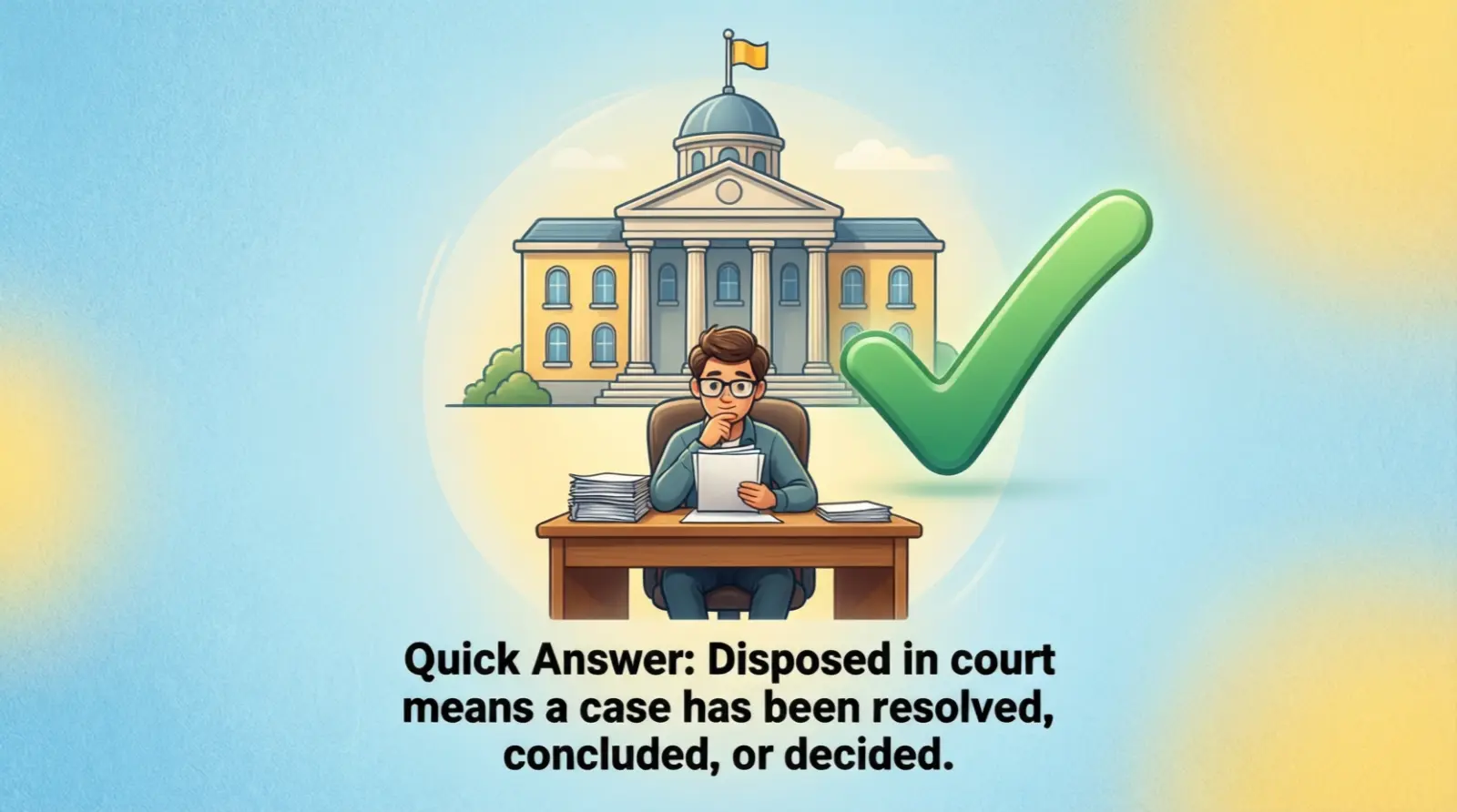
“Disposed” in court means that a case has been resolved, concluded, or decided. It’s a formal legal term used to indicate the matter is no longer pending in the court system.
🧠 What Does Disposed Mean in Text?
In simple words, “disposed” in court means that a judge or court has made a final decision on a case, or the case has been closed for other reasons (like settlement, withdrawal, or dismissal). It does not mean the case is ongoing.
Think of it as the legal version of saying, “This is done and dusted.” Once a case is disposed, no further hearings are scheduled, and the parties involved usually receive official notification.
Example sentence:
- “The case against John was disposed yesterday, so no further hearings are scheduled.”
In short:
Disposed = Case Concluded = No further court action required ✅
It’s important to note that disposed doesn’t indicate who won or lost the case—it just means the matter is officially closed. Sometimes cases are disposed because they were settled privately, withdrawn, or dismissed by the court.
📱 Where Is “Disposed” Commonly Used?
Although it’s a legal term, you might see it outside official documents too. Here’s where it appears:
- Court Records 📄 — The most formal and official use. Courts maintain public records stating if a case is disposed.
- Legal Emails ✉️ — Lawyers or clerks often use it to indicate that a matter has been concluded.
- News Articles 📰 — Reports on lawsuits, trials, or civil disputes often mention that a case was disposed.
- Texting/Chats (rare) 💬 — Sometimes used informally among law students, paralegals, or legal professionals when discussing cases.
- Social Media (law-focused) 🌐 — Legal advice forums, law blogs, or TikTok law explainer videos occasionally use the term.
Tone:
- Always formal in legal settings.
- Can be casual when discussed informally among law-savvy friends.
- Not suitable for general social media unless explaining legal context.
💬 Examples of “Disposed” in Conversation
Here are some realistic examples showing how the term could be used in casual or semi-formal chats:
- A: “Hey, did the landlord case ever end?”
B: “Yeah, it got disposed last week. No more court stuff 😌” - A: “What happened with the traffic ticket?”
B: “It’s disposed, I don’t have to go anymore!” - A: “Is the lawsuit still ongoing?”
B: “Nope, it’s disposed. Case closed ✅” - A: “I heard Sarah’s case was tricky.”
B: “True, but it’s finally disposed, thankfully!” - A: “Do we need to attend the hearing tomorrow?”
B: “Nah, the matter’s disposed, they sent the notice.” - A: “Does disposed mean it’s over?”
B: “Exactly, it’s officially closed in court.” - A: “My case report says ‘disposed.’ What should I do?”
B: “It means nothing else is pending. Just keep the notice for your records.”
Adding these examples helps readers relate to real-life situations, making legal terminology feel less intimidating.
🕓 When to Use and When Not to Use “Disposed”
✅ When to Use
- Discussing court cases or legal matters
- Explaining case outcomes in emails or chats
- Legal blogs, news, or social media posts about law
- Talking with law students, paralegals, or lawyers
❌ When Not to Use
- Casual texting with friends about unrelated topics
- Urgent or emergency situations (can confuse people)
- Informal social media posts where simpler words work better
Comparison Table:
| Context | Example Phrase | Why It Works |
|---|---|---|
| Friend Chat | “The case’s disposed 😎” | Casual & clear |
| Work Chat | “The matter has been disposed.” | Professional & concise |
| “Please note the case is now disposed.” | Formal & precise |
🔄 Similar Slang Words or Alternatives
| Term | Meaning | When to Use |
|---|---|---|
| Closed | Case is finished | Casual or legal discussion |
| Settled | Case resolved out of court | Legal, formal |
| Resolved | Issue or case decided | Semi-formal or professional |
| Concluded | Case officially over | Formal & legal |
| Dismissed | Case thrown out by the court | Legal context |
| Finalized | Legal or administrative matter completed | Professional, formal |
These alternatives are helpful if you want to avoid repetition or write for different tones.
📝 Extra Tips for Understanding “Disposed”
- Check official records – If you see “disposed” in a case summary, you can usually view the final judgment or notice for details.
- Not always judgment-based – Disposition can be through settlement, withdrawal, or dismissal, not just winning or losing.
- Keep documentation – Even if a case is disposed, keeping the court notice can help with future legal verification.
- Use in conversation carefully – Among friends, it may sound overly formal. Stick to “case closed” or “done” for casual chats.
❓ FAQs About “Disposed” in Court
Q1: Does “disposed” mean the case is won or lost?
A: Not necessarily. “Disposed” just means the case is closed, regardless of the outcome.
Q2: Can a disposed case be reopened?
A: In rare circumstances, yes. For example, if new evidence emerges or a higher court intervenes.
Q3: Is “disposed” the same as “dismissed”?
A: Not exactly. “Dismissed” usually means the court rejected the case. “Disposed” is broader—it includes dismissal, settlement, or judgment.
Q4: Can I use “disposed” in casual texting?
A: Only if your friend understands legal terms. Otherwise, simpler words like “finished” or “closed” are better.
Q5: Is “disposed” formal or casual?
A: It’s always formal in court and professional settings, but can appear in casual legal discussions.
Q6: How do I know why a case was disposed?
A: Court records usually list the disposition type, such as judgment, settlement, or dismissal.
Q7: Can businesses use “disposed” in reports?
A: Yes! Companies, law firms, and legal tech platforms often use it in case tracking dashboards.
Final Thoughts
Understanding legal terms like “disposed” in court can feel intimidating at first, but it’s really straightforward. Simply put, disposed means a case has been resolved, concluded, or closed, and no further action is required in court. Whether you’re reading court records, legal emails, or discussing a case with a friend, knowing this term helps you understand the status of any legal matter clearly.
Remember, disposed doesn’t tell you who won or lost—it just signals that the court has officially dealt with the case. Using it correctly in conversation, writing, or text messages can make you sound informed and professional, especially in law-related discussions.
So next time you see “disposed” in a case summary or chat, you’ll know it simply means: Case Closed ✅.

I’m Emma Collins, a writer passionate about decoding slang, emojis, and the ever-changing language of the internet. I enjoy turning confusing phrases into clear, easy-to-understand explanations. My mission is to help readers stay in the loop with today’s digital lingo. When I’m not writing, I love exploring social media trends and chatting with friends about new expressions. I’m here to make learning modern language fun and simple!