You’re scrolling through messages when someone suddenly types, “bro stop being emo 😅.”
For a moment, you pause. Are they talking about music, feelings, or something else?
Many people first see the word “emo” in a text or comment and feel confused. It looks simple, but the meaning depends on the context. In texting and social media, slang often evolves quickly, and “emo” is a good example of that.
Sometimes it refers to someone acting emotional. Other times it describes a specific mood or personality style.
Quick Answer:
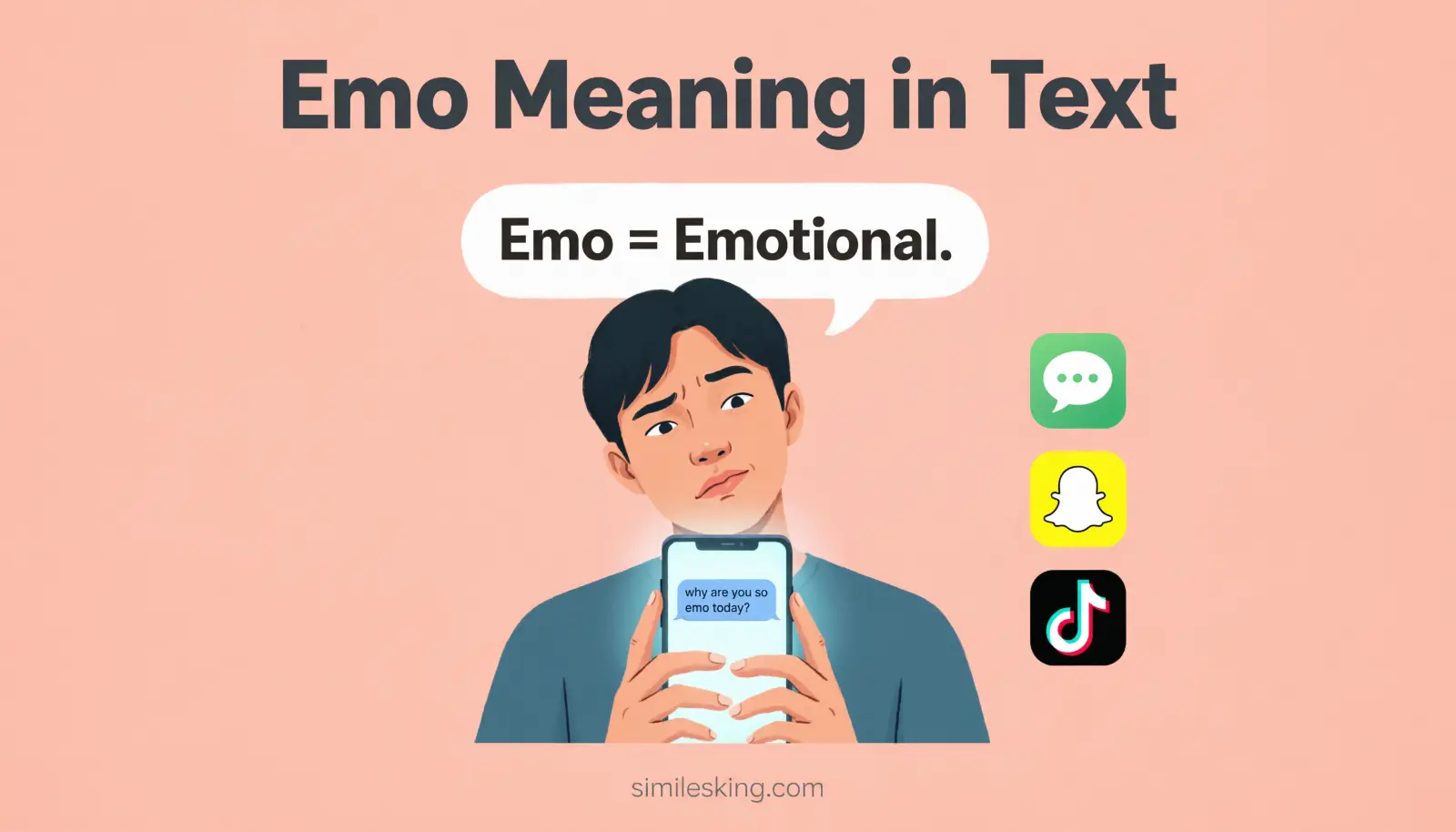
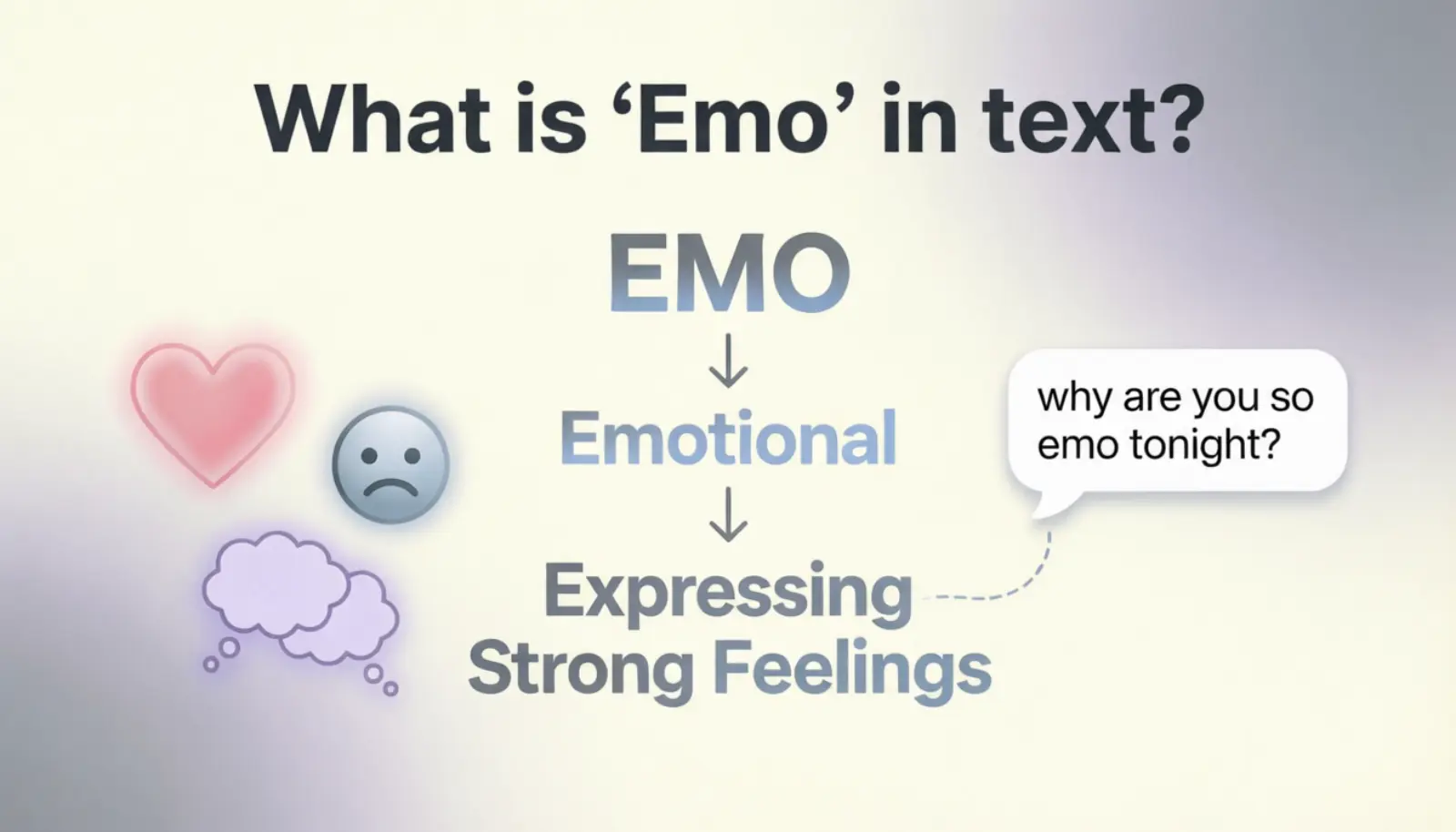
Emo means “emotional.” It’s a casual and slightly teasing way of describing someone who is expressing strong feelings or being overly sentimental.
🧠 What Does Emo Mean in Text?
In texting and internet slang, “emo” is short for “emotional.” People use it to describe someone who is feeling very sensitive, sad, dramatic, or deeply thoughtful.
When someone calls a message “emo,” they usually mean the message sounds emotional or sentimental. It can refer to:
- Someone expressing sadness
- Someone sharing deep feelings
- Someone reacting dramatically to a situation
- A person who seems very thoughtful or moody
The tone of the word can vary depending on the conversation. Sometimes it’s used playfully between friends, while other times it simply describes an emotional mood.
Originally, the word emo came from “emotional hardcore,” a music genre that became popular in the 1990s and early 2000s. Bands in this genre often wrote lyrics about personal struggles, relationships, and deep feelings. Because of that connection, the word eventually started describing emotional behavior in general.
Over time, internet culture shortened “emotional” to “emo,” and it became a common slang term in texting.
Example sentence:
“that caption sounds kinda emo tonight.”
In this case, the speaker means the caption feels emotional or sentimental.
In short:
Emo = Emotional = expressing strong feelings or a dramatic mood.
📱 Where Is Emo Commonly Used?
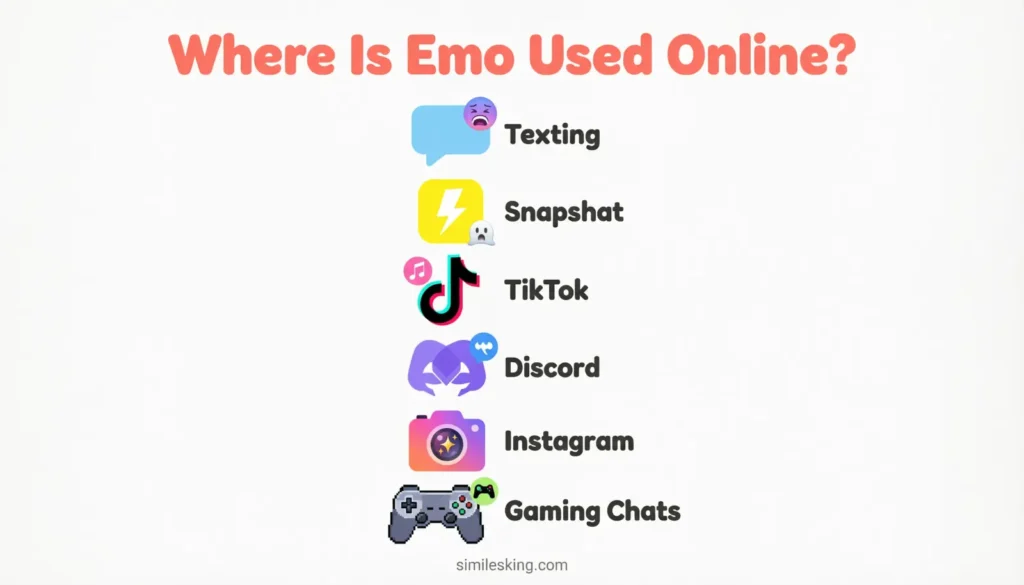
The slang “emo” appears mostly in casual online communication. It’s especially common among younger users who communicate frequently through messaging apps and social media.
Here are the most common places you’ll see it used.
📱 Text Messages
Friends often use the word when joking about someone’s mood.
Example:
“why are you so emo today?”
🎵 TikTok
On TikTok, the word is often used to describe:
- Emotional videos
- Sad music
- Deep captions
- Personal stories
Example comment:
“this video is so emo but i love it.”
👻 Snapchat
On Snapchat stories, people sometimes describe their mood using the word emo.
Example:
“late night emo vibes.”
💬 Discord and Online Communities
Gaming servers and online communities use the word casually in conversations.
Example:
“don’t go emo after losing the match.”
Many people use the word in captions or comments when sharing thoughtful or sad posts.
Example:
“today’s playlist is very emo.”
Tone and Communication Style
The word emo is usually:
- Casual
- Informal
- Friendly or teasing
It is not appropriate for professional conversations, workplace messages, or formal writing.
💬 Examples of Emo in Conversation
Seeing slang in real conversations makes it easier to understand how it works. Below are some common texting examples.
Example 1
A: why are you listening to sad songs again
B: idk i’m in my emo phase tonight 😭
Example 2
A: bro you’re being emo over a game
B: it was the final round ok 😩
Example 3
A: your caption sounds kinda emo lol
B: haha i was just feeling deep today
Example 4
A: are you okay? your tweets look emo
B: yeah just tired and overthinking
Example 5
A: stop being emo and come play
B: give me 10 mins 😅
Example 6
A: that playlist is so emo
B: that’s the vibe today
Example 7
A: why you so quiet today
B: just feeling a bit emo
These examples show that “emo” is usually lighthearted, but it still relates to feelings and mood.
🕓 When to Use and When Not to Use Emo
Even though “emo” is common online, it doesn’t fit every situation. Understanding when to use it helps avoid misunderstandings.
✅ When to Use Emo
Use it in situations like:
- Casual chats with friends
- Joking about dramatic reactions
- Talking about emotional music or mood
- Describing sad or deep posts
- Playful teasing between close friends
Example:
“stop being emo, it’s just a movie 😂”
❌ When Not to Use Emo
Avoid using it in these situations:
- Professional or work conversations
- Serious emotional discussions
- Talking to someone you don’t know well
- Formal emails or academic writing
- When someone is genuinely upset
In serious moments, the word can sound dismissive or insensitive.
Quick Context Comparison
| Context | Example Phrase | Why It Works |
|---|---|---|
| Friend Chat | “bro you’re being emo today 😅” | Playful and casual |
| Gaming Chat | “don’t go emo after that loss” | Light teasing |
| Work Chat | “Take your time.” | Professional tone |
| “Please review when convenient.” | Clear and formal |
🔄 Similar Slang Words or Alternatives
Several other slang terms express emotions, mood, or dramatic reactions in texting.
| Slang | Meaning | When to Use |
|---|---|---|
| Moody | Feeling emotional or quiet | Talking about someone’s mood |
| Dramatic | Overreacting emotionally | Playful teasing |
| Deep | Thoughtful or philosophical mood | Social media captions |
| Sensitive | Easily affected emotionally | Supportive conversations |
| In My Feels | Feeling emotional or sentimental | Casual chats and TikTok |
| Sad Vibes | Feeling down or melancholic | Music or mood discussions |
These alternatives may sound softer or more descriptive than “emo,” depending on the conversation.
❓ FAQs About Emo Meaning in Text
1. Does emo always mean emotional?
Most of the time, yes. In texting, emo usually means emotional, especially when someone is acting sensitive or dramatic.
2. Is calling someone emo rude?
It depends on the context.
Among friends, it’s often playful or teasing. But if someone is genuinely upset, it can feel dismissive.
3. What does “being emo” mean?
“Being emo” means acting very emotional, sad, or dramatic in a conversation.
Example:
“he’s being emo because his team lost.”
4. Is emo related to music?
Yes. The word originally came from emo music, a genre known for emotional lyrics and expressive themes.
Over time, the word became internet slang for emotional behavior.
5. Is emo a personality or just slang?
It can be both.
- In slang: it means emotional mood.
- In culture: it refers to a music and fashion style connected to emotional expression.
6. Can emo be used in social media captions?
Yes, many people use it in captions like:
- “late night emo vibes 🌙”
- “feeling emo tonight”
It’s common on TikTok, Instagram, and Snapchat.
Final Thoughts
The slang “emo” is a simple but expressive word used in modern texting culture. It usually describes someone who is feeling emotional, sentimental, or dramatic.
While it started in music culture, it quickly became popular in messages, memes, and social media posts.
Just remember:
- Use it casually with friends
- Avoid it in serious or professional situations
- And pay attention to tone and context
When used correctly, “emo” adds personality and humor to everyday conversations.

I’m Sara Lexicon, a writer fascinated by words, slang, and how language evolves online. I love turning confusing phrases and trending terms into easy, fun explanations. My goal is to help readers understand and enjoy the language of the digital world. When I’m not decoding words, I’m exploring social media and discovering new ways people express themselves. I’m here to make modern language simple, relatable, and entertaining!