You’re scrolling through your messages when someone suddenly replies, “erm… idk about that.” You pause. Erm? Is that a typo? Is it an abbreviation?
Or does it actually mean something? If you’ve ever felt confused seeing “erm” pop up in a chat, you’re not alone.
Slang and texting shortcuts evolve fast, and sometimes the simplest words raise the biggest questions.
Quick Answer:
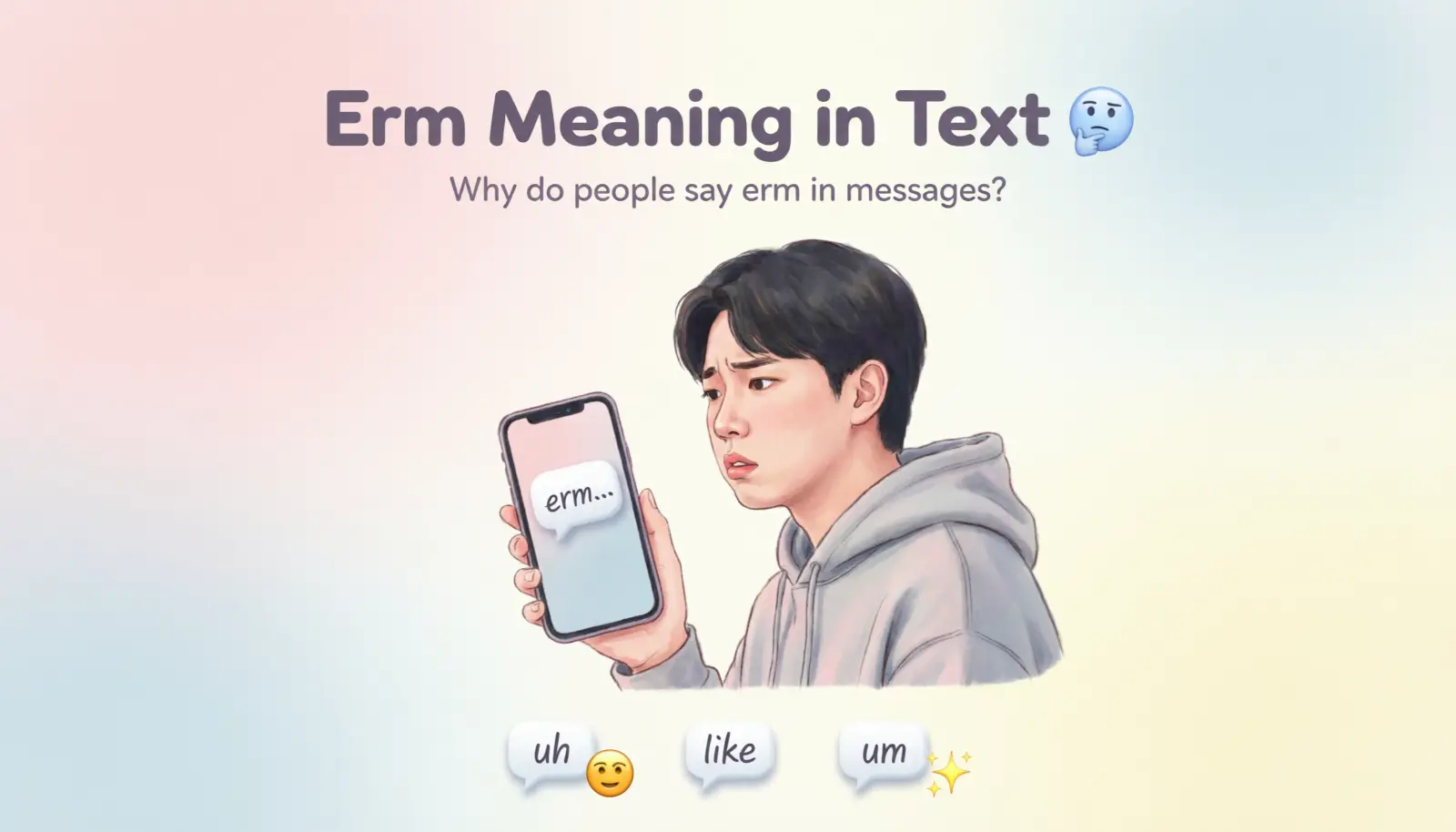
“Erm” means “um” or “uh.” Erm means a sound people make when they hesitate or feel unsure. It’s a casual and slightly awkward way of expressing doubt, confusion, or thinking time in text.
Let’s break it down so you know exactly how and when to use it.
🧠 What Does Erm Mean in Text?
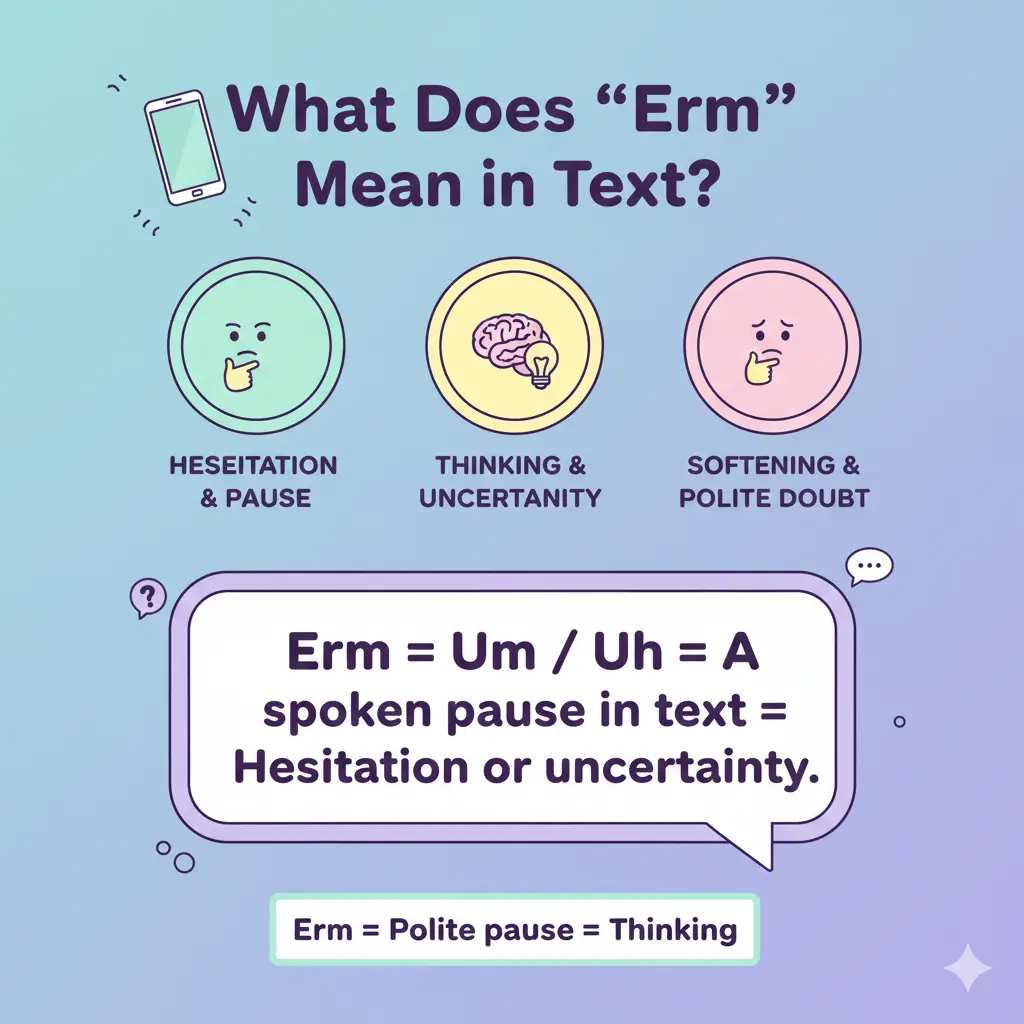
“Erm” represents the natural filler sound people make while speaking. In real conversations, people often say “um,” “uh,” or “er” when they are:
- Thinking about what to say
- Feeling unsure
- Trying to soften a response
- Hesitating before disagreeing
- Processing surprising information
In text, “erm” recreates that pause.
It signals that the person is not responding instantly or confidently. Instead, they are considering their words.
The Emotional Meaning Behind “Erm”
Depending on context, “erm” can express:
- Mild doubt
- Polite disagreement
- Awkwardness
- Nervousness
- Disbelief
- Playful sarcasm
For example:
“erm… that doesn’t sound right.”
This sentence feels softer than saying:
“That’s wrong.”
The hesitation reduces bluntness.
In short: Erm = Hesitation sound = I’m unsure, thinking, or slightly doubtful.
📚 Is “Erm” British or American?
“Erm” is more common in British English, while “um” is more common in American English. However, on social media, both are widely used regardless of location.
Online culture has blurred regional differences. You may see “erm” used by people worldwide, especially in meme culture and TikTok comments.
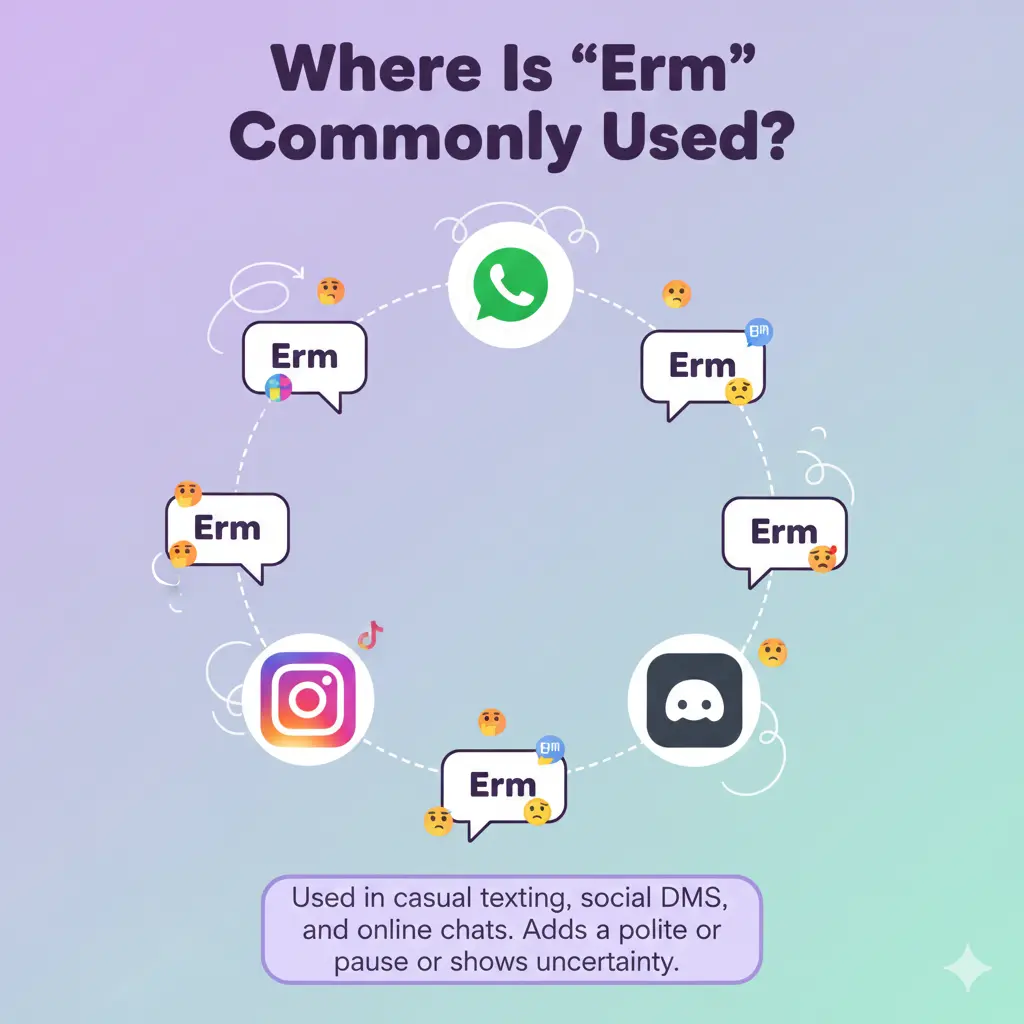
📱 Where Is “erm” Commonly Used?
“Erm” appears most often in casual digital conversations, especially where people want to sound natural or express tone without speaking.
Here’s where you’ll typically see it:
- 📱 Regular texting
- 💬 WhatsApp conversations
- 💜 Instagram DMs
- 🟢 Messenger chats
- 🎮 Gaming chats (Discord, Xbox, PlayStation)
- 🧵 Reddit threads
- 🐦 Twitter/X replies
- 🧑🤝🧑 Group chats
- 😂 Meme comments
- 🇬🇧 British English messages (very common!)
Tone Guide
- ✔ Casual
- ✔ Friendly
- ✔ Polite
- ✔ Soft
- ✔ Slightly awkward
- ❌ Not formal
- ❌ Not professional
If someone uses erm, it usually means they’re being gentle, thinking, or reacting in a soft way rather than being direct.
💬 Examples of “erm” in Conversation
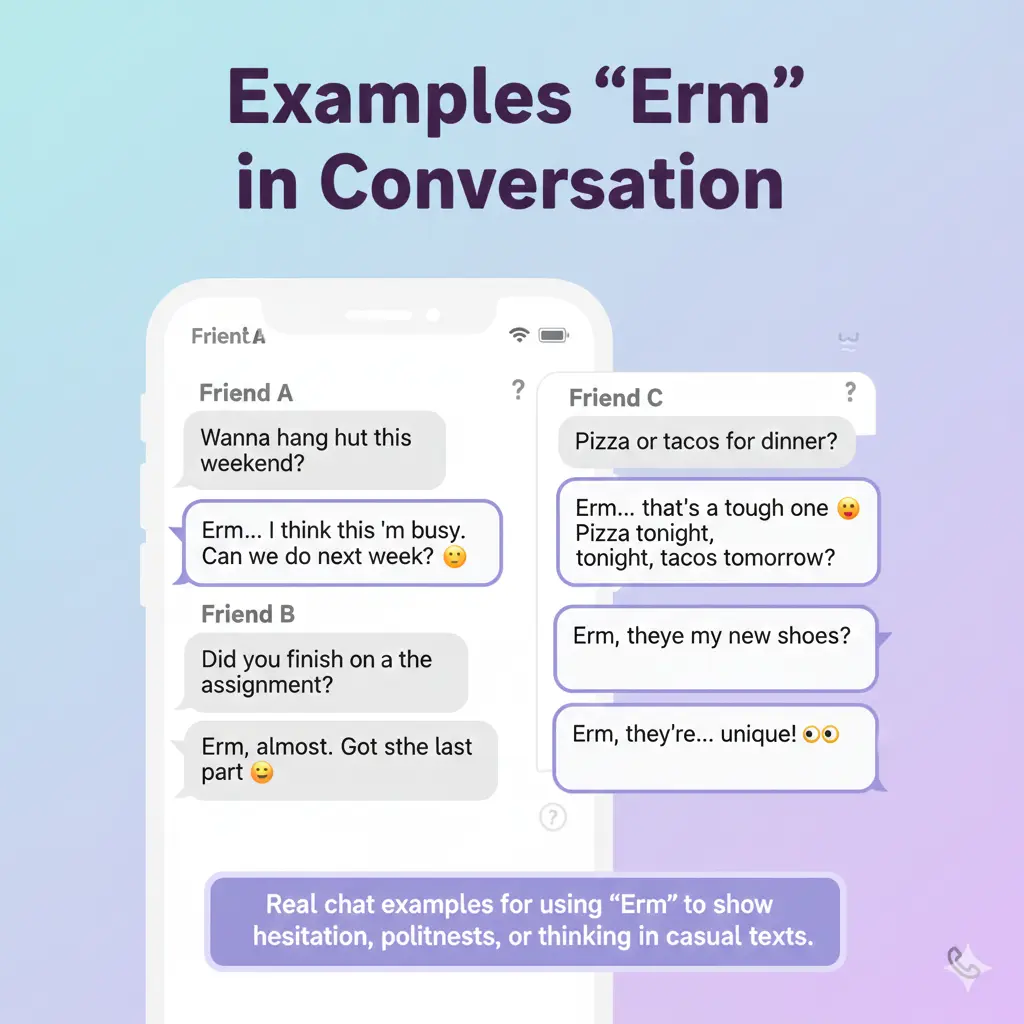
To truly understand slang, examples help more than definitions. Below are realistic texting-style conversations showing different ways people use “erm” naturally.
1. Confusion
A: did you understand the instructions?
B: erm… not at all 😂
2. Polite hesitation
A: can you lend me 5k till friday?
B: erm… that’s gonna be tough 😬
3. Soft disagreement
A: i think pineapple belongs on pizza!
B: erm… i strongly disagree 😂
4. Awkward moment
A: btw i told your crush you like them
B: erm EXCUSE ME??? 😭
5. When surprised
A: i cut my bangs at 2am
B: erm… why tho 😅
6. Flirty but shy
A: do you miss me?
B: erm… maybe a little 😳
7. Thinking
A: which outfit should i wear?
B: erm let me think a sec
8. Calling someone out softly
A: i didn’t take your charger
B: erm… it’s literally in your hand
9. When something feels off
A: i’m gonna quit my job and become a magician
B: erm… r u sure?
10. When buying time
A: quick answer—yes or no?
B: erm give me a min
🧠 The Psychology Behind Using Erm
People use filler sounds in speech because silence feels uncomfortable. In texting, the same principle applies.
Typing “erm” helps to:
- Avoid sounding too direct
- Show emotional nuance
- Reduce confrontation
- Signal uncertainty
- Create relatability
It makes digital communication feel more human.
Without tone indicators, text can feel cold. “Erm” adds warmth and realism.
🕓 When to Use and When Not to Use “erm”
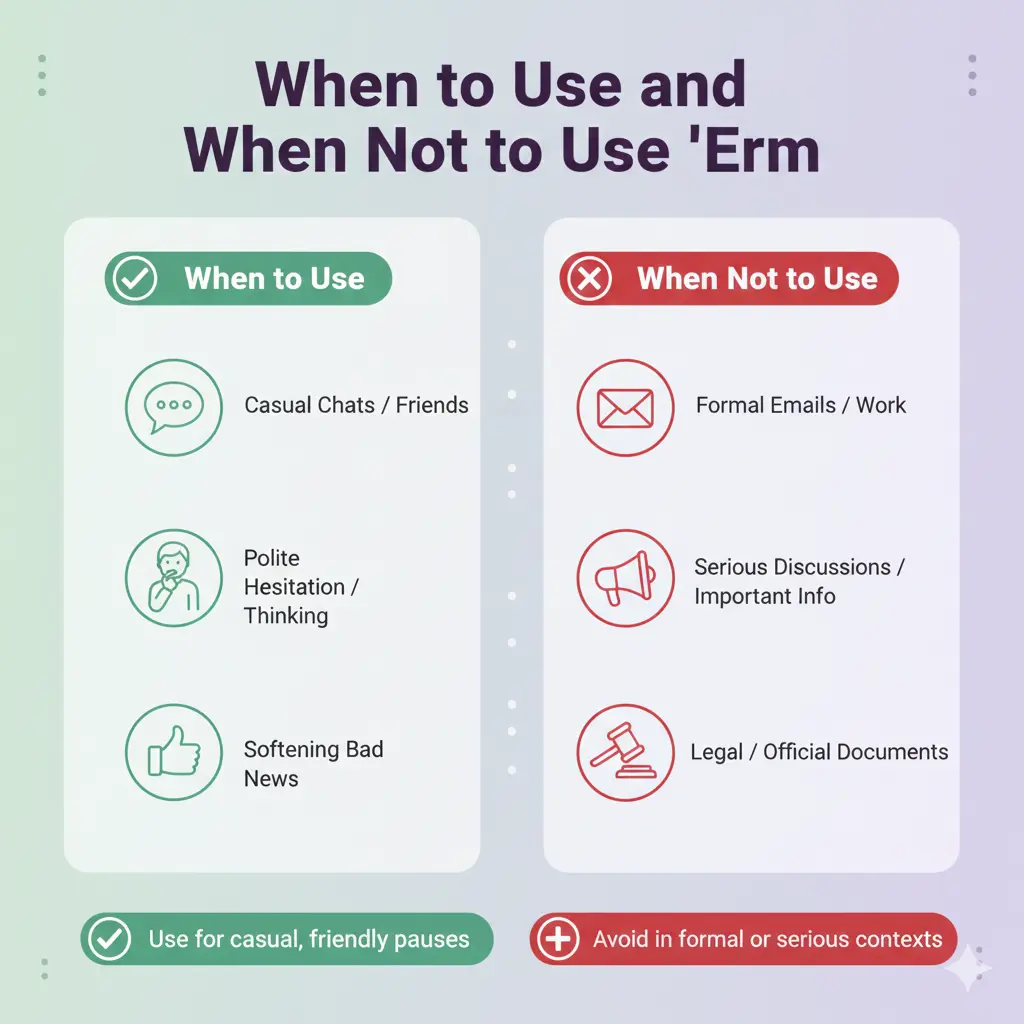
Understanding the right context matters because “erm” gives a specific vibe — casual, unsure, polite, or confused.
✅ When You SHOULD Use “erm”
Use “erm” when:
- You feel unsure how to respond
- You want to soften your reply
- You disagree but politely
- Something surprised you
- You need a second to think
- You want to add an awkward or humorous tone
- You’re trying not to sound harsh
- You want to be friendly and informal
Examples:
- “erm… i don’t think that’s right”
- “erm gimme a moment”
- “erm… are you serious?”
❌ When You SHOULD NOT Use “erm”
Avoid using “erm” in:
- Work conversations
- School or academic emails
- Job applications
- Talking to your boss or professor
- Professional customer messages
- Emergency situations
- Moments requiring clarity
In those cases, use clear language like:
- “I need a moment to think.”
- “I’m not sure.”
- “Let me check and get back to you.”
📊 Comparison Table: When “erm” Works vs. When It Doesn’t
| Context | Example Phrase | Why It Works / Doesn’t Work |
|---|---|---|
| Friend Chat | “erm… if you say so 😂” | Casual, humorous, natural |
| Crush Chat | “erm… i kinda like you too 😳” | Soft, cute hesitation |
| Group Chat | “erm did we decide a time?” | Shows uncertainty without sounding rude |
| Gaming Chat | “erm where am i supposed to go?” | Fits casual gaming tone |
| Work Chat | “I’m unsure about that.” | More professional and clear |
| Client Message | “Let me review this for you.” | Avoids awkward slang |
| “Please let me know when done.” | Formal and appropriate |
🔄 Similar Slang Words or Alternatives
Here are commonly used alternatives that express a similar feeling of doubt, hesitation, or awkwardness:
| Slang/Word | Meaning | When to Use |
|---|---|---|
| Um / Uh | Basic hesitation sound | Anytime you’re unsure or thinking |
| Uhhh… | Confused, shocked, or lost | When something doesn’t make sense |
| Well… | Soft disagreement | When you disagree politely |
| Hmm | Thinking or analyzing | When considering options |
| Idk | I don’t know | When giving a direct uncertain answer |
| Wait what | Surprise or disbelief | When something is shocking or funny |
These alternatives help keep conversations natural while showing different levels of uncertainty or reaction.
⚖ Erm vs Um vs Hmm
Let’s break down the difference:
- Erm → Slightly awkward hesitation
- Um → Neutral thinking pause
- Hmm → Thoughtful consideration
- Uhh → Stronger awkwardness or nervousness
Choosing the right one depends on the emotion you want to convey.
❓ FAQs About “erm”
1. Is “erm” rude or sarcastic?
Not usually. It depends on the context, but it’s mostly gentle, hesitant, or slightly awkward, not rude.
2. Do British people use “erm” more?
Yes! “Erm” is strongly associated with UK English, while US English uses “um” or “uh.”
3. Can “erm” be flirty?
Definitely. When used with emojis like 😳, 😅, or 🙂, it gives shy, cute, hesitant vibes.
4. Does “erm” always mean doubt?
No — it can mean thinking, softening a message, reacting, or buying time.
5. Is “erm” informal?
Yes. It’s not appropriate for work emails, professional conversations, or official messages.
6. Is “erm” the same as “um”?
Almost. They serve the same purpose, but “erm” has a more British and slightly more awkward tone.
7. What does “erm…” with dots mean?
Adding “…” increases hesitation, awkwardness, or emotional expression.
8. Does “erm” mean someone is uncomfortable?
Sometimes — especially if they’re about to deliver awkward news or a soft disagreement.
9. Why do people use “erm” instead of writing full sentences?
Because it mimics natural speech and expresses tone quickly.
🏁 Final Thoughts
Understanding Erm Meaning in Text helps you decode hesitation in modern conversations. “Erm” is simply a written hesitation sound. It shows uncertainty, doubt, awkwardness, or thinking time. It makes digital messages feel more human and less robotic.
In casual chats, erm softens responses. It helps you disagree politely. It also adds humor or surprise. However, it does not belong in formal emails or professional communication.
In simple terms:
Erm meaning in text = a hesitation sound = “I’m unsure, thinking, or slightly doubtful.”
Now when someone types “erm…” you’ll instantly understand the tone behind it. And if you ever need a gentle pause before replying, you know exactly what to use.

I’m Sara Lexicon, a writer fascinated by words, slang, and how language evolves online. I love turning confusing phrases and trending terms into easy, fun explanations. My goal is to help readers understand and enjoy the language of the digital world. When I’m not decoding words, I’m exploring social media and discovering new ways people express themselves. I’m here to make modern language simple, relatable, and entertaining!