Have you ever been texting someone and they replied with “ETA”? You might have paused, scratched your head, and wondered, “Wait… what does that even mean?”
Don’t worry, you’re not alone. Many people stumble upon this abbreviation and get confused. The good news? It’s super simple once you know the full form.
Quick Answer:
ETA means “Estimated Time of Arrival.” It’s a casual, friendly way of asking or letting someone know when you expect to arrive somewhere.
If you’re meeting friends, coordinating deliveries, or just checking in, it’s a handy shorthand to keep your texts short and clear.
What Does ETA Mean in Text? 🤔
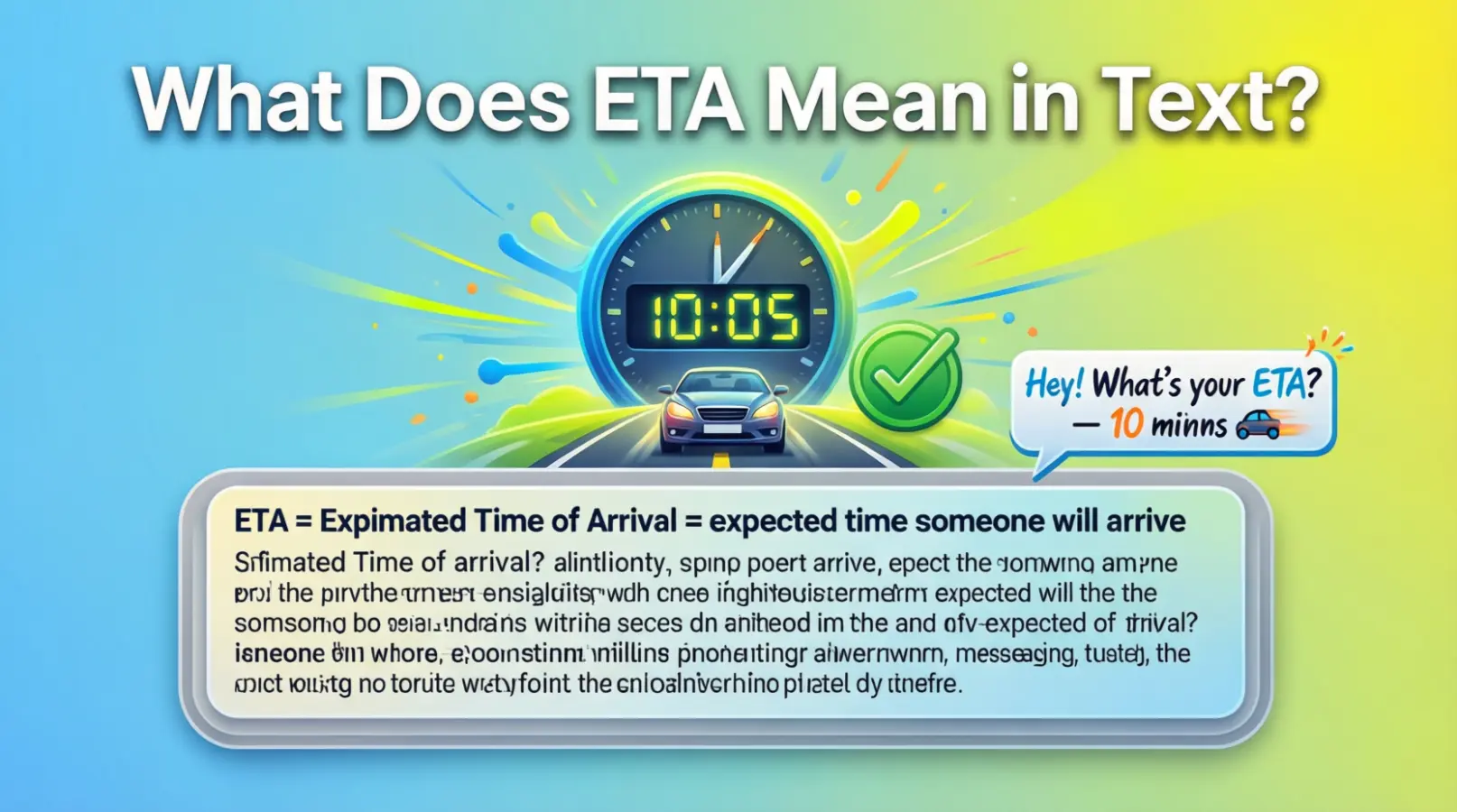
ETA stands for Estimated Time of Arrival. In texting, it’s usually used to ask someone when they will reach a place or to let them know when you will arrive.
For example:
“Hey! What’s your ETA to the café?”
“I’ll be there in 10 mins 🚗”
In short: ETA = Estimated Time of Arrival = expected time someone will arrive.
It’s a simple, widely understood abbreviation that keeps communication quick and casual. Unlike formal phrases like “expected time,” ETA feels personal and text-friendly.
Where Is ETA Commonly Used? 📱
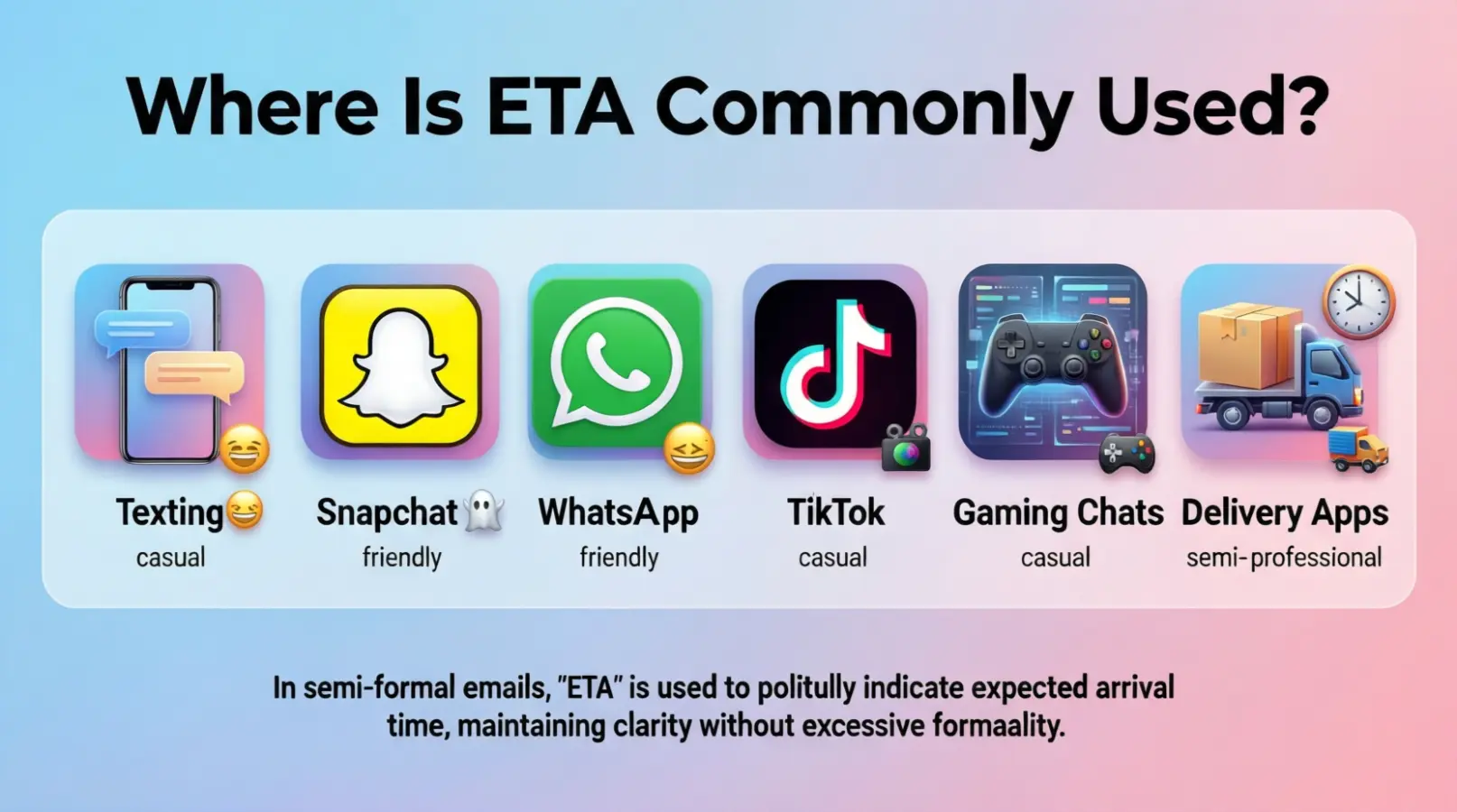
ETA is everywhere in modern texting and social media. Here are some places you might see it:
- Text messages: Asking friends or family when they’ll arrive.
- Snapchat & WhatsApp: Coordinating meetups or events.
- TikTok & Instagram DMs: Casual chats about plans or travel.
- Gaming chats: Checking when teammates or players will log in.
- Delivery tracking apps: Restaurants, Amazon, and ride-sharing apps often show ETA.
- Email (semi-formal): Occasionally used in professional updates or delivery timelines.
Tone: Mostly casual, friendly, and social-media-friendly. It’s not formal language, but can be adapted politely in semi-professional chats. Knowing the context helps avoid sounding too casual in work emails.
Examples of ETA in Conversation 💬
Here are some realistic texting scenarios to show how ETA is used:
1 Example
A: “Hey, what’s your ETA?”
B: “About 15 mins, stuck in traffic 😅”
2 Example
A: “Dinner starts at 7. ETA?”
B: “I’ll be there by 6:50 🕖”
3 Example
A: “When will the package arrive?”
B: “ETA is tomorrow afternoon 📦”
4 Example
A: “We’re waiting for you at the movies 🍿”
B: “ETA 5 mins, parking now 🚗”
5 Example
A: “Team meeting starting soon, ETA?”
B: “Joining in 2 mins, on my way 👌”
6 Example
A: “Coffee shop hangout, what’s your ETA?”
B: “10 mins, grabbing my wallet ☕️”
7 Example
A: “Airport pickup, ETA?”
B: “Flight landed, ETA 20 mins 🛬”
These examples show how versatile ETA is — from casual meetups to more practical updates.
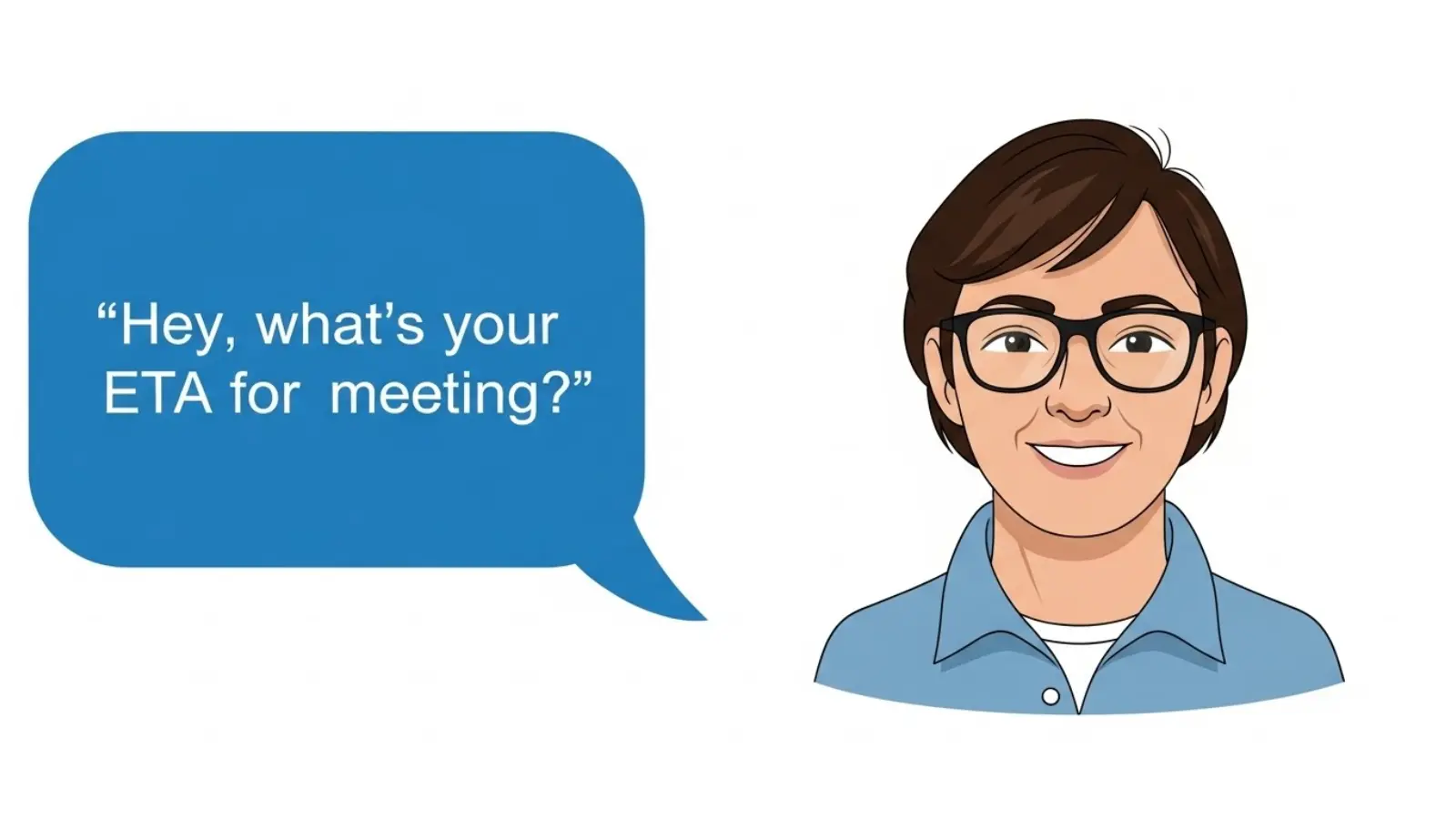
Fun Ways to Use ETA in Texts 🎉
Want to make your chats more lively while using ETA? Try these ideas:
- Add emojis to show context: “ETA 5 mins 🚗💨”
- Use humor: “ETA: probably in time… or fashionably late 😎”
- Combine with GIFs or memes in social apps to make your reply more visual.
- Use in group chats: “ETA 10 mins, bring snacks 🍿”
This way, ETA doesn’t just give information — it also makes texting fun and friendly.

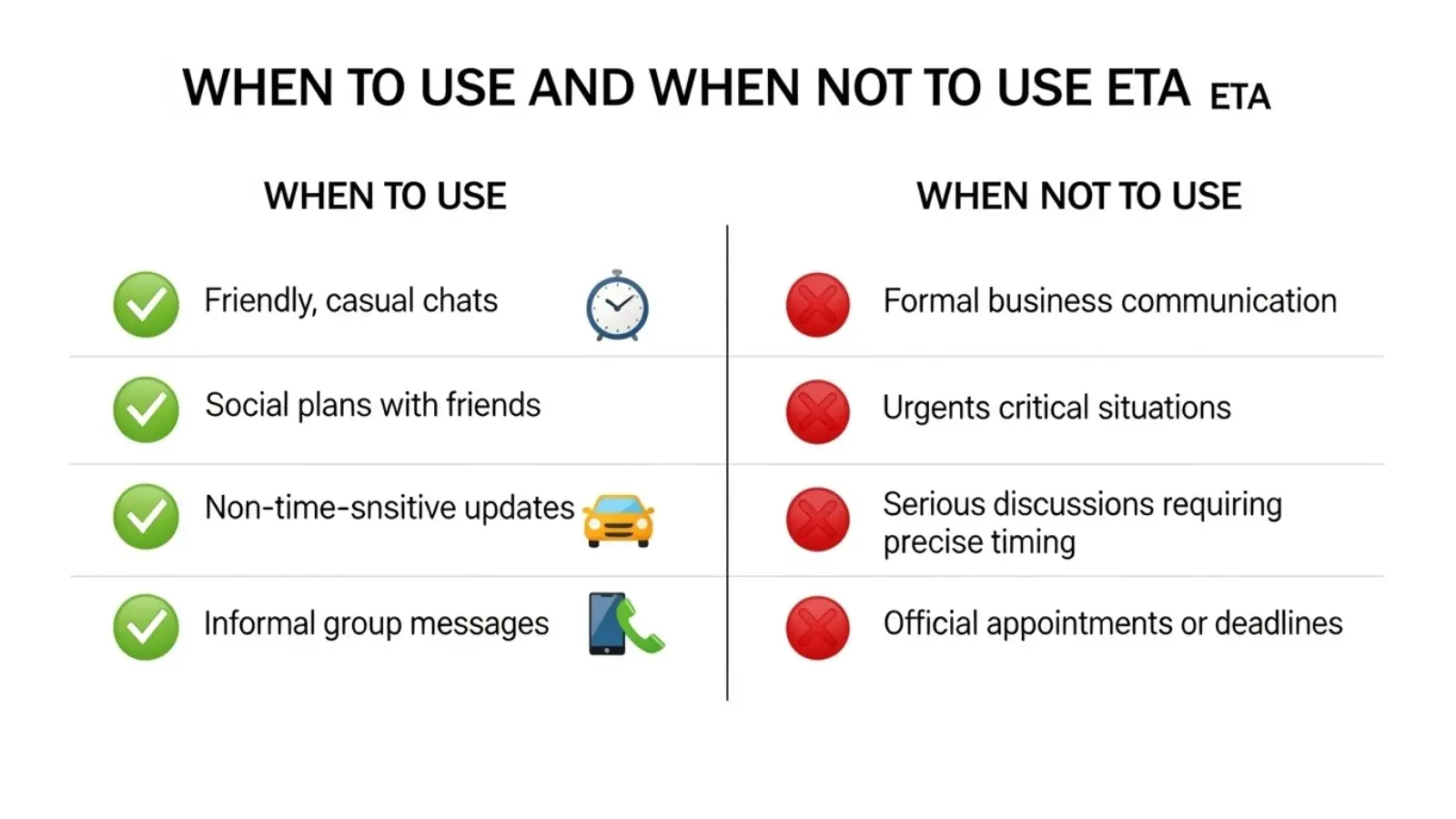
When to Use and When Not to Use ETA 🕓
Knowing when to use ETA helps avoid awkward or inappropriate situations.
✅ When to Use:
- Friendly chats with friends or family
- Coordinating social plans
- Casual work updates
- Tracking deliveries or travel
- Gaming or online meetups
❌ When Not to Use:
- Formal emails requiring detailed timing
- Serious emergencies or urgent messages
- Situations needing professional tone
- Official government or legal communication
Comparison Table:
| Context | Example Phrase | Why It Works |
|---|---|---|
| Friend Chat | “No rush, ETA around 7 😄” | Casual & friendly |
| Work Chat | “ETA for the report?” | Polite & professional |
| “Please provide your ETA.” | Formal & clear | |
| Delivery App | “Your ETA is 10 mins” | Informative & timely |
Pro Tips for Using ETA Effectively ✅
- Always consider context — ETA is casual; don’t use it in highly formal emails.
- Be specific when possible — “ETA 10 mins” is clearer than “ETA soon.”
- Combine with emojis or status updates to make it more relatable.
- Use politely in semi-professional chats — e.g., “Could you share your ETA for the meeting?”
- Avoid overusing — if every message has ETA, it can seem impatient or nagging.
Similar Slang Words or Alternatives 🔄
Here’s a quick reference to slang words similar to ETA:
| Slang | Meaning | When to Use |
|---|---|---|
| TBA | To Be Announced | When schedule/time is not confirmed |
| TBD | To Be Decided | Planning events or meetings |
| ASAP | As Soon As Possible | Urgent situations or quick replies |
| BRB | Be Right Back | Short absence in chat |
| RN | Right Now | Immediate action or response |
| OTW | On The Way | Letting someone know you’re coming |
These alternatives can make your chats more varied while keeping them clear and friendly.
FAQs About ETA ❓
Q1: Can I use ETA in professional emails?
A: Yes, but keep it polite and clear, e.g., “Please provide your ETA for the shipment.”
Q2: Is ETA formal or casual slang?
A: ETA is mostly casual and friendly, but can be used politely in semi-formal contexts.
Q3: Can I use ETA for text messages only?
A: No, it’s also used in emails, apps, and even gaming chats.
Q4: What’s the difference between ETA and ASAP?
A: ETA refers to the expected arrival time, while ASAP requests something as quickly as possible.
Q5: Are there regional differences in using ETA?
A: Mostly universal in English texting, but always consider your audience for clarity.
Q6: Can I use ETA when giving updates on deliveries?
A: Absolutely! It’s commonly used in delivery apps, ride-sharing, and shipping notifications.
Final Thoughts ✨
In the world of texting and social media, ETA is one of those handy abbreviations that can make communication faster and clearer. Remember, ETA means “Estimated Time of Arrival,” and it’s a friendly way to ask or share when you’ll reach a place or when something is expected. Whether you’re coordinating plans with friends, updating someone about a delivery, or even checking in during a meeting, knowing how and when to use ETA keeps your messages casual, polite, and easy to understand.
Next time you see “ETA” in a text, you’ll know exactly what it means — and you can use it confidently in your own chats!

- I’m Casey Morgan, a writer who loves breaking down internet slang and modern lingo into simple, relatable explanations. I’ve spent years studying how digital communication shapes the way we talk. My goal is to make every confusing phrase easy to understand. When I’m not decoding trends, you’ll find me sipping coffee and browsing social media for the next viral term.