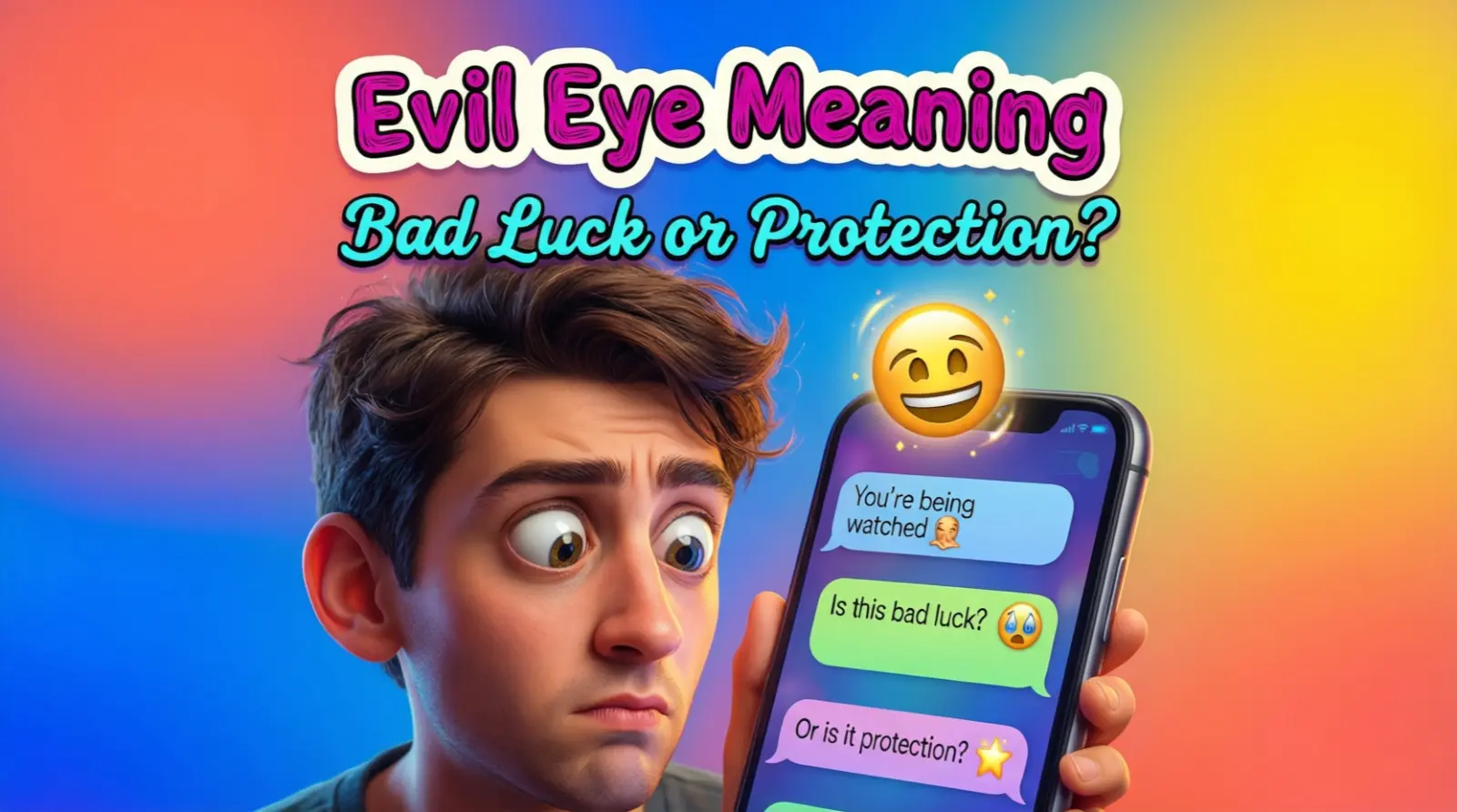
You’re scrolling through Instagram or chatting with a friend, and suddenly you see someone comment, “evil eye nazar lag gayi 🧿”. You pause. Is it a curse? A joke?
Just an emoji trend? If you’ve ever felt confused seeing the evil eye mentioned in texts, captions, or comments, you’re not alone.
The evil eye is one of those phrases that pops up everywhere—social media, family talks, even emojis—yet its meaning isn’t always clear, especially online.
Quick Answer:
The evil eye means a belief that someone’s jealous or negative look can bring bad luck or harm. It’s often used in a protective, cultural, or casual way to explain sudden problems or to ward off negativity.
🧠 What Does the Evil Eye Mean in Text?
The evil eye refers to a traditional belief found in many cultures around the world. It’s the idea that when someone looks at you with jealousy, envy, or bad intentions—even unintentionally—it can cause negative effects like bad luck, illness, or setbacks.
In texting or social media, people usually use evil eye in a light, symbolic, or humorous way rather than literally accusing someone of magic.
Example sentence:
“Everything was going fine until today… evil eye fr 🧿”
In short: Evil eye = jealous or negative energy = bad luck explanation
📱 Where Is the Evil Eye Commonly Used?
You’ll see the evil eye mentioned or symbolized in many places online and offline. Here’s where it’s most common 👇
- 📲 Text messages – casual chats with friends or family
- 📸 Instagram captions – especially with the 🧿 emoji
- 🎵 TikTok comments – reacting to success or sudden problems
- 🧵 Twitter/X posts – joking about bad luck
- 👵 Family conversations – especially in South Asian, Middle Eastern, Mediterranean cultures
Tone check:
- ✔️ Mostly casual & cultural
- ❌ Not formal or professional
- ✔️ Very social-media–friendly
💬 Examples of the Evil Eye in Conversation
Here are some realistic chat-style examples so you can see how people actually use it 👇
1 Example
A: “my phone just stopped working out of nowhere”
B: “evil eye bro 🧿 you just bought it”
2 Example
A: “everyone was praising my outfit today”
B: “careful… evil eye lag jati hai 😭”
3 Example
A: “i told people about my plans and now everything’s delayed”
B: “classic evil eye situation”
4 Example
A: “why do you always use that 🧿 emoji?”
B: “protection from evil eye 😌”
5 Example
A: “after posting that pic, i got sick”
B: “not saying it’s evil eye… but it’s evil eye”
6 Example
A: “nazar utarwa lo”
B: “already did 🧿😂”
🕓 When to Use and When Not to Use the Evil Eye
Like most cultural phrases, the evil eye works best in the right setting.
✅ When to Use
- Casual chats with friends
- Talking about sudden bad luck
- Cultural or family conversations
- Social media captions & comments
- Joking or light explanations
❌ When Not to Use
- Formal emails or work chats
- Serious medical or legal discussions
- Professional presentations
- When someone is genuinely distressed
Context Comparison Table
| Context | Example Phrase | Why It Works |
|---|---|---|
| Friend Chat | “evil eye lag gayi 🧿” | Casual & relatable |
| “protecting my peace 🧿” | Trendy & cultural | |
| Work Chat | “Let’s review what went wrong.” | Professional & neutral |
| “There may be external factors affecting progress.” | Formal & clear |
🔄 Similar Slang Words or Alternatives
Here are some related words or phrases people use instead of evil eye, depending on culture and tone:
| Slang / Phrase | Meaning | When to Use |
|---|---|---|
| Nazar | Evil eye (South Asian term) | Family & cultural chats |
| Bad vibes | Negative energy | Casual, modern slang |
| Jinx | Causing bad luck unintentionally | Playful situations |
| Bad luck | Unfortunate events | Neutral & safe |
| Negative energy | Harmful emotional influence | Casual or semi-formal |
| 🧿 Emoji | Protection from evil eye | Social media & texts |
❓ FAQs About What Does the Evil Eye Mean
Q1: Is the evil eye real or just a belief?
It’s a cultural belief, not scientifically proven. People use it symbolically or traditionally.
Q2: What does the 🧿 emoji mean in text?
It represents protection against the evil eye or jealousy.
Q3: Is saying “evil eye” rude?
Not usually. It’s often said jokingly or culturally, not as an insult.
Q4: Can the evil eye be used flirty or funny?
Yes! Many people use it humorously or playfully online.
Q5: Is the evil eye religious?
It appears in many religions and cultures, but online it’s mostly cultural, not religious.
Final Thoughts
So, what does the evil eye mean in simple terms? It refers to the belief that jealousy or negative attention can bring bad luck or unwanted problems, often symbolized by the 🧿 emoji. In today’s texting and social media world, the evil eye is mostly used in a casual, cultural, or playful way—to explain sudden mishaps, protect good vibes, or jokingly blame bad luck.
Whether you see it in chats, captions, or comments, understanding what does the evil eye mean helps you catch the tone and intention behind the message. Most of the time, it’s not serious—just a relatable way to talk about life’s unexpected twists while keeping things light and friendly. 🧿✨

I’m Sara Lexicon, a writer fascinated by words, slang, and how language evolves online. I love turning confusing phrases and trending terms into easy, fun explanations. My goal is to help readers understand and enjoy the language of the digital world. When I’m not decoding words, I’m exploring social media and discovering new ways people express themselves. I’m here to make modern language simple, relatable, and entertaining!