The first time I saw “HTH” at the end of a message, I honestly thought it was a typo. Someone had just explained how to fix a phone issue and ended with “HTH.” I stared at it for a second, wondering if I had missed something important.
If you’ve ever felt confused by short texting slang, you’re definitely not alone. Online conversations move fast, and abbreviations make them even faster.
Quick Answer:
HTH means “Hope This Helps.” It’s a friendly, polite, and supportive way of saying you hope your advice or information is useful.
Now let’s explore its meaning, tone, usage, and real-life examples in depth.
What Does HTH Mean in Text?
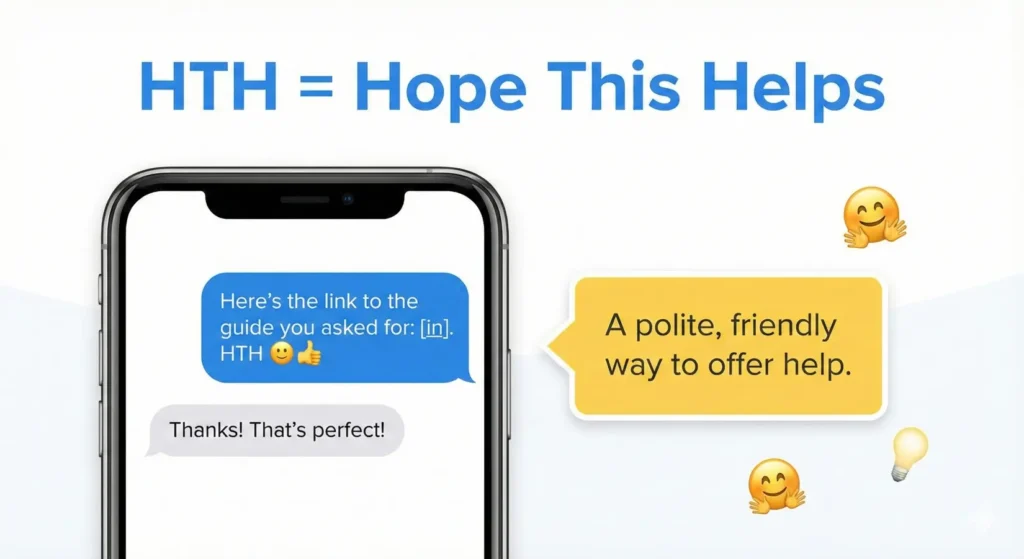
HTH stands for “Hope This Helps.”
People commonly use it after sharing information, giving instructions, or answering someone’s question. It’s a gentle closing phrase that suggests the sender genuinely hopes the information is useful.
Think of it as the shortened, more convenient version of:
- “Hope this helps!”
- “Hope this is useful!”
- “Hope this clears things up!”
It adds a warm and helpful tone, especially when you’re trying to be supportive or provide clarity.
Example Sentence
“You can find the settings under ‘Account > Privacy.’ HTH!”
This shows how it fits naturally at the end of a sentence when giving guidance.
In short:
HTH = Hope This Helps = a kind and polite way to offer helpful information.
📖 The Deeper Meaning Behind HTH
HTH is more than just an abbreviation. It reflects digital communication culture.
Here’s what it subtly communicates:
- 🤝 Willingness to help
- 😊 Politeness and kindness
- 🙌 Positive intent
- 💡 Offering guidance without pressure
It avoids sounding bossy. For example:
“Restart your phone.”
Sounds direct.
“Restart your phone. HTH!”
Sounds supportive.
That small addition changes the tone completely.
Where Is HTH Commonly Used?
HTH appears across many digital platforms, especially where people exchange information, tips, or instructions. It’s part of everyday internet language and fits well in both casual and semi-professional settings.
Here’s where you’ll most likely see it:
📱 Text Messages & DMs
Used between friends, family, classmates, or anyone sharing a useful tip or answer.
💬 WhatsApp, Messenger & iMessage
People end helpful replies with HTH to keep the tone friendly and polite.
🧵 Reddit & Online Forums
Very common in subreddits like tech help, hobbies, DIY, or academic communities.
📧 Emails (Semi-Formal)
In quick work chats or slightly informal emails, people may add “HTH” to end their explanation on a warm note.
💻 Facebook Groups
Especially in community or help-based groups where users share instructions.
🎮 Gaming Chats
Gamers sometimes use HTH to quickly give game tips or fixes without typing long sentences.
✨ Tone Level
- Casual: Perfect
- Friendly: Yes
- Polite: Definitely
- Professional: Acceptable, but not ideal for very formal communication
- Formal: ❌ Avoid (use the full phrase instead)

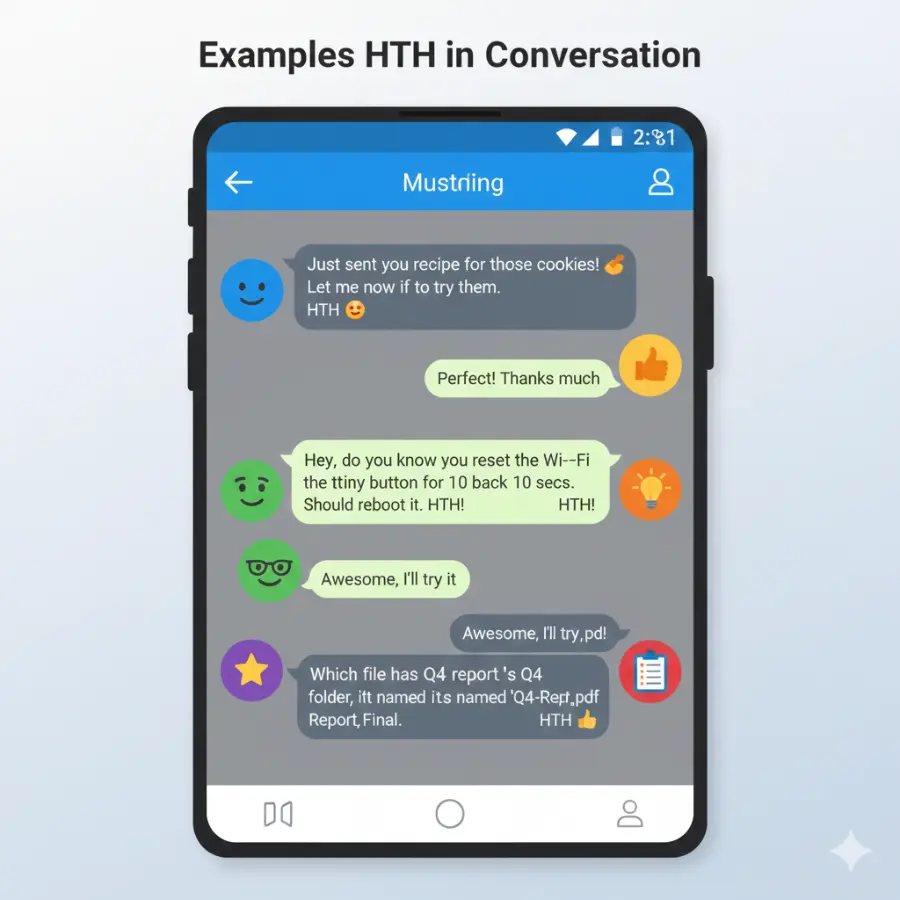
Examples of HTH in Conversation
Here are 7 realistic chat-style examples showing how people use HTH naturally in everyday texting. These examples mirror real texting formats—short, lowercase, and fast.
1. Tech Help
A: my mic isn’t connecting to zoom
B: go to settings > audio > input device. hth 👍
2. Schoolwork
A: do we have to submit the assignment tonight?
B: yeah, by 11:59 pm. hth!
3. Social Media Tips
A: how do i hide my tagged photos on fb?
B: privacy settings > timeline. hth 🙂
4. Shopping Advice
A: which power bank is good?
B: anker 20k is the best in budget. hth!
5. Gaming Chat
A: how do i level up fast in this game?
B: do daily missions first. hth 🙌
6. Travel Planning
A: what’s the cheapest way to go to lahore?
B: try the early morning bus. hth!
7. Work Group Chat
A: where do we update the project file?
B: shared drive > folder 3. hth!
🧾 HTH in Professional vs Casual Settings
While HTH works well in informal settings, it’s important to know its limits.
In Casual Settings
It fits perfectly in:
- Group chats
- Friendly workplace chats
- Student discussions
- Online help threads
Example:
“Try reinstalling the software. HTH!”
In Formal Emails
Instead of HTH, write the full sentence:
- “I hope this helps.”
- “Please let me know if this resolves the issue.”
- “I hope this information is useful.”
Writing it out sounds more professional and respectful.
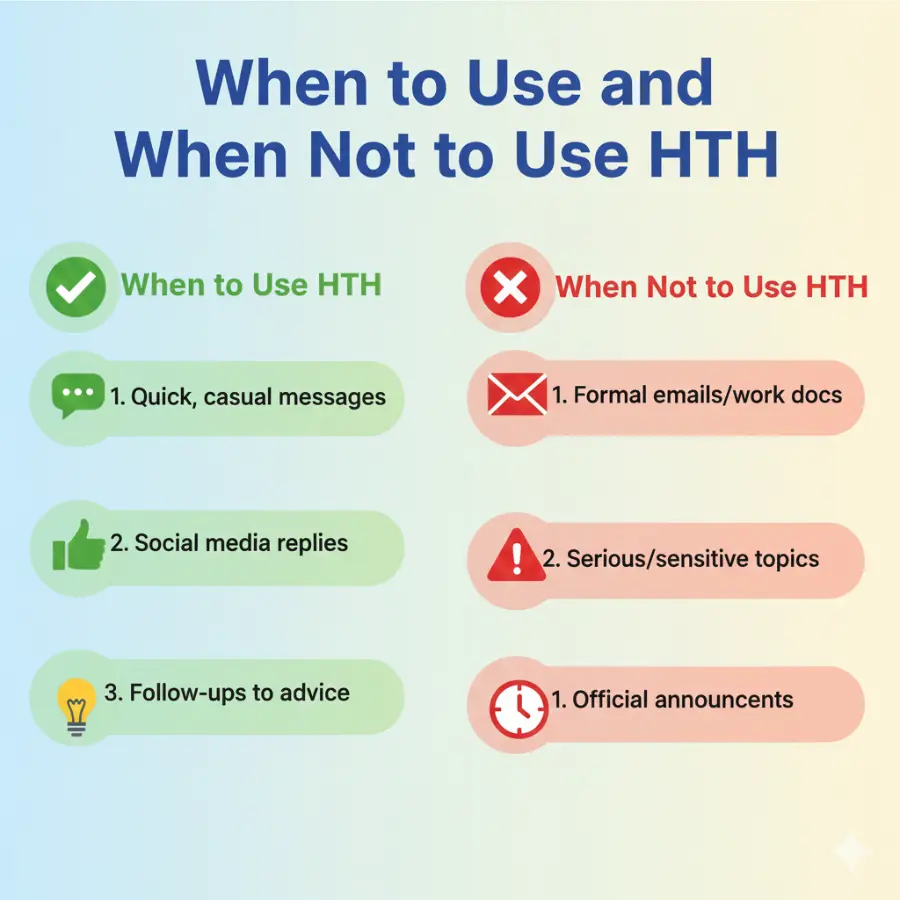
When to Use and When Not to Use HTH
Using HTH correctly can make your messages feel more positive and polite. But using it in the wrong context can make your message sound out of place—or even unintentionally sarcastic.
✅ When to Use “HTH”
- When giving tips, advice, or instructions
- When answering a question someone asked you
- When closing a helpful message on a friendly note
- In casual conversations
- In semi-professional chats, like workplace group messages
- When you want to sound warm, polite, and helpful
- In support groups, Q&A chats, or community discussions
❌ When NOT to Use “HTH”
- In serious or sensitive discussions (e.g., illness, emergencies)
- In very formal business emails
- When replying to a boss, client, or official request
- When giving urgent instructions
(“HTH” would feel too casual in emergencies.) - When the other person may not know internet slang
- When offering advice that might sound sarcastic
(e.g., giving “obvious” tips)
Comparison Table
| Context | Example Phrase | Why It Works |
|---|---|---|
| Friend Chat | “here’s the link you needed, hth 😄” | Friendly, warm, and casual |
| Work Chat | “Try clearing cache first. HTH.” | Polite yet concise; suitable for quick workplace tips |
| “Hope this helps with your request.” | Full wording sounds more professional | |
| Social Media | “restart the app and try again. hth!” | Informal, quick, and easy to understand |
| Support Groups | “check the pinned post for details, hth” | Encouraging and helpful |
| Classroom/Study | “chapter 5 covers that topic. hth 👍” | Helpful guidance for classmates |
Similar Slang Words or Alternatives
If you want to say something similar to HTH, these abbreviations and phrases work in different contexts.
| Slang / Phrase | Meaning | When to Use It |
|---|---|---|
| FYI | For your information | Sharing info that doesn’t require a response |
| LMK | Let me know | When you need an update or response from someone |
| IMO / IMHO | In my (honest) opinion | Sharing suggestions or personal advice |
| NP | No problem | Replying when someone thanks you |
| YW | You’re welcome | Polite follow-up after helping someone |
| TMI | Too much information | Used when someone overshares |
These alternatives help you switch tone depending on how formal, casual, or helpful you want to sound.
🧠 Why People Use HTH Instead of the Full Phrase
- Saves time
- Fits texting culture
- Looks clean and quick
- Matches informal tone
- Keeps conversation flowing
Digital communication favors speed and simplicity.
FAQs About HTH
1. Is HTH formal or informal?
It’s mostly informal, but still polite enough for team chats or friendly work messages.
2. Should I use HTH in work emails?
Only in casual or semi-formal situations.
For proper business emails, write:
“Hope this helps.”
3. Does HTH have any other meanings?
In texting and online chat, no.
It universally means “Hope This Helps.”
4. Is HTH rude or sarcastic?
Not usually.
But in some cases, if the advice is very obvious, it can sound unintentionally sarcastic. Tone matters.
5. Can I use HTH with strangers?
Yes — it’s polite, helpful, and widely understood online.
6. What should I reply to HTH?
Here are good options:
- “yes, it did—thanks!”
- “super helpful!”
- “got it, appreciate it!”
- “thank you!”
7. Is HTH used by all age groups?
Yes. It’s common among teens, adults, and professionals because it’s easy, helpful, and universal.
Final Thoughts
Now that you understand the HTH meaning in text, which is “Hope This Helps,” you can confidently recognize and use it in any conversation. This simple abbreviation adds a polite, friendly, and supportive tone when you’re offering advice or sharing useful information.
Knowing the HTH meaning (“Hope This Helps”) also makes your communication smoother—especially in texts, group chats, social media replies, and even semi-formal messages. And the next time someone sends “HTH,” you’ll instantly know they’re wishing you well and genuinely hoping their message was helpful. 😊💬

- I’m Casey Morgan, a writer who loves breaking down internet slang and modern lingo into simple, relatable explanations. I’ve spent years studying how digital communication shapes the way we talk. My goal is to make every confusing phrase easy to understand. When I’m not decoding trends, you’ll find me sipping coffee and browsing social media for the next viral term.