I still remember the first time I saw “IDRM” in a message. A friend asked where we should eat, and someone replied, “idrm.” I stared at it for a few seconds. Was it positive?
Was it annoyed? Or was it just another shortcut I had missed? If you’re here, you probably had the same moment of confusion.
Text slang can feel like a secret code. But once you break it down, it becomes simple and easy to use.
Quick Answer:
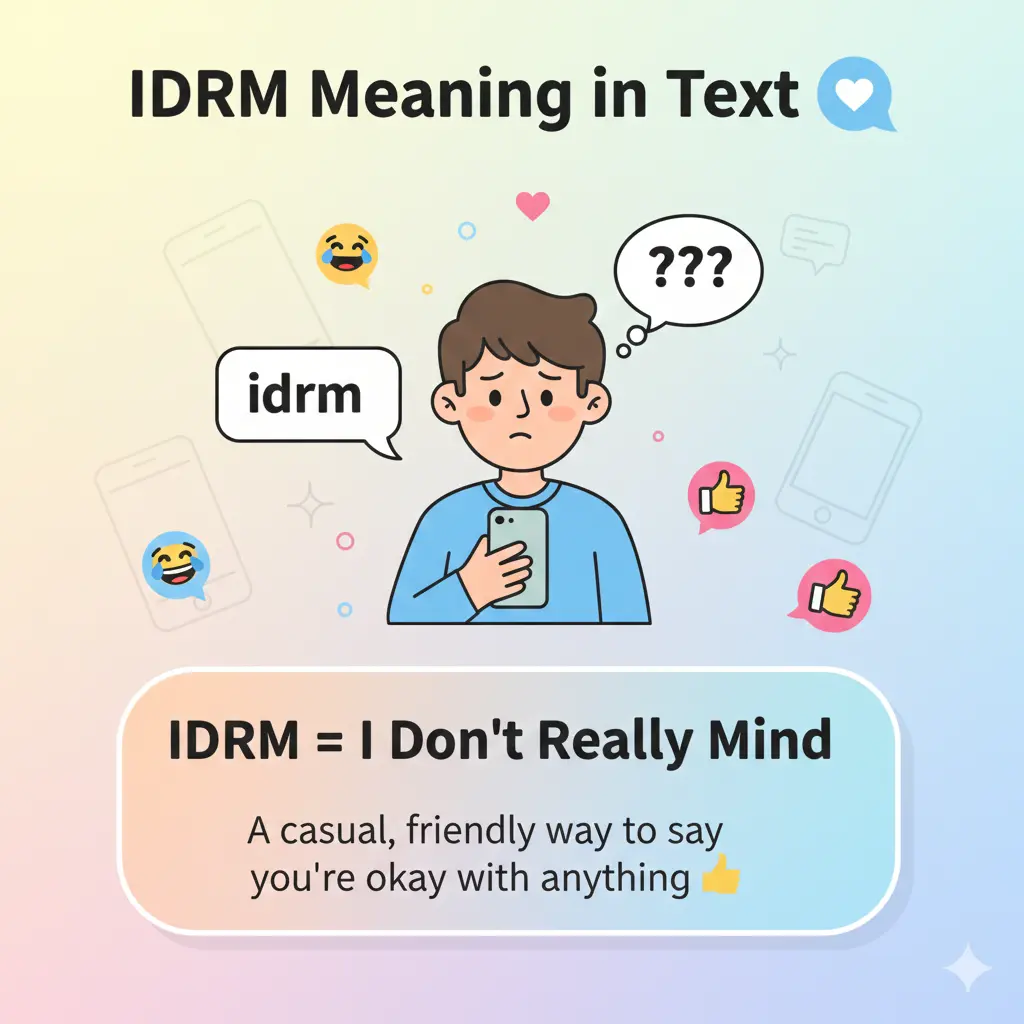
IDRM means “I Don’t Really Mind.” It’s a casual and relaxed way of saying you’re okay with something and don’t have a strong preference.
Now let’s explore its meaning, tone, psychology, and real-life usage in depth.
What Does IDRM Mean in Text?
IDRM stands for “I Don’t Really Mind.”
It’s used in texting, DMs, and social apps when someone genuinely has no preference and wants to show they’re easygoing. The tone behind IDRM is typically chill, casual, and cooperative — almost like saying, “I’m cool with whatever.”
This slang doesn’t express disinterest; instead, it signals agreement or willingness to go with the other person’s choice. People often use it when making plans, choosing between options, or responding to questions where any answer works.
Example sentence:
“idrm if we meet at 4 or 5, both are fine for me 😄”
In short:
IDRM = I Don’t Really Mind = I’m okay with anything / No strong preference.

Where Is IDRM Commonly Used?
You’ll mostly see IDRM in laid-back digital spaces where short chats and quick decisions happen. It’s especially common among teens, young adults, and people who enjoy using shorthand texting slang.
Here’s where you’ll typically see it:
- 📱 Text messages
- 🟣 Snapchat chats
- 💛 Instagram DMs
- 🔵 Facebook Messenger
- 🎮 Gaming chats (Discord, Xbox, PS messages)
- 🧑🤝🧑 Group chats
- 😏 Chill or flirty conversations
Formality Level:
- ✔ Casual
- ✔ Informal
- ✔ Friendly
- ✘ Not professional
- ✘ Not suitable for workplace emails
In short, use it with friends, siblings, partners, and people you’re comfortable with — not in business or serious discussions.

Examples of IDRM in Conversation
Let’s look at detailed, realistic chat situations.
Example 1: Making Plans
A: movie night or dinner out?
B: idrm 😄 both sound good
Here, B sounds easygoing and open.
Example 2: Changing Plans
A: sorry, can we reschedule?
B: idrm at all, no worries
This shows understanding and patience.
Example 3: Small Decisions
A: window seat okay?
B: idrm lol
It shows the seat choice is not important.
Example 4: Relationship Context
A: is it okay if I pick the restaurant?
B: idrm ❤️ surprise me
Here it feels sweet and trusting.
Example 5: Slightly Tired Tone
A: we might just stay home
B: idrm.
Without emoji, this can feel neutral or slightly low-energy.
Example 6: Group Chat Scenario
1st Friend : 7 pm or 8 pm?
2nd Friend : idrm
3rd Friend : 7 works for me
Friend 2 signals flexibility so the group can decide.

🧩 The Emotional Meaning Behind IDRM
Slang often carries emotional signals. IDRM reflects personality traits like:
- Easygoing attitude
- Low conflict preference
- Flexibility
- Cooperation
However, overusing IDRM can make someone seem passive. If you always say IDRM, people may think you lack opinions.
Balance is important.
Sometimes it’s better to state a preference clearly.
Instead of: “idrm.”
You could say: “I prefer 6, but 7 is fine too.”
That sounds engaged and considerate.
When to Use and When Not to Use IDRM
Using IDRM correctly makes your messages sound natural and relaxed — but using it in the wrong context might make you seem unprofessional or unclear.
✅ When to Use “IDRM”
Use it when you want to show:
- You’re not picky
- You’re okay with any choice
- The situation is casual
- You trust the other person to choose
- You want to keep things friendly
- You’re trying to avoid conflict
Best moments to use IDRM:
- Picking food or restaurants
- Choosing timing for plans
- Deciding movie options
- Casual daily chats
- Group planning among friends
❌ When Not to Use “IDRM”
Avoid using it when:
- Speaking to a boss or teacher
- Writing a work email
- Responding to a serious question
- Someone genuinely needs a specific answer
- A mistake could cause confusion
- The topic is urgent or important
If someone needs clarity, IDRM might make you seem unsure or careless.

Comparison Table
| Context | Example Phrase | Why It Works |
|---|---|---|
| Friend Chat | “No rush, idrm 😄” | Matches a friendly, relaxed vibe |
| Work Chat | “Take your time.” | Polite and professional |
| “Please review when convenient.” | Clear and formal | |
| Relationship Chat | “idrm babe, whatever u want 💛” | Soft, sweet, flexible tone |
| Group Chat | “idrm where we go, just update me” | Shows cooperation |
| Gaming Chat | “idrm map, pick any” | Fits fast-paced gaming style |
Similar Slang Words or Alternatives
If you like the tone of IDRM, here are other slang options with similar meaning. Use them depending on the mood of the conversation:
| Slang | Meaning | When to Use |
|---|---|---|
| IDK | I Don’t Know | When you’re unsure, not undecided |
| IDC | I Don’t Care | When you have zero preference (more blunt) |
| UTU | Up To You | When you want the other person to decide |
| TBH | To Be Honest | When giving a true or casual opinion |
| LMK | Let Me Know | When waiting for someone else’s choice |
| EITHER | Either is fine | Natural, warm alternative without slang |
| WHATEVS | Whatever | Super casual, playful, sometimes sarcastic |
These alternatives help you match the tone to the person you’re texting — friendly, serious, sweet, or casual.
Important Difference: IDRM vs IDC
- IDRM sounds softer.
- IDC can sound cold or uninterested.
If you want to avoid sounding rude, IDRM is the better choice.
FAQs About IDRM
1. Is IDRM a rude slang?
Not at all. It’s actually polite and flexible. It shows you’re okay with any option and not trying to control the decision.
2. Does IDRM mean “I don’t care”?
No — and that’s important.
IDC = I Don’t Care (direct)
IDRM = I Don’t Really Mind (friendly)
They are not the same emotionally.
3. Can you use IDRM in flirting?
Yes! If someone wants you to choose and you reply with something like:
“idrm, whatever u want 😉”
…it can come across as cute, sweet, or flirty.
4. Is IDRM commonly used?
It’s not as universal as LOL or IDK, but it’s becoming increasingly popular among teens, Gen Z, and gamers.
5. Is IDRM appropriate for work?
Not recommended. Instead use:
“Either option works for me.”
or
“I’m flexible with the timing.”
6. What’s a nicer alternative to IDRM?
“Up to you, I’m good with anything 😊”
This sounds friendly and warm while avoiding slang.
7. Can IDRM be misunderstood?
Yes — if someone thinks you’re being passive or uninterested. If the decision is important, it’s better to be clear.
Final Thoughts
Understanding IDRM meaning in text makes chatting online much easier and more fun. This simple slang — “I Don’t Really Mind” — helps you communicate flexibility and friendliness without typing a long response. It’s perfect for casual conversations, choosing plans, or showing you’re easygoing.
Remember, IDRM is casual and best for friends, social media, and relaxed messaging. Using it correctly shows that you’re approachable and laid-back, while avoiding it in formal or serious contexts keeps your communication clear. Next time you see IDRM in a chat, you’ll instantly know it means: “I’m good with whatever you decide!”

I’m Emma Collins, a writer passionate about decoding slang, emojis, and the ever-changing language of the internet. I enjoy turning confusing phrases into clear, easy-to-understand explanations. My mission is to help readers stay in the loop with today’s digital lingo. When I’m not writing, I love exploring social media trends and chatting with friends about new expressions. I’m here to make learning modern language fun and simple!