We’ve all been there—you send a long message, pour out effort, explain everything clearly… and the guy replies with just “k.”
No emoji.
No punctuation.
Just one tiny alphabet that somehow feels louder than a whole paragraph.
If you’ve ever stared at your screen thinking, “Wait… what does k even mean here?” — you’re not alone. This one-letter reply has confused millions of texters because its meaning depends heavily on tone, mood, and context.
The mystery behind “k” is that it’s not just a simple “okay.” It can carry hidden emotions, from annoyance to indifference, or sometimes just laziness. Understanding it can save you a lot of overthinking and awkward texting moments.
Quick Answer:
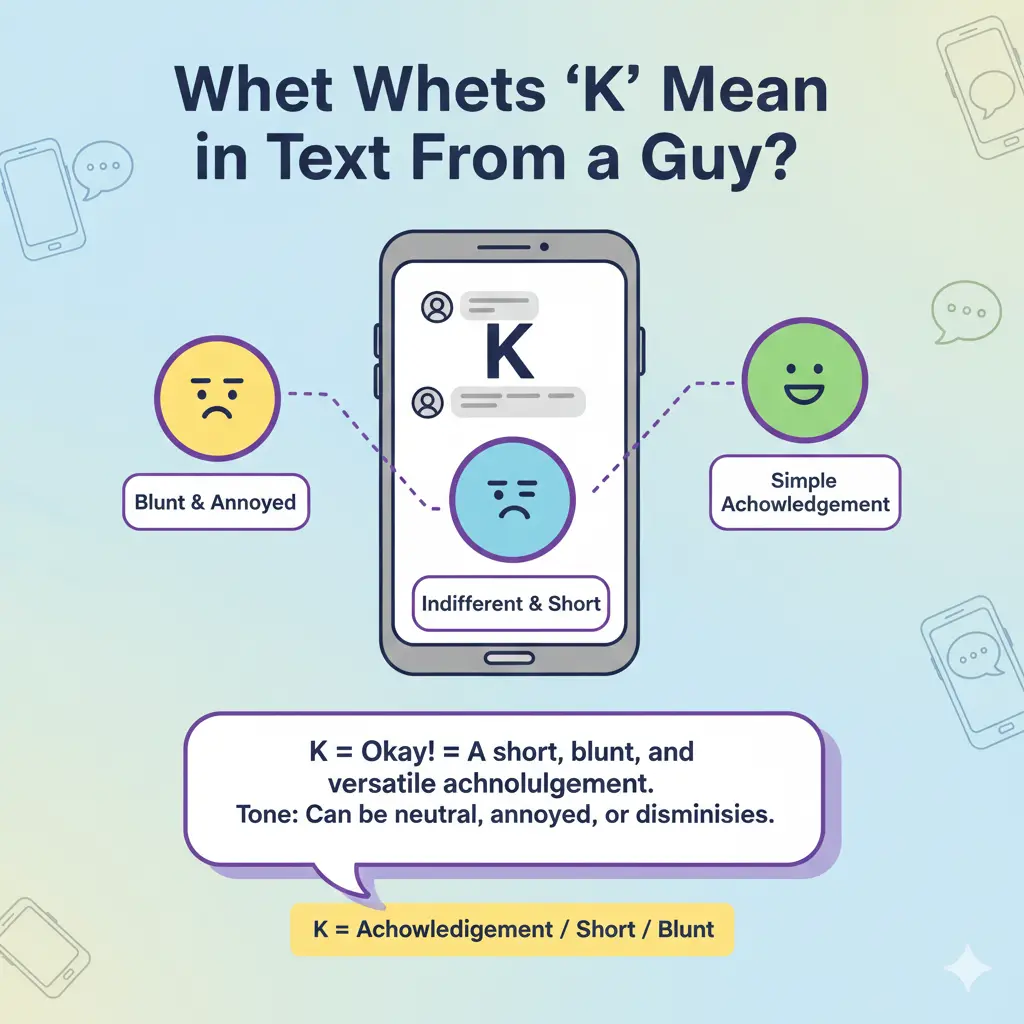
When a guy texts “K,” it usually means “okay,” but in a short, dry, annoyed, or dismissive way. It can also mean he’s done talking, busy, or not in the mood to chat.
🧠 What Does “K” Mean in Text From a Guy?
“K” is the super-short version of “okay.” Unlike “ok,” “okay,” or “kk,” the single letter often carries a colder or more irritated tone, especially when coming from a guy.
It can mean:
- He’s acknowledging your message.
- He doesn’t feel like continuing the conversation.
- He’s annoyed, upset, or bored.
- He wants to keep the reply short on purpose.
Example:
You: “I might be late, stuck in traffic.”
Him: “k”
That little “k” feels like a mix of “fine,” “whatever,” and “noted.”
In short:
“K” = “Okay” = A short, blunt, and often annoyed acknowledgement.
📱 Where Is “K” Commonly Used?
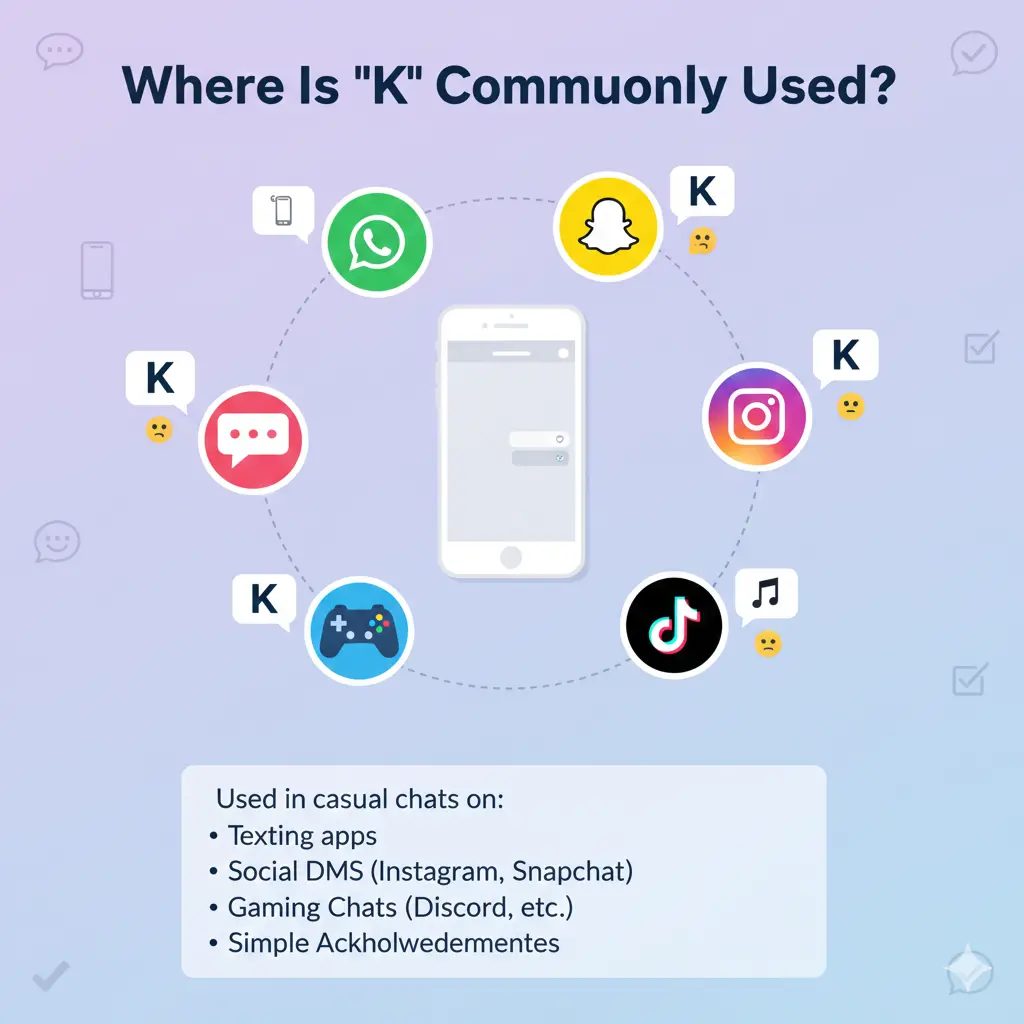
You’ll usually see “K” in:
- 📱 Text messages
- 💬 WhatsApp chats
- 👻 Snapchat conversations
- 🧵 Instagram DMs
- 🎮 Gaming chats (quick acknowledgement)
- TikTok comment replies
- Discord private messages
Tone level:
- ❌ Not formal
- ❌ Not professional
- ⚠️ Casual
- ⚠️ Often negative or distant
- ✔ Useful for quick replies in fast-paced chats
Sometimes, people also use “K” sarcastically or passive-aggressively to subtly express irritation without writing a full message. This is why context matters so much.
💬 Examples of “K” in Conversation
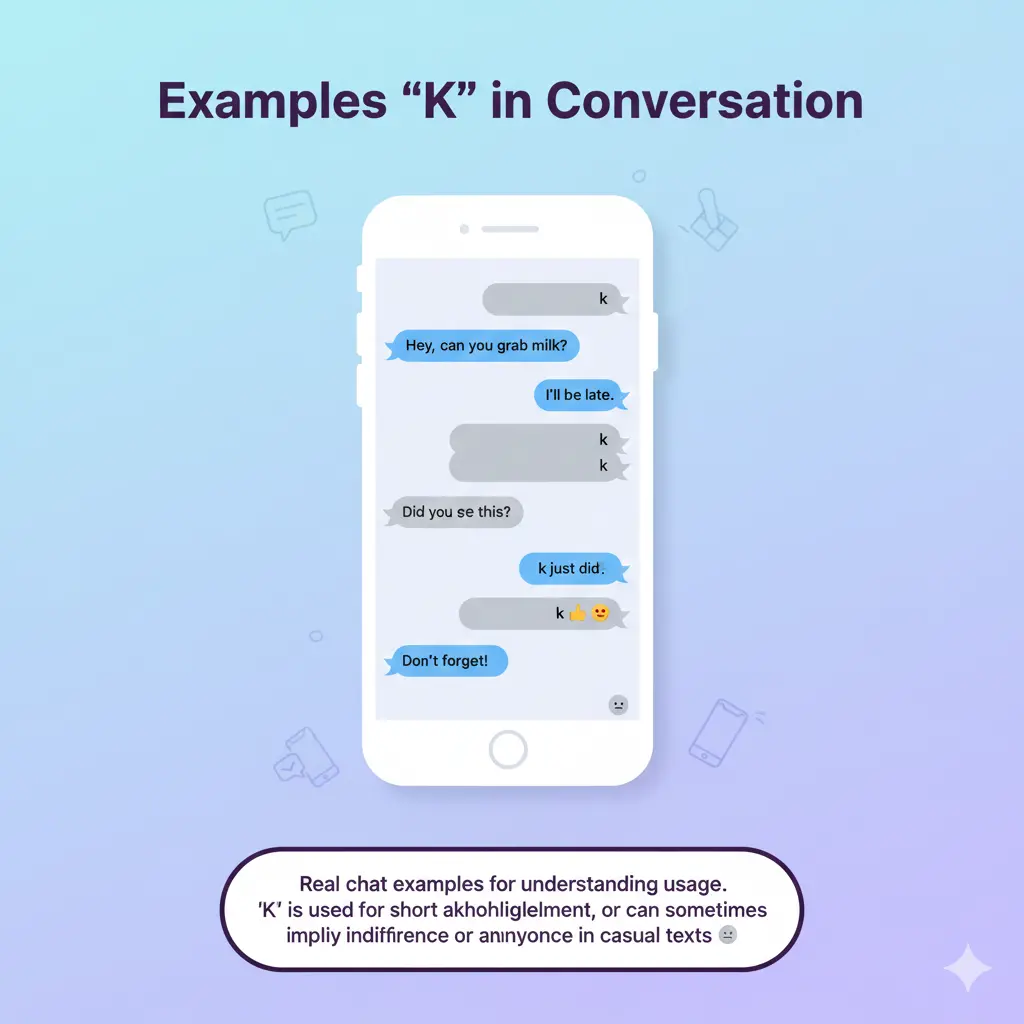
Here are realistic chat examples showing how guys use “K”:
1.
A: “I’ll text you later, super busy rn.”
B: “k”
2.
A: “Did you see my message above?”
B: “k just did”
3.
A: “I’m going out with friends tonight.”
B: “k”
4.
A: “Can you send me the notes?”
B: “k will do”
5.
A: “Sorry if I annoyed you earlier.”
B: “k”
6.
A: “We need to talk later.”
B: “k”
7.
A: “I can’t make it today.”
B: “k ig”
Notice how tone and context change the interpretation. In a playful conversation, “k” may be neutral. In a serious or emotional conversation, it can feel dismissive.
🕓 When to Use and When Not to Use “K”
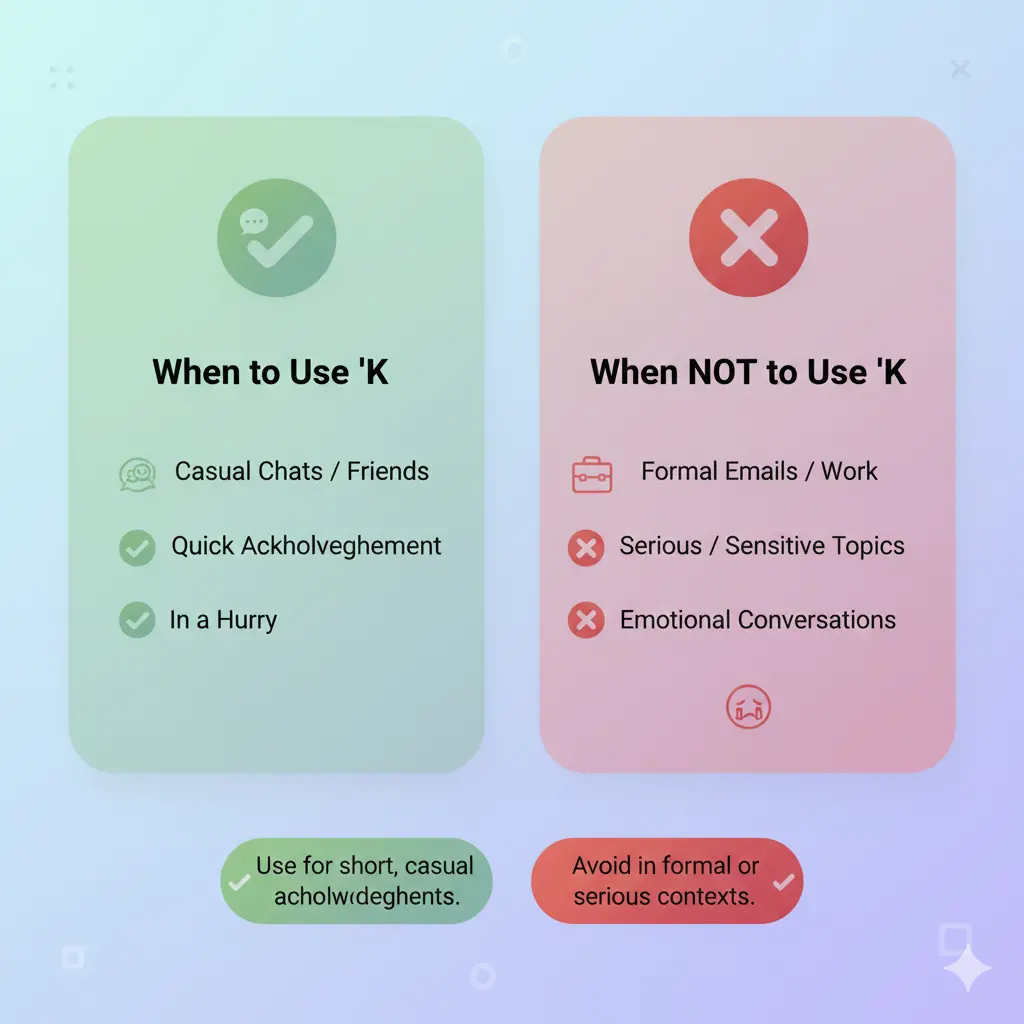
✅ When You Can Use “K”
- When the conversation doesn’t need a long reply
- When you’re in a hurry
- When chatting casually with a close friend
- When the topic is light and informal
- When both people normally use short replies
- When you want to quickly acknowledge a message without adding emotion
❌ When You Shouldn’t Use “K”
- When someone might take it as rude
- In serious or emotional conversations
- In professional or work messages
- When someone wrote a long, thoughtful text
- When you’re trying to sound caring or supportive
- When you want to keep the conversation warm and engaging
Comparison Table
| Context | Example Phrase | Why It Works |
|---|---|---|
| Friend Chat | “No worries, k 😄” | Casual & clearly not rude |
| Work Chat | “Okay, noted.” | Polite & professional |
| “Please confirm once reviewed.” | Formal & clear | |
| Dating Chat | “Okay!” or “Alright 👍” | Shows interest & warmth |
| Serious Discussion | “I understand.” | Mature & emotionally safe |
| Group Chat | “k everyone” | Quick, acknowledges multiple people |
🔄 Similar Slang Words or Alternatives
| Slang | Meaning | When to Use |
|---|---|---|
| OK | Neutral “okay” | Everyday chats, polite replies |
| Okay | Fully spelled-out acknowledgment | Friendly or warm conversations |
| kk | “Okay cool” / “got it” | Playful, casual texting |
| Sure | Agreement or confirmation | When you want to sound positive |
| Alright | Calm acknowledgment | For polite, steady conversations |
| Bet | “Okay” with confidence | Gaming, friends, hype tone |
| Got it | Confirmation or understanding | Professional or casual chats |
Using alternatives can soften the tone and prevent misunderstandings. For instance, “kk” feels lighthearted, while “k” can seem blunt.
❓ FAQs About “K”
1. Is “k” rude?
Often yes. Many people read it as annoyed, uninterested, or dismissive.
2. Does “k” mean he’s mad?
Not always — but if the tone of the conversation changed, it might mean he’s irritated or done talking.
3. Is “k” different from “kk”?
Yes!
- “kk” is friendly.
- “K” is blunt, neutral, or annoyed.
4. What does it mean if a guy always replies “k”?
He might be:
- Busy
- A dry texter
- Not very expressive
- Annoyed
- Not into texting much
5. What should I reply when he says “k”?
You can keep it simple:
- “Alright 👍”
- “Got it”
- “Cool”
Or if the tone feels off, check in with:
- “Everything okay?”
- “You seem quiet, is everything alright?”
6. Is it okay to use “k” with your boyfriend?
Yes, but only if he understands your texting style and doesn’t misinterpret it. Couples often develop their own shorthand, so context matters.
7. Can “k” be flirty?
Rarely, but in playful conversations, a guy may use “k” teasingly. Usually, he’ll follow up with an emoji or witty remark to soften the tone.
8. Why do some guys always text “k” instead of words?
Some people are naturally minimalist texters, prioritizing speed over warmth. Others might not be comfortable expressing emotions through text.
Final Thoughts
While “k” may seem short, cold, or even irritating, it’s simply a texting habit for many guys. Understanding the tone, context, and your relationship with the sender is key to interpreting it correctly.
Next time a guy texts “k,” pause and consider:
- Is he busy?
- Is he annoyed?
- Is he just keeping it short?
And remember: sometimes, it’s just “k,” nothing more, nothing less.
Mastering these tiny texting nuances will save you overthinking, misreading emotions, and unnecessary stress.

- I’m Casey Morgan, a writer who loves breaking down internet slang and modern lingo into simple, relatable explanations. I’ve spent years studying how digital communication shapes the way we talk. My goal is to make every confusing phrase easy to understand. When I’m not decoding trends, you’ll find me sipping coffee and browsing social media for the next viral term.