You’re scrolling through your messages late at night, catching up on missed chats, when you suddenly spot a reply that says, “sorry I was MIA.”
For a moment, you stop and wonder what it really means. Were they upset? Ignoring you? Or just busy? If you’ve ever felt confused by this short phrase, you’re definitely not alone.
Text slang changes quickly, and terms like MIA appear everywhere, from everyday texting to Instagram captions and TikTok comments.
Because people use it so casually, asking for an explanation can feel awkward. That’s why understanding common slang matters.
Quick Answer:
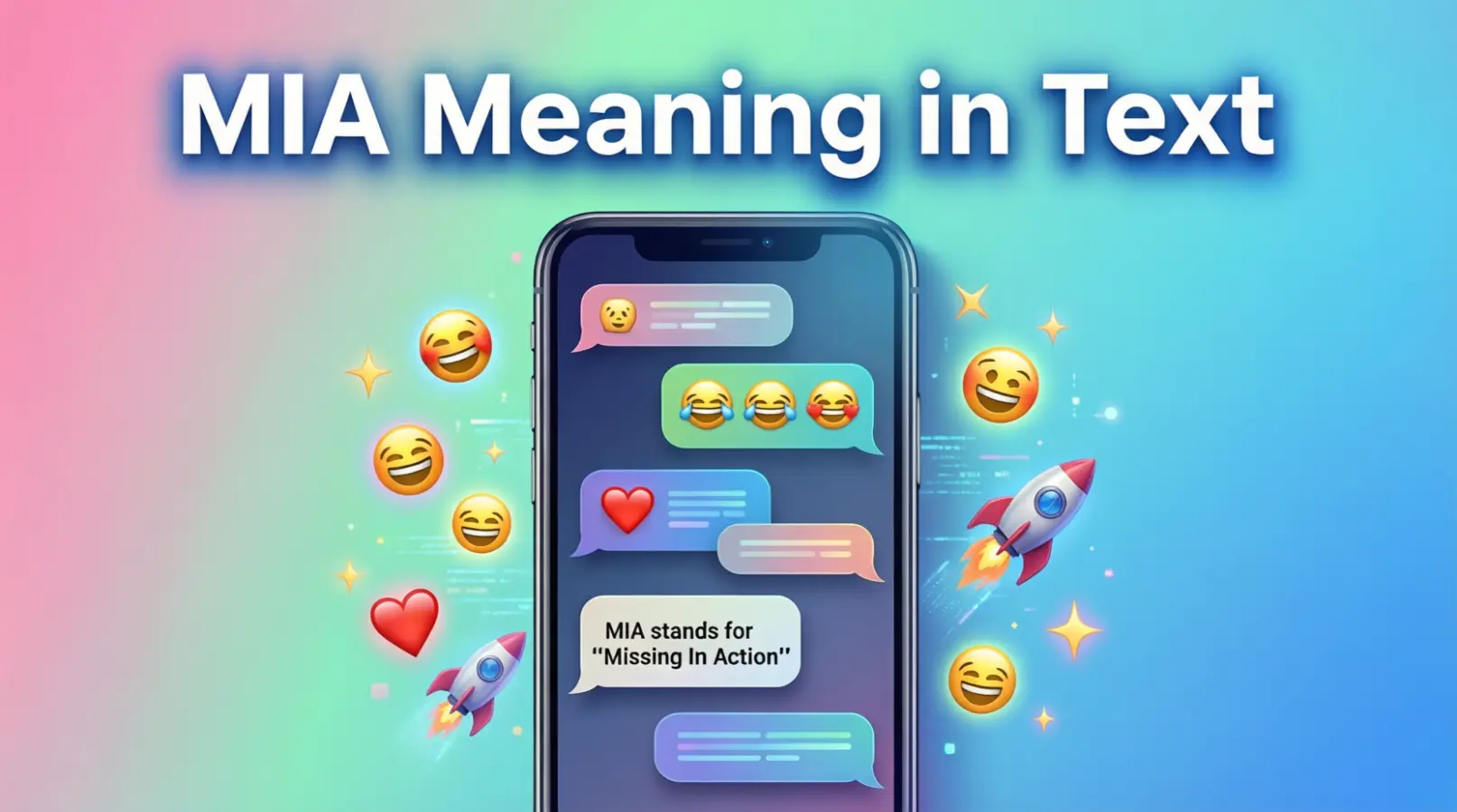
MIA means “Missing In Action.” It’s a casual and friendly way of saying someone was unavailable, inactive, or not replying for some time.
This guide will clearly explain the MIA meaning in text, how it’s used, and when it’s appropriate in conversations.
🧠 What Does MIA Mean in Text?
The MIA meaning in text comes from the phrase “Missing In Action.” While the term originally had a serious military meaning, its modern texting use is much lighter and informal.
In everyday chats, MIA simply means someone was absent, busy, offline, or not responding. It’s often used as an explanation rather than an excuse and usually comes with a relaxed or apologetic tone.
People like using MIA because it sounds natural and doesn’t require a long explanation.
Simple example:
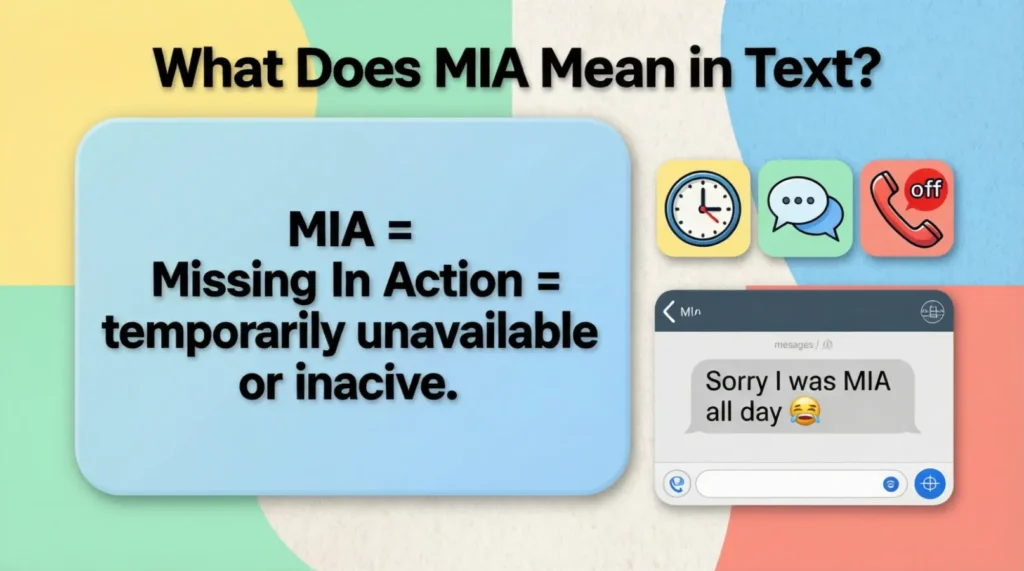
“Been MIA all day, just saw your message.”
This tells the other person you weren’t ignoring them—you were just unavailable.
In short:
MIA = Missing In Action = temporarily unavailable or inactive
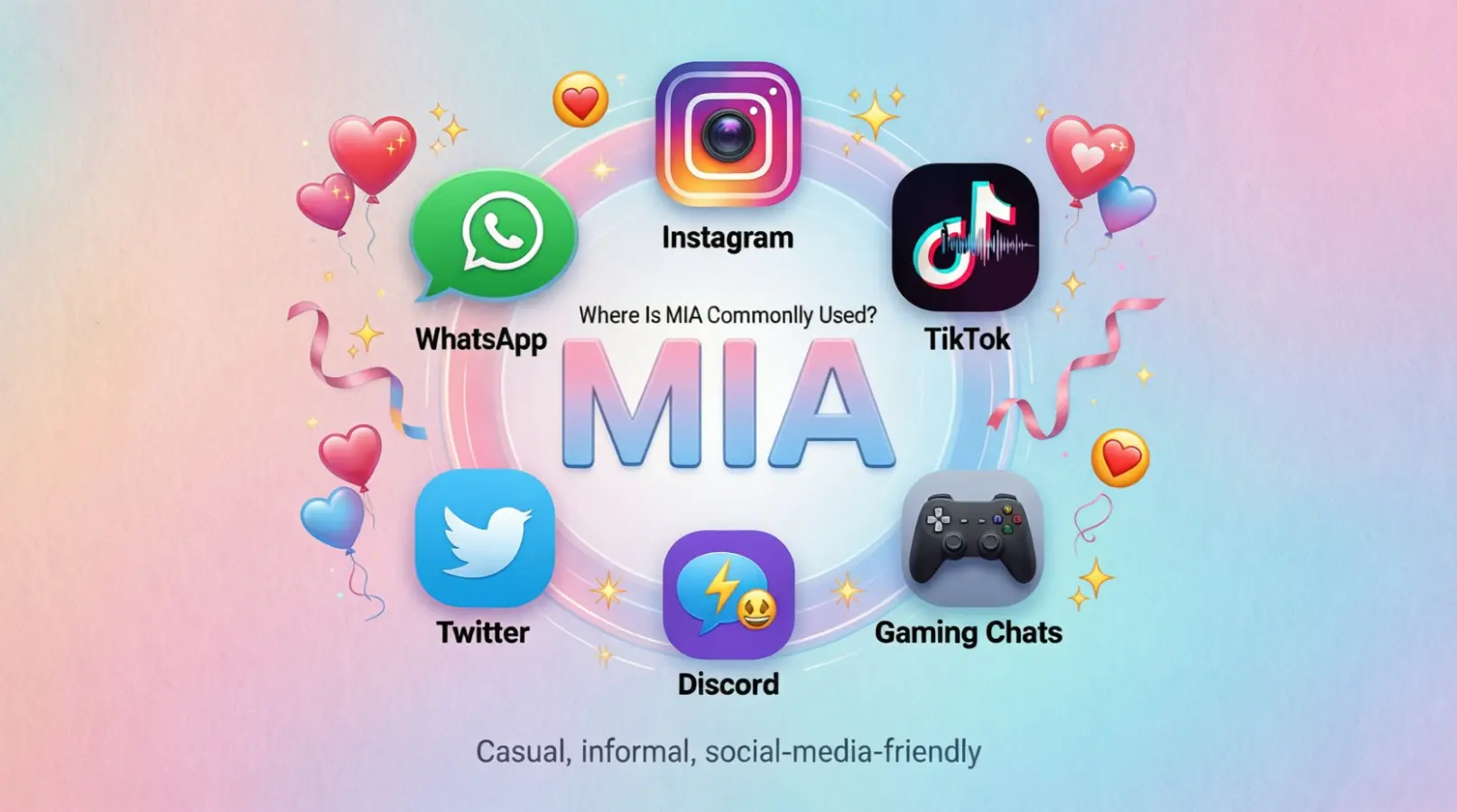
📱 Where Is MIA Commonly Used?
The slang MIA is widely used across digital platforms, especially where casual language is normal.
You’ll most often see it on:
- 💬 Text messages & WhatsApp chats
- 📸 Instagram DMs, captions, and stories
- 🎵 TikTok comments
- 🧵 Twitter/X posts
- 🎮 Gaming chats and Discord servers
🔹 Tone: Casual, friendly, sometimes playful
🔹 Formality: Informal
🔹 Best suited for: Friends, online followers, casual groups
Because it’s relaxed slang, MIA fits perfectly in social media and personal chats—but not in professional or official communication.
💬 Examples of MIA in Conversation
Here are realistic and natural chat examples showing how MIA is actually used:
1 Example
A: you vanished yesterday
B: haha yeah sorry I was mia 😅
2 Example
A: thought you forgot about me
B: never! just went mia for a bit
3 Example
A: why no posts lately
B: been mia, life got busy
4 Example
A: where you at
B: my bad, was mia all weekend 💤
5 Example
A: you alive?
B: lol yes just mia today
6 Example
A: no replies since morning
B: sorryyy mia at work 😩
7 Example
A: you ghosted
B: nah just mia, promise
These examples show that MIA is usually paired with emojis, humor, or apologies to keep the tone light.
🕓 When to Use and When Not to Use MIA
Knowing when to use MIA is just as important as knowing what it means.
✅ When to Use MIA
- Casual conversations with friends
- Explaining late replies
- Social media captions like “been MIA lately”
- Gaming or group chats
- Informal apologies
❌ When Not to Use MIA
- Work emails or professional chats
- Client or business communication
- Serious discussions
- Emergency or urgent situations
📊 Context Comparison Table
| Context | Example Phrase | Why It Works |
|---|---|---|
| Friend Chat | “sorry I was mia 😄” | Relaxed and friendly |
| Group Chat | “been mia today, busy” | Casual explanation |
| Work Chat | “Sorry for the delayed response.” | Professional tone |
| “Apologies for the late reply.” | Clear and formal |
Using MIA in the wrong setting can sound careless, so always match it to the situation.
🔄 Similar Slang Words or Alternatives
If you want alternatives to MIA, here are popular slang terms with similar meanings:
| Slang | Meaning | When to Use |
|---|---|---|
| AFK | Away from keyboard | Gaming chats |
| Ghosted | Suddenly stopped replying | Emotional or dramatic contexts |
| BRB | Be right back | Short absences |
| Offline | Not active | Neutral situations |
| Disappeared | Went silent | Casual conversations |
| On mute | Notifications off | Social chats |
Each slang term has a slightly different tone, but MIA remains one of the most widely accepted and flexible options.
❓ FAQs About MIA Meaning in Text
What does MIA mean in text messages?
It means Missing In Action, used to say you were unavailable or inactive.
Is MIA a negative term?
No. In texting, it’s neutral or friendly, not negative.
Can MIA sound flirty?
Yes, depending on tone. Adding emojis can make it playful or teasing.
Is MIA the same as ghosting?
No. Ghosting implies ignoring someone intentionally, while MIA suggests temporary absence.
Can I use MIA on Instagram or TikTok?
Absolutely. It’s very common in captions and comments.
Is MIA okay for work chats?
No. It’s better to use professional wording instead.
Final Thoughts
Now that you fully understand the MIA meaning in text, it’s clear that MIA stands for “Missing In Action” and is simply a casual way to say someone was unavailable, inactive, or not responding for a while. It’s not rude, serious, or negative—just an easy, friendly explanation for going quiet.
As long as you use MIA in informal chats, social media, or with friends, it fits perfectly. Just remember to avoid it in professional or formal situations. With the right tone, MIA helps keep conversations relaxed, honest, and natural.

I’m Emma Collins, a writer passionate about decoding slang, emojis, and the ever-changing language of the internet. I enjoy turning confusing phrases into clear, easy-to-understand explanations. My mission is to help readers stay in the loop with today’s digital lingo. When I’m not writing, I love exploring social media trends and chatting with friends about new expressions. I’m here to make learning modern language fun and simple!