Have you ever been scrolling through your messages or TikTok comments and stumbled upon “OD” and thought, “Wait… what does that even mean?” You’re not alone! It can be super confusing the first time you see it, especially when it’s thrown into a casual chat or meme. 🤯
It all started for me when a friend texted, “You’re ODing 😂” after I sent ten memes in a row. At first, I panicked, thinking it was serious. But soon, I realized it was just a fun way to say I was “overdoing it.”
Quick Answer: OD means “Overdo” or “Overdoing it” in texting language. It’s a friendly, playful way to point out when someone is being extra about something, like excitement, drama, or effort.
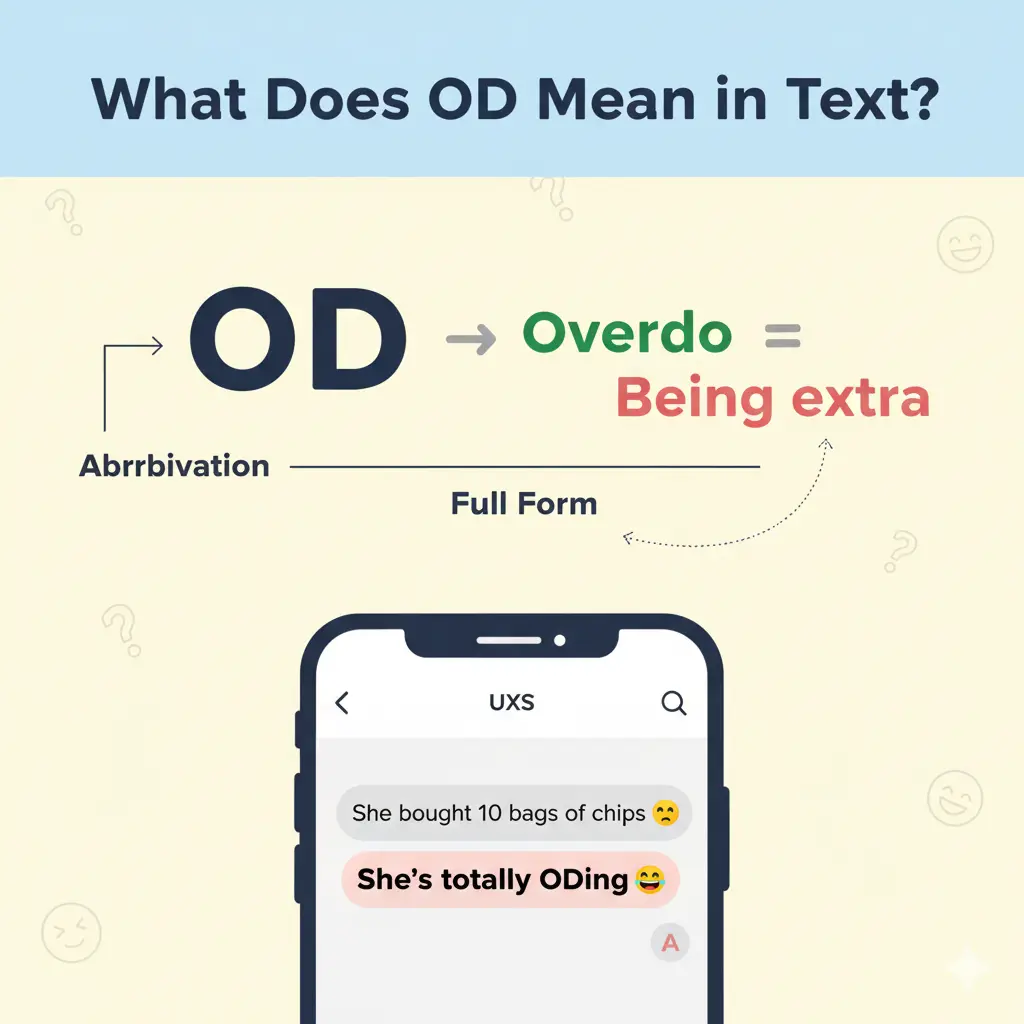
What Does OD Mean in Text?
In texting or social media, OD is slang for “Overdo” or “Overdoing it.” It’s used to describe someone who is going a little too far, whether that’s in their actions, reactions, or posts. Think of it as a casual nudge saying, “Whoa, slow down a bit!”
Example:
- A: “She bought 10 bags of chips for the party 😅”
- B: “Wow, she’s totally ODing 😂”
It can also reflect humor or exaggeration: you’re not literally criticizing someone; you’re just pointing out their over-the-top behavior.
In short: OD = Overdo = Being extra or over the top.
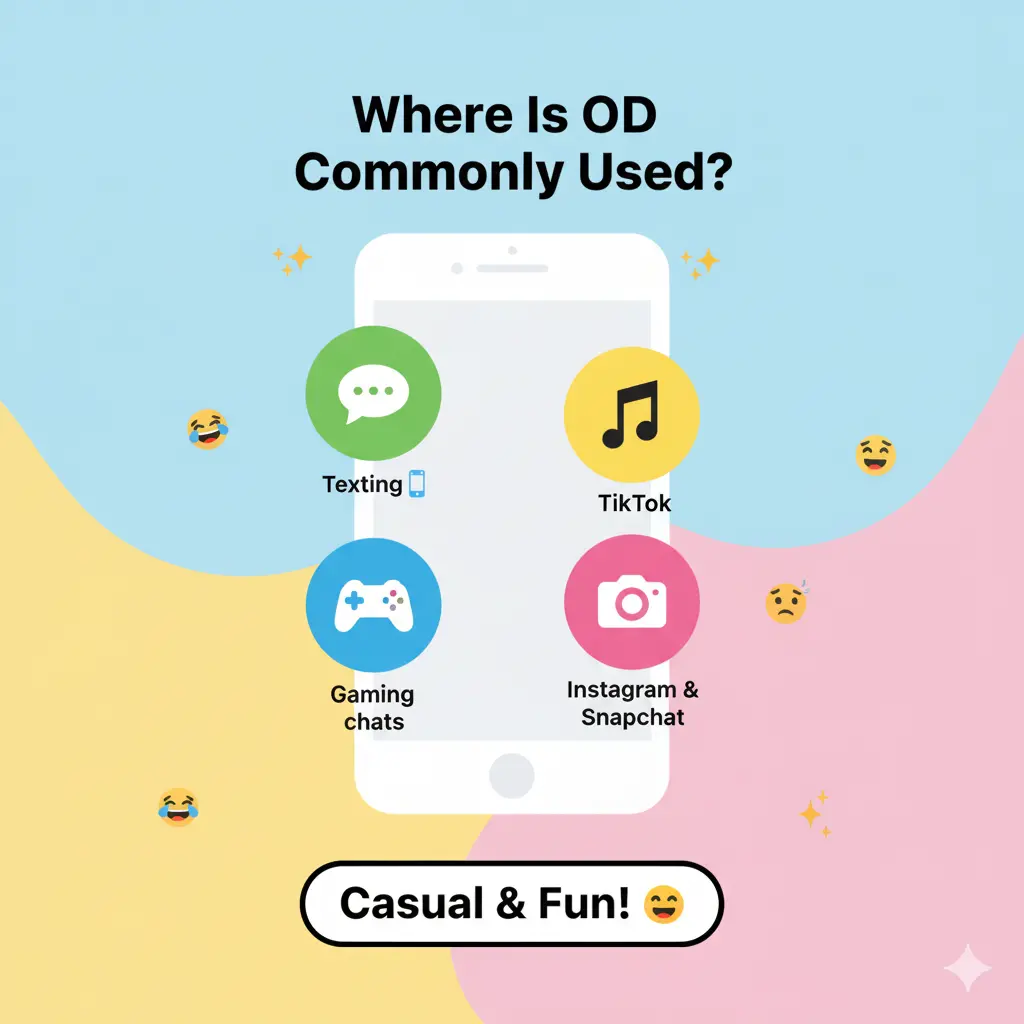
Where Is OD Commonly Used?
OD is everywhere in casual texting and online conversations. Here’s where it’s popular:
- 📱 Texting: Between friends or family when joking
- 🎵 TikTok: Comments on videos that are dramatic, funny, or excessive
- 🎮 Gaming chats: Reacting to intense or over-the-top gameplay
- 📸 Instagram & Snapchat: When someone posts too much content at once
- 💬 Discord or WhatsApp groups: Joking about someone’s enthusiasm or actions
Tone: Always casual and playful. Avoid using OD in emails, formal chats, or professional settings because it’s slang and can be misunderstood.
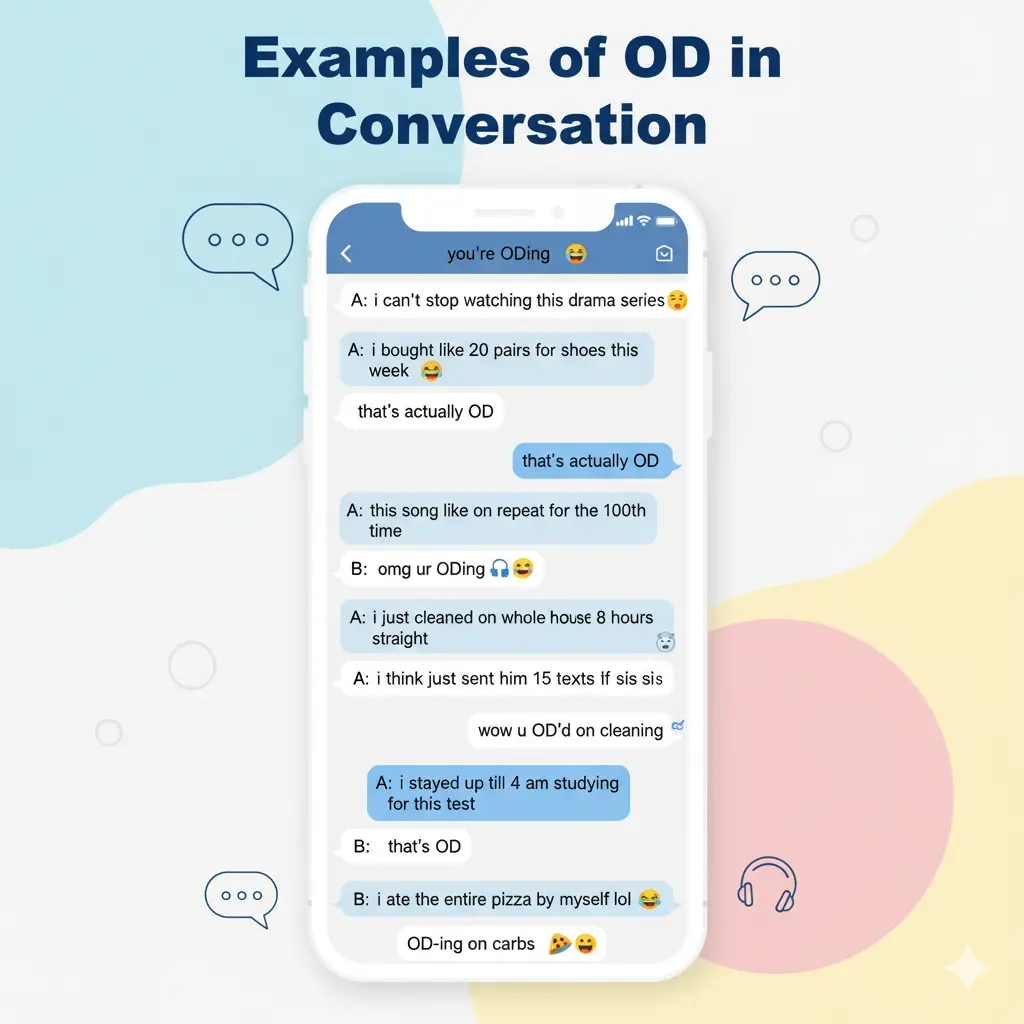
Examples of OD in Conversation
Here are some realistic examples of how OD is used in texting or social media:
- A: “He bought 5 birthday cakes 😳”
B: “He’s ODing lol” - A: “I can’t stop watching this drama series 😩”
B: “You’re ODing 😆” - A: “She’s posting her breakfast again 🥐”
B: “OD much?” - A: “I just did 100 push-ups 😅”
B: “Wow, OD!” - A: “He bought 3 different shoes for one outfit 👟👟👟”
B: “Totally ODing 😂” - A: “I’ve been texting her nonstop 😬”
B: “OD alert!” - A: “She’s literally sending 20 selfies in one chat 😭”
B: “That’s OD for sure 😅”
The key thing to remember is that OD is lighthearted and joking, not meant to be harsh criticism.
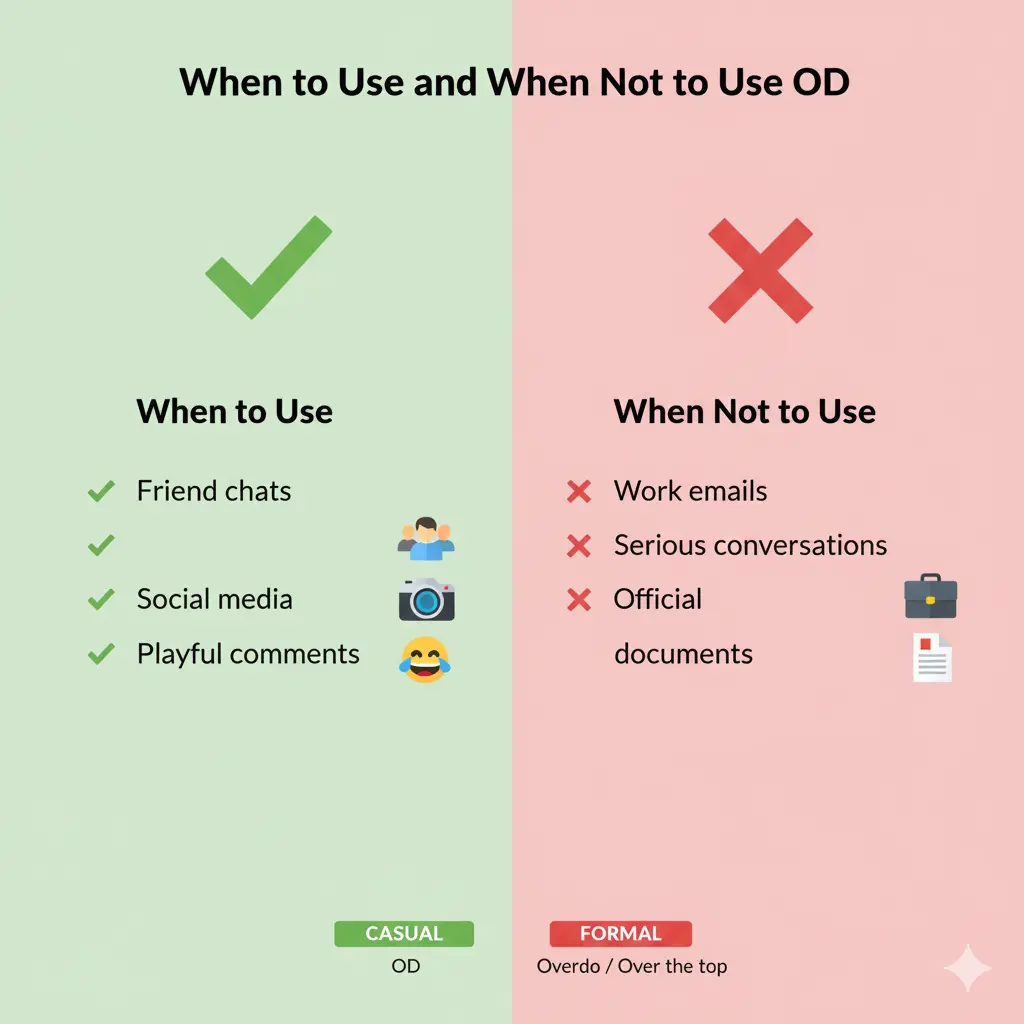
When to Use and When Not to Use OD
✅ When to Use:
- Friendly chats with friends
- Commenting on funny or “extra” social media posts
- Reacting to excitement, drama, or over-the-top actions
- Group chats where informal slang is common
❌ When Not to Use:
- Professional emails or work chats
- Serious or urgent situations
- Conversations where clarity and respect are required
- Any context where slang could be misunderstood
| Context | Example Phrase | Why It Works |
|---|---|---|
| Friend Chat | “No way, you’re ODing 😄” | Casual & friendly |
| Work Chat | “Please take your time.” | Polite & professional |
| “Kindly review the document.” | Formal & clear | |
| TikTok Comment | “This is OD 😂” | Short, casual, relatable |
| WhatsApp Group | “She’s ODing with excitement 😅” | Funny & playful |
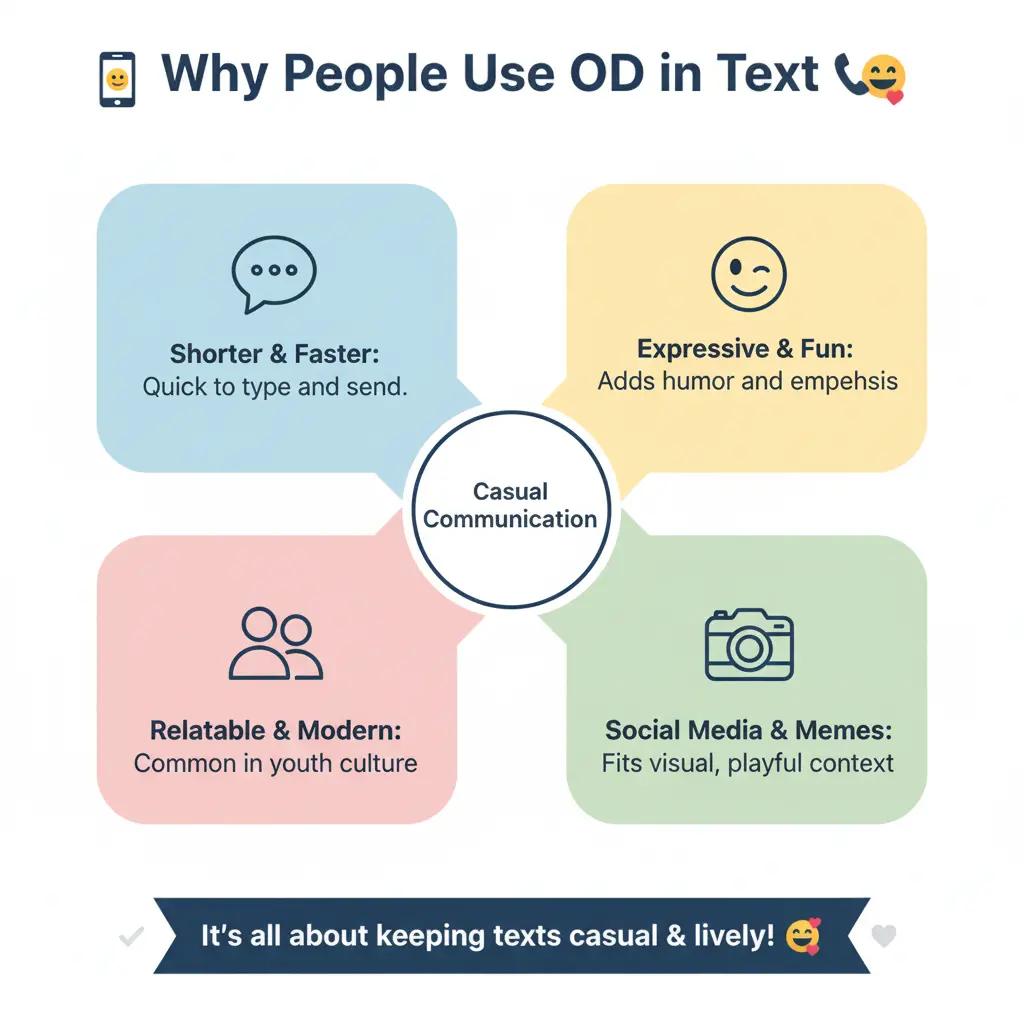
Why People Use OD in Text
OD is popular because it’s short, expressive, and relatable. People love slang that:
- Saves time typing
- Conveys emotions quickly
- Fits casual and playful tones
- Works across platforms like TikTok, WhatsApp, and Instagram
It’s also a way to bond socially. When you tell a friend “you’re ODing,” it’s a friendly acknowledgment of their energy or enthusiasm — not a criticism.
Similar Slang Words or Alternatives
If you like OD, there are other casual slang terms that express similar ideas:
| Slang | Meaning | When to Use |
|---|---|---|
| Extra | Over the top, dramatic | Casual chats or memes |
| LOL | Laughing out loud | Funny reactions or texts |
| SMH | Shaking my head | Expressing disbelief casually |
| LMAO | Laughing my ass off | Online joking reactions |
| FOMO | Fear of missing out | Social situations, casual |
| Too much | Exaggerated or over the top | Friendly comments, social media |
These words and phrases often appear alongside OD in chats and posts, giving more nuance to casual conversations.
FAQs About OD
Q1: Is OD only used online?
A1: Mostly yes. It’s common in texting, social media, and online chat groups.
Q2: Can OD be rude?
A2: Usually no. It’s playful, but saying someone is ODing in a sarcastic tone could come off as rude.
Q3: Is OD formal or professional?
A3: No. It’s strictly casual and should be avoided in work emails or professional messages.
Q4: Are there alternatives to OD?
A4: Yes! Words like “extra,” “over the top,” or “too much” can replace OD in casual contexts.
Q5: How do I use OD in a sentence?
A5: Examples:
- “She’s ODing on emojis 😆”
- “He’s ODing with excitement!”
- “You’re ODing with stories today 😂”
Q6: Can OD be positive?
A6: Absolutely! You can use it to playfully admire someone’s energy or enthusiasm. For instance, “You’re ODing with creativity 🎨” is positive.
Final Thoughts
Slang like OD can seem confusing at first, but once you understand it, it’s a fun and playful way to express when someone is “overdoing it” or being extra in a conversation. Whether you’re texting a friend, reacting to a TikTok video, or commenting in a gaming chat, OD adds humor and personality to your messages.
Remember: it’s casual, friendly, and social-media–friendly, so avoid using it in professional emails or serious discussions. By spotting OD in real conversations and trying it in safe, playful contexts, you’ll quickly get the hang of it.
So next time someone says you’re ODing, don’t stress — just laugh, emoji it up 😆, and maybe tone it down a bit if you’re really going overboard!
Pro Tip: Pair OD with emojis like 😂, 😅, or 😳 to show tone, making your text messages relatable and fun.

- I’m Casey Morgan, a writer who loves breaking down internet slang and modern lingo into simple, relatable explanations. I’ve spent years studying how digital communication shapes the way we talk. My goal is to make every confusing phrase easy to understand. When I’m not decoding trends, you’ll find me sipping coffee and browsing social media for the next viral term.