Ever text someone and they reply with just “OK”… and suddenly your brain starts doing backflips? 😂
The first time it happened to me, I remember staring at my phone thinking —
“Wait… are they mad? Are they bored? Did I do something wrong?”
It’s funny how a tiny two-letter word can make us overthink so much. But don’t worry — you’re not alone. “OK” is one of the most common (and most misunderstood!) texting replies.
Let’s break it down simply so you never panic from a short reply again.
Quick Answer:
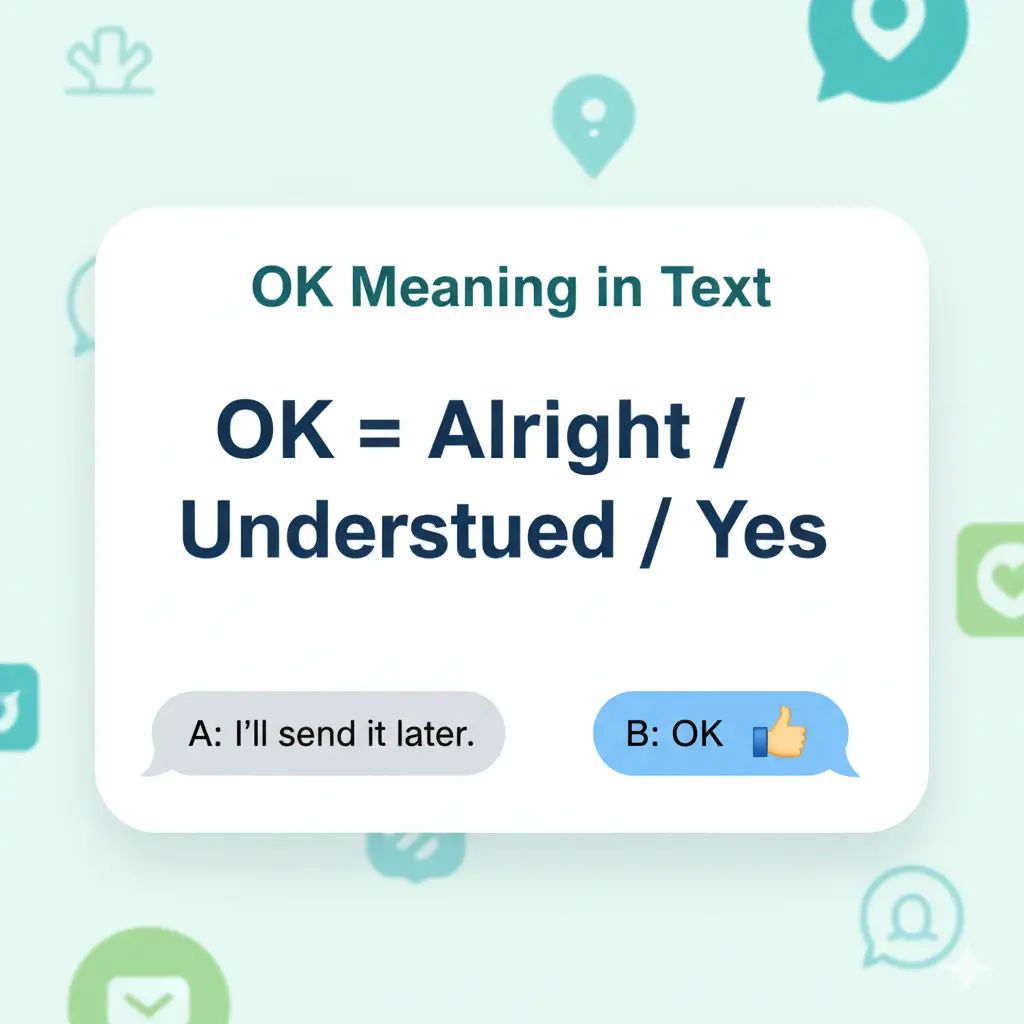
“OK” means “Alright” or “I understand.”
It’s a neutral, polite, and simple acknowledgment used to show agreement or confirmation in texts.
🧠 What Does OK Mean in Text?
In texting, OK stands for:
- Alright
- Understood
- Agreement
- Acknowledged
It shows that you received the message and you’re fine with it — without needing to add extra emotion.
It’s one step more formal than “k”, but less emotional and warmer than “Okayyy 😊”.
✅ Example:
A: “I finished the report.”
B: “OK, great.”
Here, the person is acknowledging your message politely without over-explaining.
In short:
OK = Alright / Understood / Confirmed
📱 Where Is OK Commonly Used?
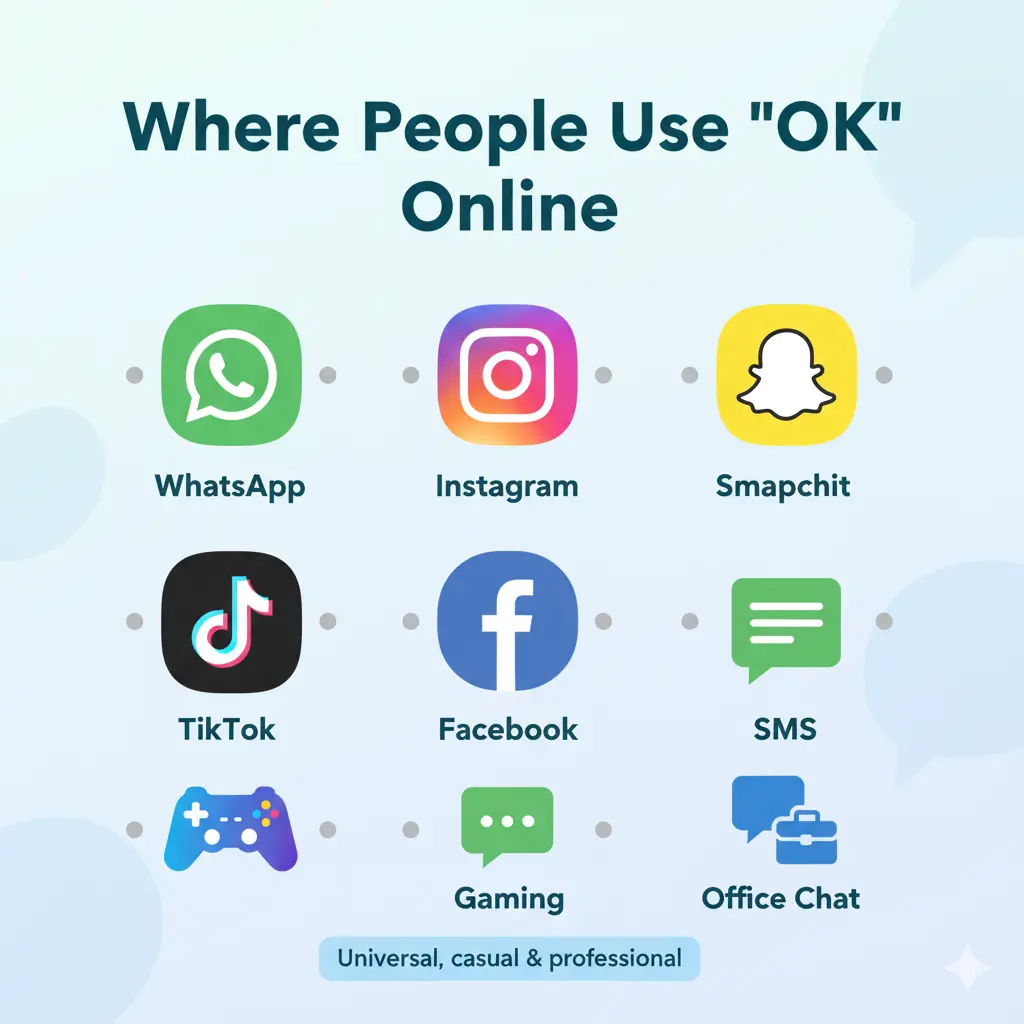
You’ll see OK almost everywhere people communicate online. It’s one of the most universal digital replies.
Platforms where OK is used:
- 📱 Text Messages
- 📸 Instagram DMs
- 🧠 Discord
- 🎮 Gaming chats
- 🛜 Snapchat
- 👍 Work messaging tools (Slack/Teams)
- 📧 Emails
Tone Level:
| Usage Type | Tone |
|---|---|
| Friends Chat | Casual & normal |
| Work Chat | Professional, polite |
| Family Chat | Standard, respectful |
| Crush/Flirty Chat | Can feel dry 😅 |
| Emotional conversations | Might sound cold |
Tip:
If you want to sound warmer, use “Okay 😊”, “Okie,” “Okay cool!”, or add emojis.
💬 Examples of OK in Conversation
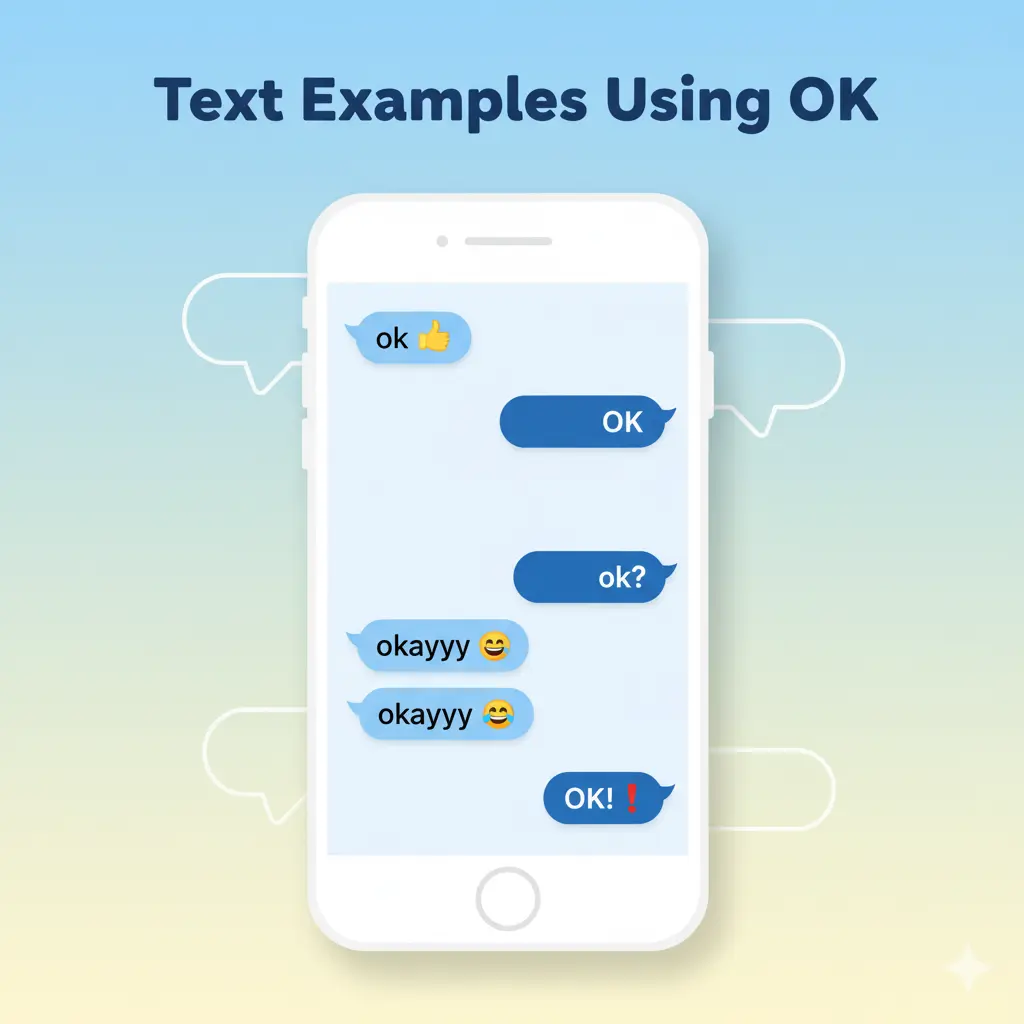
Here are realistic examples so you fully understand the vibe. Notice tone shifts depending on punctuation and emojis 👇
Friendly Chat
A: “I’ll call you after dinner.”
B: ok 👍
A: “Be there in 10.”
B: okkk 😄
Work / School / Professional Chat
A: “Please review this file by tomorrow.”
B: OK, will do.
A: “Meeting at 2 PM.”
B: OK.
Relationship Chat
A: “Sorry I didn’t reply earlier, was busy.”
B: ok ❤️
A: “I’ll explain everything later.”
B: ok…
(Notice the dots — it shows emotion)
Gaming Chat
A: “Grab shield and follow me!”
B: OK go go go 😂
Group Chat
A: “Can everyone send their part today?”
B: OK ✅
C: ok
When OK Feels Cold
A: “I really want to talk about this.”
B: ok.
A: “I miss you.”
B: ok
👀 Ouch. Tone matters!
🕓 When to Use and When Not to Use OK
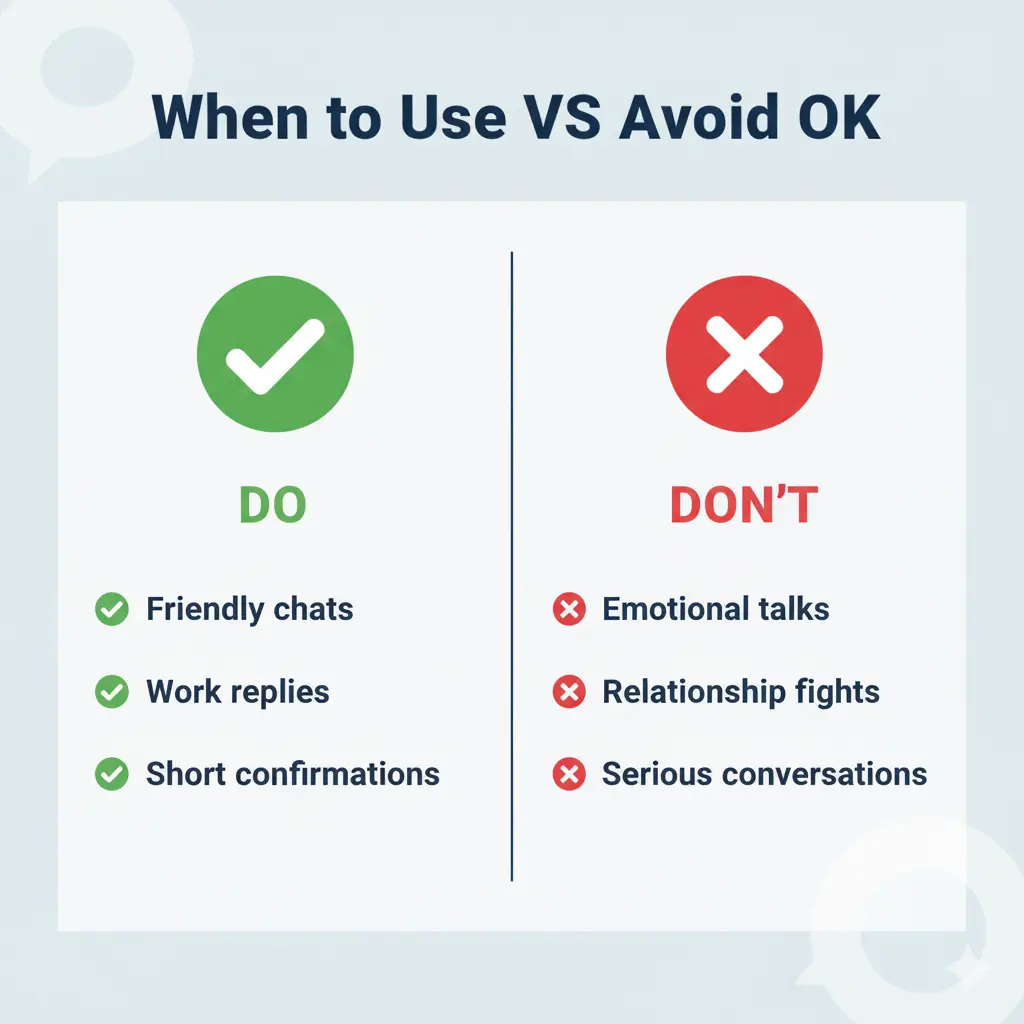
✅ When to Use “OK”
Use it when you want to:
- Show agreement
- Confirm instructions
- Reply quickly
- Sound polite and neutral
- Respond in work or school messages
- Keep conversation simple
Examples:
- “OK, sounds good.”
- “OK, I’ll do it.”
- “OK let’s go.”
❌ When NOT to Use “OK”
Avoid “OK” if:
- Someone is emotional or upset
- Conversation needs warmth or empathy
- You’re texting your partner and want to show care
- You need to sound enthusiastic
- You’re responding to a heartfelt message
Bad examples:
- “I failed my test.” → OK ❌
- “I miss you.” → ok ❌
Better alternatives:
- “That sucks, I’m here for you.”
- “I miss you too ❤️”
✅ “OK” Usage Table
| Context | Example | Why It Works |
|---|---|---|
| Friend Chat | “No worries, OK 😄” | Friendly & relaxed |
| Work Chat | “OK, I’ll review it.” | Polite & efficient |
| “Okay, noted.” | Professional tone | |
| Serious Talk | Instead of “OK” → “I understand, tell me more.” | Shows empathy |
| Relationship | Instead of “OK” → “Okay babe ❤️” | Adds warmth |
🔄 Similar Slang Words or Alternatives
| Slang | Meaning | When to Use |
|---|---|---|
| okay | same as OK | Neutral, polite |
| k / kk | got it | Super casual, short & fast |
| okie / okiee | cute okay | Friendly, playful tone |
| bet | deal / okay | Youth slang, confident tone |
| sure | yes / agreed | Polite & calm |
| gotchu / got it | understood | Supportive & reassuring |
| sounds good / alright | same agreement | More clear & friendly |
❓ FAQs About OK Meaning in Text
❓ Is OK rude in texting?
Not usually — but it can sound dry depending on tone and context.
Add emojis to soften it:
- OK 😊
- OK 👍
❓ OK vs Okay — what’s the difference?
| Version | Tone |
|---|---|
| OK | Neutral, simple |
| Okay | Softer, warmer |
| Okayyy / okie | Cute, casual |
❓ Is “K” the same as OK?
Technically yes, but:
- OK = normal
- K = can feel rude or impatient
- “kk” = friendly + chill
❓ What does OK mean from a girl/guy?
Usually just agreement — don’t assume anger unless context hints it.
But tone changes meaning:
- ok = neutral / casual
- OK. = annoyed or serious
- ok? = asking for confirmation
- ok ❤️ = affectionate
- ok lol = funny / light mood
❓ Does punctuation matter?
Absolutely! Tone changes fast:
| Text | Emotion |
|---|---|
| OK | neutral |
| ok | relaxed |
| OK! | excited |
| OK. | annoyed |
| ok… | upset / thinking |
| ok? | questioning |
| okkk | enthusiastic |
| okayyy | cute/flirty |
❓ Is OK good for professional messages?
Yes — it’s simple and respectful.
Better options though:
- “Okay, noted.”
- “Understood.”
- “Will do.”
🏁 Conclusion
Even though it’s tiny, OK carries tone, context, and emotion in texting. It’s safe, simple, and one of the most universal responses online.
✅ Means “Alright / I understand”
✅ Neutral & polite
✅ Works in casual and work messages
⚠️ Can feel cold in emotional chats
If you want warmth, try:
- “Okay 😊”
- “Okay cool!”
- “Okiee!”
- Emojis to add emotion
Now you know exactly how to read and use OK like a texting pro 😎📱
Bookmark this guide and share it with someone who always overthinks short replies!

I’m Sara Lexicon, a writer fascinated by words, slang, and how language evolves online. I love turning confusing phrases and trending terms into easy, fun explanations. My goal is to help readers understand and enjoy the language of the digital world. When I’m not decoding words, I’m exploring social media and discovering new ways people express themselves. I’m here to make modern language simple, relatable, and entertaining!