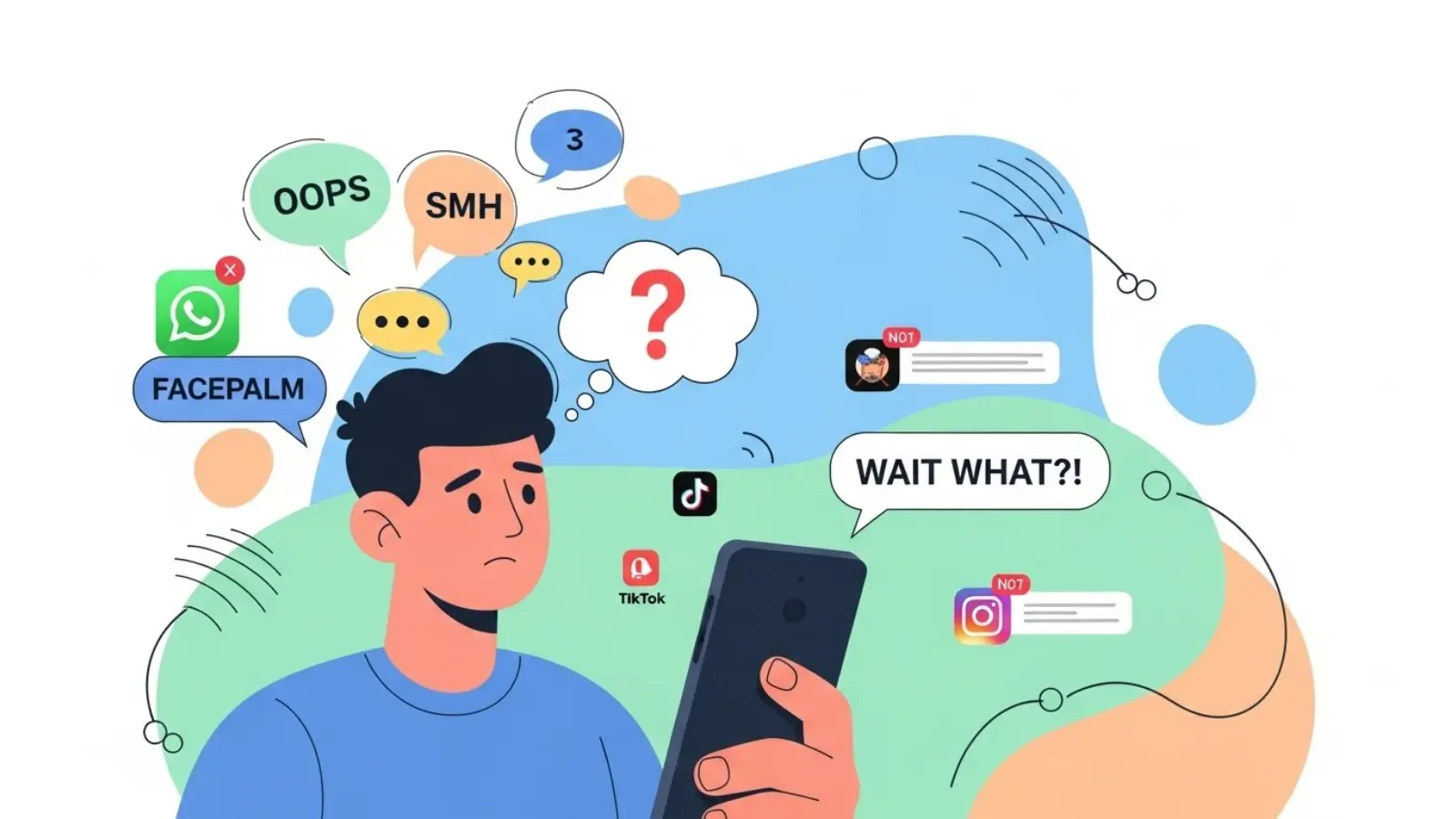
Have you ever been scrolling through your messages and stumbled upon someone replying with just “oops” and wondered, “Wait… what does that even mean?” 🤔
Maybe it was after a typo, a funny mistake, or a small accident, and you weren’t sure if it was serious, sarcastic, or just casual texting slang.
Don’t worry, you’re not alone! Texting slang can be confusing, but once you get the hang of it, it becomes second nature.
Quick Answer:
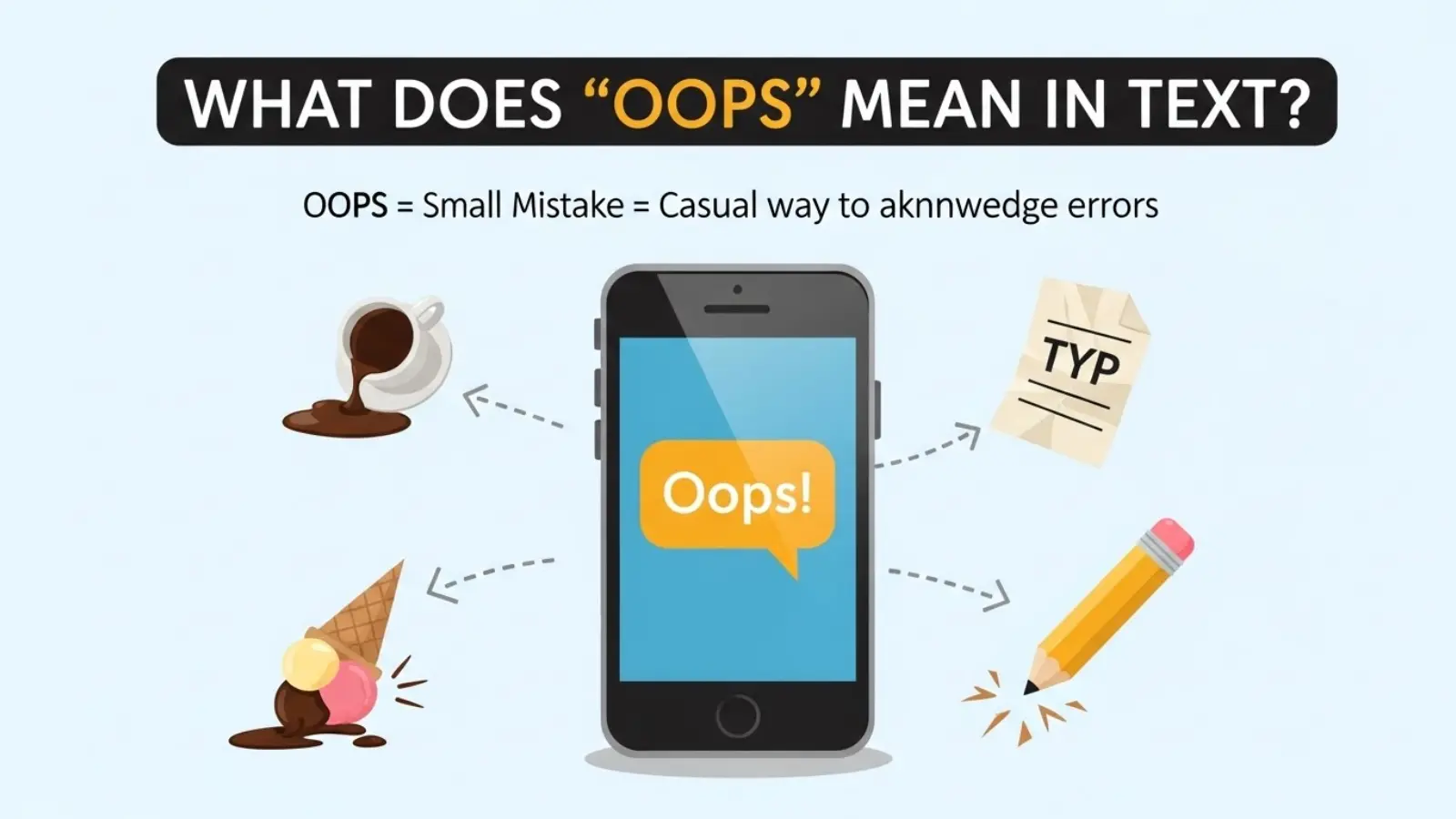
“Oops” means “a small mistake or accident happened”. It’s a friendly and casual way of acknowledging an error or slip-up in text messages or social media.
What Does Oops Mean in Text? 🧠
“Oops” is one of the simplest yet most widely used slang words online. It’s an exclamation people type when they make a small mistake, notice an error, or accidentally do something unintended. Think of it as the text version of saying, “Oh no! My bad!”
Example:
A: I just deleted the wrong file 😅
B: oops! that happens
In short: Oops = a small mistake = a casual, friendly way to acknowledge errors.
It’s lighthearted, not serious, and almost always used in casual, friendly, or humorous situations.
A Brief History of “Oops”
The word “oops” actually dates back to the early 20th century. It started as an on-the-spot spoken exclamation when someone made a small mistake. With the rise of texting and online messaging, it quickly became digital shorthand for acknowledging tiny slip-ups. Today, “oops” is universally recognized online and even appears in memes, tweets, and TikTok captions. So when you see it in text, you’re part of a long tradition of playful language! 🎉
Where Is Oops Commonly Used? 📱
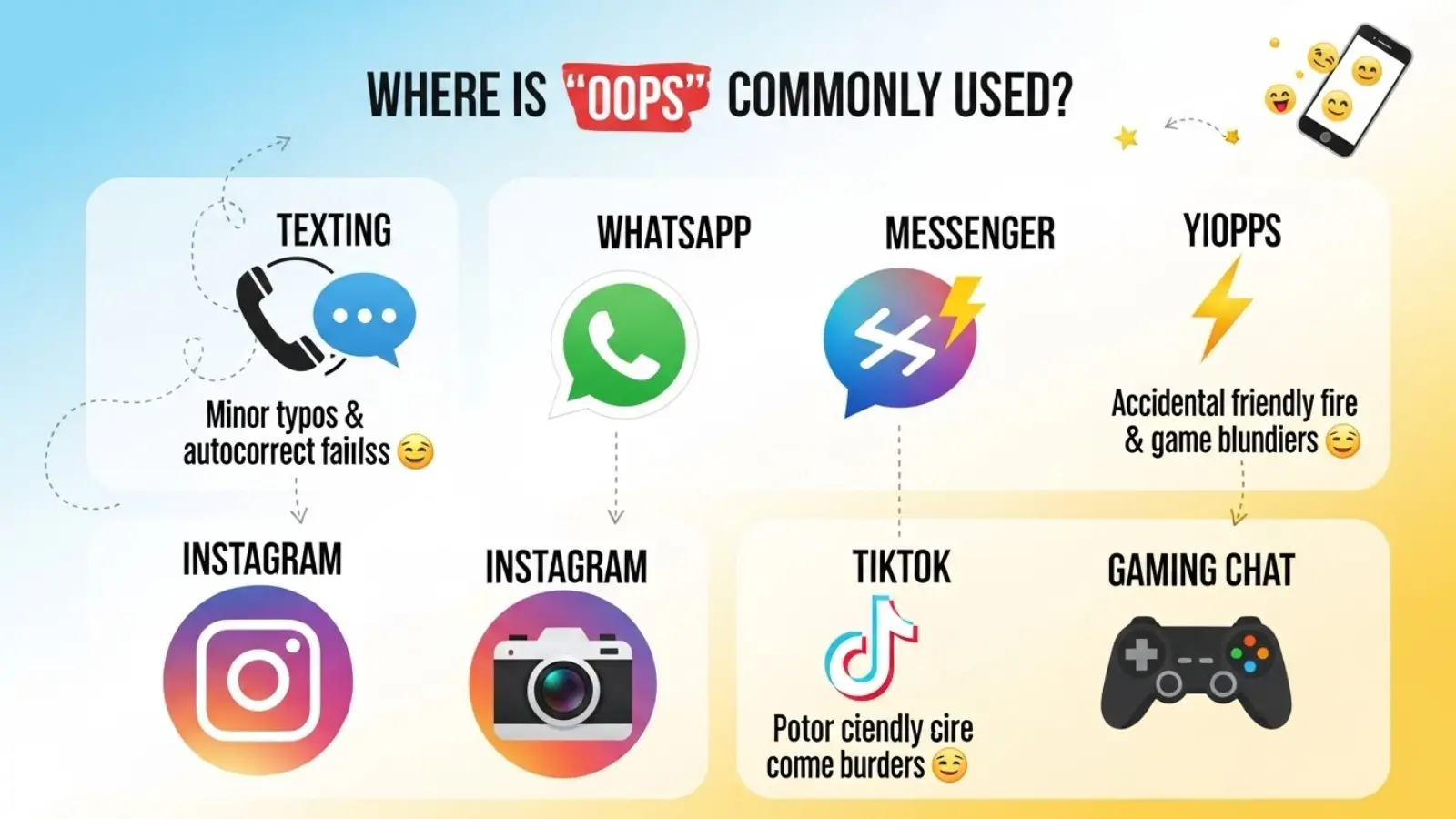
“Oops” has made its way into almost every corner of digital communication. Here’s where you’ll see it the most:
- Texting with friends 📲 – perfect for typos or funny mistakes
- Social media comments 💬 – Twitter, Instagram, TikTok
- Gaming chats 🎮 – when someone messes up in-game
- Email (very casual) ✉️ – only with coworkers you know well
- Messaging apps 🫂 – WhatsApp, Messenger, Snapchat
Tone check:
- Casual & friendly ✅
- Flirty or playful sometimes 😏
- Formal or professional ❌ – avoid in serious business emails
Examples of Oops in Conversation 💬
Here are some realistic examples of how “oops” pops up in chats:
1
A: I just spilled coffee on my laptop 😬
B: oops! hope it’s okay
2
A: Forgot to send the file 🙈
B: oops, send it when you can
3
A: I accidentally liked your old post 😅
B: oops, no worries lol
4
A: Sent the message to the wrong group 😳
B: oops! that’s funny
5
A: Just dropped my phone 😬
B: oops, be careful!
6
A: I ate the last slice of pizza 🍕
B: oops! I wanted that 😆
7
A: Missed our video call 😭
B: oops! it’s fine, we can try later
8
A: Typo in my post again 🙃
B: oops! happens to everyone
Adding more examples like this helps beginners see exactly how to use “oops” naturally in texting.
When to Use and When Not to Use Oops 🕓
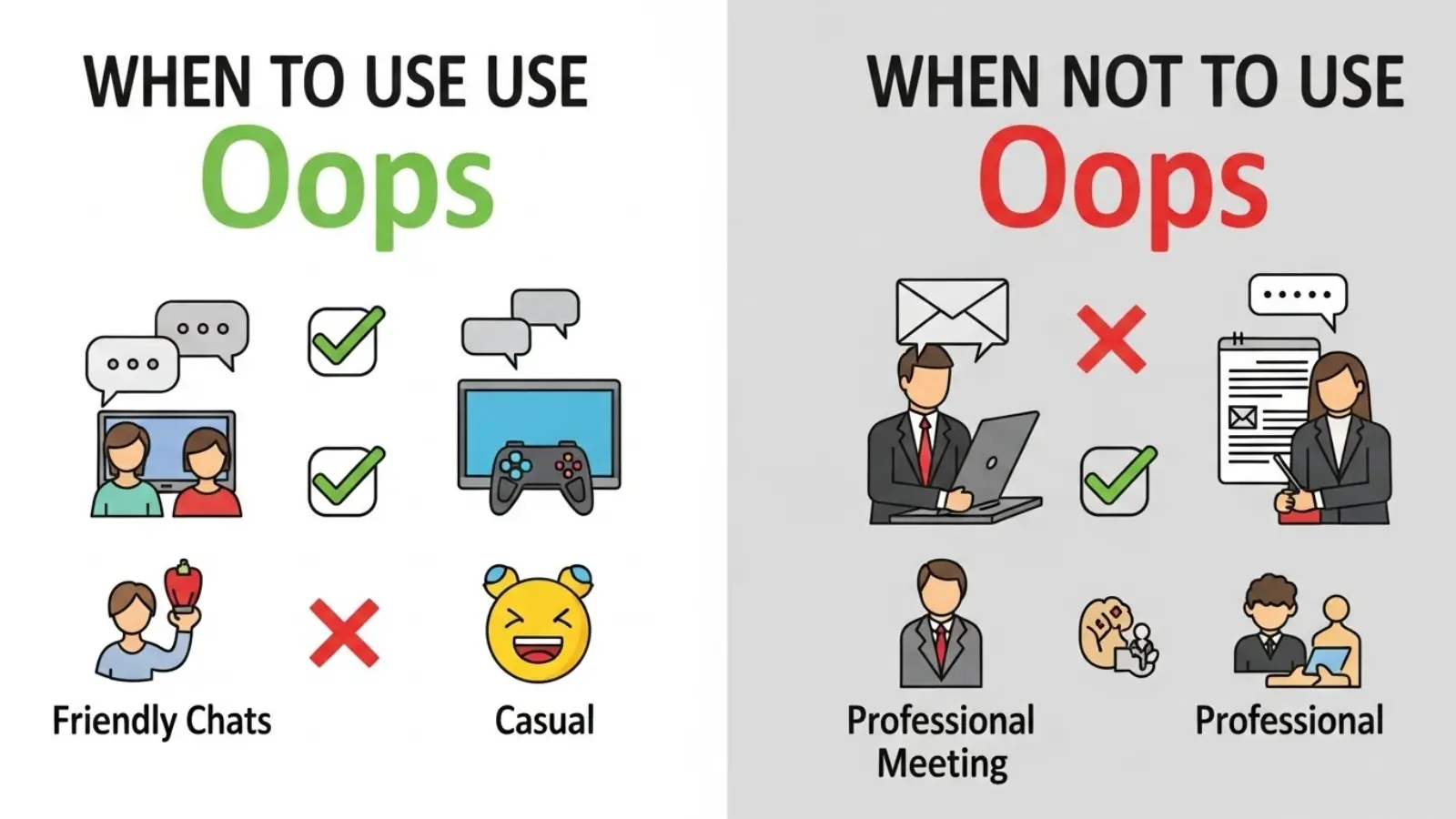
Knowing when to drop an “oops” is key to texting like a pro. Here’s a quick guide:
✅ When to Use
- Friendly chats with friends or family
- Casual social media posts
- Playful or humorous situations
- Minor mistakes or slip-ups
- Lighthearted gaming moments
❌ When Not to Use
- Formal work emails or reports
- Serious or urgent situations
- Professional client communication
- Legal or academic discussions
Comparison Table:
| Context | Example Phrase | Why It Works |
|---|---|---|
| Friend Chat | “No rush, oops 😄” | Casual & friendly |
| Work Chat | “Take your time.” | Polite & professional |
| “Please review the file.” | Formal & clear |
Similar Slang Words or Alternatives 🔄
If you like “oops,” here are some similar slang words and when to use them:
| Slang | Meaning | When to Use |
|---|---|---|
| My bad | I made a mistake | Casual, friendly |
| Whoops | Slightly playful mistake | Friends, social media |
| Uh-oh | Something went wrong | Humorous, lighthearted |
| LOL | Laughing at an error or joke | Casual, funny |
| Sorry | Apology for an error | Friendly or semi-formal |
Oops in Pop Culture 🎬
“Oops” has been featured in songs, TV shows, and movies, making it a cultural phenomenon as well as slang. For example:
- Britney Spears’ hit song “…Oops!… I Did It Again”
- Memes about texting mistakes often use “oops” for comedic effect
- TikTok videos showing funny slip-ups with captions like “oops 😅”
This shows that using “oops” in messages is not just a text habit—it’s a fun, playful part of online culture.
FAQs About Oops ❓
Q1: Is “oops” formal or informal?
A: “Oops” is informal. Use it with friends, family, or casual chats—not in professional emails.
Q2: Can “oops” be used flirty?
A: Yes! In a playful way, like when teasing someone or joking about a small mistake.
Q3: What is the difference between “oops” and “whoops”?
A: Both mean a minor mistake, but “whoops” is slightly more playful, while “oops” is neutral and widely used.
Q4: Can I use “oops” in texting adults or older people?
A: Yes, but only in casual or friendly situations. Avoid using it in serious or formal conversations.
Q5: Is “oops” used worldwide?
A: Absolutely! It’s recognized in English-speaking countries and online globally due to social media.
Q6: Can “oops” be used in professional emails?
A: Only if you have a very casual rapport with coworkers. Otherwise, stick to “sorry” or “my mistake.”
Q7: Why do people type “oops” instead of just apologizing?
A: “Oops” is quick, light, and playful, making it perfect for texting without sounding too serious.
Final Thoughts 📝
Texting slang can be confusing at first, but words like “oops” make digital conversations more fun and casual. Remember, “oops” means a small mistake or accident happened and is a friendly way to acknowledge it in messages. Whether you’re chatting with friends, commenting on social media, or joking in a group chat, using “oops” shows a playful, lighthearted tone.
Next time you see a typo, a funny mishap, or just want to react to a minor error, don’t overthink it—just type “oops” and keep the conversation flowing. It’s simple, universally understood, and adds a touch of personality to your texts. 😄

- I’m Casey Morgan, a writer who loves breaking down internet slang and modern lingo into simple, relatable explanations. I’ve spent years studying how digital communication shapes the way we talk. My goal is to make every confusing phrase easy to understand. When I’m not decoding trends, you’ll find me sipping coffee and browsing social media for the next viral term.