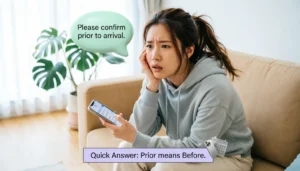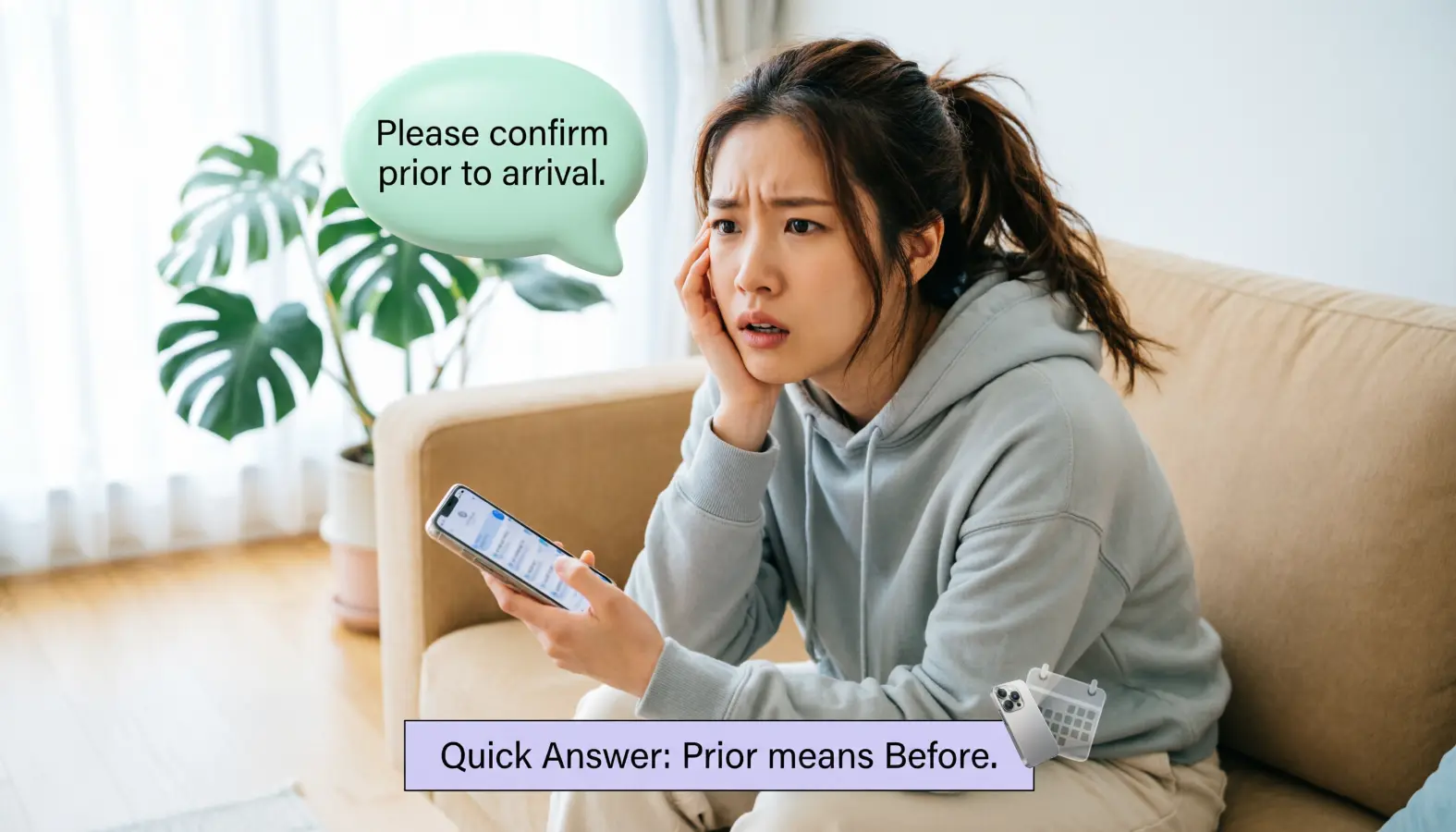
Have you ever been reading a message, email, or caption and suddenly paused at the word “prior”? Maybe someone wrote, “As mentioned prior…” or “Please inform me prior to arrival,” and you wondered, Wait… what exactly does prior mean here? 🤔
You’re not alone. While “prior” isn’t modern texting slang like “LOL” or “BRB,” it still shows up in messages, captions, and even social media comments — and it can feel a little formal or confusing.
Quick Answer:
Prior means “before.” It’s a more formal or polite way of saying something happened earlier.
Let’s break it down in a simple, easy-to-understand way.
🧠 What Does Prior Mean in Text?
The word prior simply means before something else.
It is commonly used to describe something that happened earlier in time.
For example:
👉 “I had never met her prior to the meeting.”
This means: I had never met her before the meeting.
In texting or online conversations, “prior” usually appears in slightly formal messages. It’s not typical slang, but it may show up in:
- School emails
- Work chats
- Formal announcements
- Professional captions
In short: Prior = Before = Something that happened earlier.
It’s just a more polished way to say “before.”
📱 Where Is Prior Commonly Used?
Although “prior” isn’t internet slang, it still appears in certain digital spaces.
Here’s where you’ll most likely see it:
- 📧 Emails – Professional or academic emails
- 💼 Work chats – Slack, Microsoft Teams, or office messages
- 📚 School messages – Teacher or university communication
- 📄 Official posts – Announcements or formal captions
- 📝 Legal or formal documents
Tone Check 👀
- ✔️ Formal
- ✔️ Professional
- ✔️ Polite
- ❌ Not casual slang
- ❌ Not flirty
- ❌ Not trendy social-media language
If you see “prior” in a Snapchat message, it’s probably part of a serious or organized conversation — not casual banter.
💬 Examples of Prior in Conversation
Here are some realistic examples to show how “prior” is used in different chats.
1️⃣ Work Chat
A: can you send the report?
B: yes, i’ll send it prior to 5 pm.
2️⃣ School Message
A: when is the assignment due?
B: please submit it prior to monday morning.
3️⃣ Event Planning
A: what time should we arrive?
B: arrive prior to 7 pm so we can set up.
4️⃣ Polite Reminder
A: did you see the notice?
B: yes, it was shared prior to the meeting.
5️⃣ Slightly Formal Text
A: do i need to register?
B: yes, register prior to attending the event.
6️⃣ Social Media Caption
“Please complete payment prior to booking confirmation.”
As you can see, “prior” sounds organized and responsible. It doesn’t feel casual or playful. It feels structured and clear.
🕓 When to Use and When Not to Use Prior
Even though “prior” simply means “before,” the context matters.
✅ When to Use Prior
- In professional conversations
- In academic writing
- When giving instructions
- When setting deadlines
- When you want to sound polite and formal
Example:
“Please confirm your attendance prior to Friday.”
❌ When Not to Use Prior
- In casual texting with friends
- In flirty conversations
- In urgent emergencies
- In relaxed social media captions
- When a simple “before” sounds better
Instead of:
“I’ll call you prior.”
Just say:
“I’ll call you before.”
🔎 Quick Comparison Table
| Context | Example Phrase | Why It Works |
|---|---|---|
| Friend Chat | “Call me before 8 😄” | Casual & natural |
| Work Chat | “Please respond prior to 3 PM.” | Professional tone |
| “Kindly submit the document prior to review.” | Formal & clear | |
| Social Media | “Register before seats fill up!” | Friendly & simple |
Notice how “prior” fits best in work or formal settings.
🔄 Similar Words or Alternatives
If you don’t want to use “prior,” here are some alternatives you can use depending on the situation:
| Word | Meaning | When to Use |
|---|---|---|
| Before | Earlier than | Casual & formal |
| Earlier | At an earlier time | Everyday conversation |
| Previously | At a past time | Professional writing |
| Ahead of | Before something | Business or events |
| In advance | Beforehand | Planning situations |
| Previously | Already happened | Formal emails |
“Before” is the simplest and most common replacement.
If you’re texting friends, just stick with “before.” It sounds natural and friendly.
❓ FAQs About Prior
1️⃣ Is “prior” slang?
No, “prior” is not slang. It is a standard English word used in formal communication.
2️⃣ Does “prior” mean the same as “before”?
Yes. In most situations, “prior” and “before” mean the same thing.
Example:
“Arrive prior to 6 PM.”
“Arrive before 6 PM.”
Both sentences mean the same.
3️⃣ Is “prior to” grammatically correct?
Yes, “prior to” is grammatically correct and commonly used in formal English.
Example:
“Submit your ID prior to entry.”
4️⃣ Is “prior” formal or casual?
“Prior” is considered formal. It is more common in professional or academic settings.
5️⃣ Can I use “prior” in texting?
You can, but it may sound overly formal. With friends, it’s usually better to say “before.”
6️⃣ Why do people use “prior” instead of “before”?
People often use “prior” to sound more professional, polite, or official — especially in work emails or instructions.
📌 Final Thoughts
So, what does prior mean?
It simply means before, something that happened earlier in time. While it’s not trendy slang or internet shorthand, it still appears in digital communication, especially in professional or academic contexts.
If you’re texting your friends, stick with “before.”
If you’re writing an email or setting a deadline, “prior” works perfectly.
Understanding simple words like this helps you sound confident and clear — whether you’re chatting casually or sending an important message.
Now the next time you see “prior” in a message, you won’t pause in confusion. You’ll know exactly what it means. 😊

I’m Sara Lexicon, a writer fascinated by words, slang, and how language evolves online. I love turning confusing phrases and trending terms into easy, fun explanations. My goal is to help readers understand and enjoy the language of the digital world. When I’m not decoding words, I’m exploring social media and discovering new ways people express themselves. I’m here to make modern language simple, relatable, and entertaining!