Have you ever been texting someone and suddenly they reply with “tmo”, leaving you confused and staring at your screen like, “Wait… what?”
The first time I saw it, a friend messaged, “I’ll tell you tmo,” and for a good minute I wondered if they meant TMI, TM, or some mysterious code I wasn’t cool enough to know.
That’s the funny thing about texting slang — it appears out of nowhere, becomes popular overnight, and suddenly everyone uses it like it’s common knowledge.
If you’re chatting with friends, planning a meetup, or coordinating something online, TMO is one of those shortcuts people use constantly.
Quick Answer:
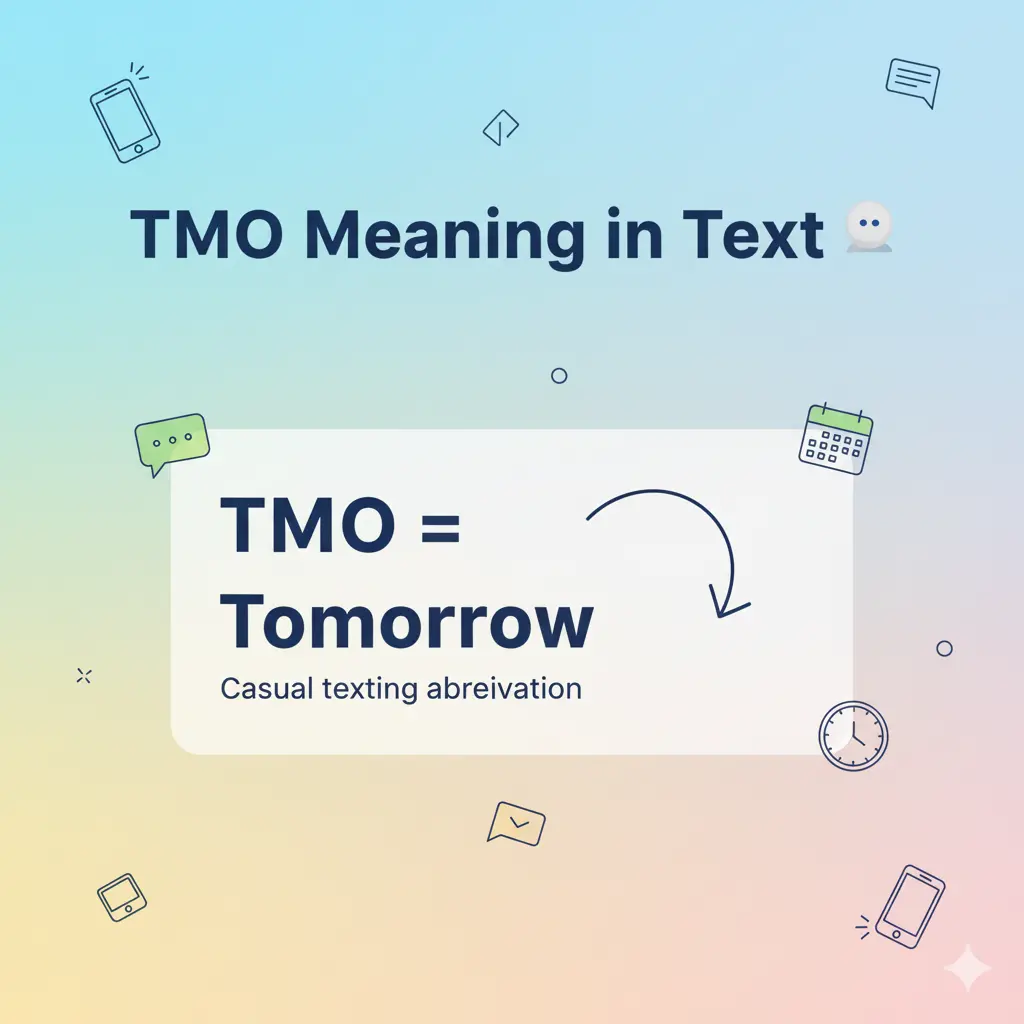
TMO means “Tomorrow.”
It’s a casual, friendly shorthand people use in texting or social media to say they’ll do something the next day.
🧠 What Does TMO Mean in Text?
TMO = Tomorrow.
When someone types TMO, they’re simply referring to the next day. It’s a quick abbreviation used to save time while typing, especially in fast-paced chat environments. You’ll see it most commonly among teenagers, students, and people who text frequently and prefer short, efficient communication.
For example, instead of typing:
“I will send you the file tomorrow,”
they might type:
“I’ll send it tmo.”
It means the same thing but is faster to type and feels more casual.
When people use TMO, they usually mean:
- They’ll finish a task the next day
- They’ll reply or update later
- A plan or meeting is happening the next day
- Something is postponed until tomorrow
Example sentence:
“Let’s talk tmo when you’re free.”
In short:
TMO = Tomorrow = Something happening the next day.

📱 Where Is TMO Commonly Used?
TMO appears mostly in informal, quick digital conversations. It’s not something you’d normally see in professional messages or formal communication.
Here’s everywhere you might spot it:
📱 Messaging Apps
- iMessage
- Facebook Messenger
- Telegram
- Signal
🤳 Social Media
- Snapchat
- TikTok captions
- Instagram DMs
- Twitter/X posts
- Reddit chats
🎮 Gaming Platforms
- Discord
- PSN chats
- Xbox Live messages
- Mobile game chats
📚 Students & Group Chats
- Homework groups
- Study circles
- Project teams
- College or school friend chats
Tone Level
- Very casual
- Friendly
- Informal
- Not for business use
- Not recommended for formal communication
People use TMO because:
- It saves time
- It’s easy to type
- It fits modern abbreviations
- It feels relaxed and natural
If you see TMO in a chat, the conversation is likely light, casual, and non-serious.

💬 Examples of TMO in Conversation
Here are realistic, relatable chat examples you can use to understand the tone and context of TMO. All examples use natural, everyday texting style:
1.
A: did u finish the slides?
B: nope, i’ll do them tmo
2.
A: can we go to the mall?
B: busy today… tmo?
3.
A: remind me to call mom
B: ok, tmo morning
4.
A: u free tonight?
B: not really 😅 tmo would be better
5.
A: send ur location
B: will do tmo… i’m out rn
6.
A: we still on for the meeting?
B: let’s shift it to tmo
7.
A: i want the pics from the event
B: i’ll edit and send tmo 👍
These examples show that TMO is used naturally when someone wants to postpone something or provide updates for the next day.

🕓 When to Use and When Not to Use TMO
✅ When to Use TMO
Use TMO when the tone is casual, friendly, or relaxed:
- Texting a friend or sibling
- Chatting in a group chat
- Playing online games
- Planning hangouts or casual meetups
- Responding quickly on mobile
- Updating someone about a small task
- Talking to someone your age
- When speed matters more than formality
TMO is perfect when the vibe is simple and you don’t need to sound professional.
❌ When NOT to Use TMO
Avoid TMO in situations where clarity and professionalism matter:
- Business emails
- Messages to your boss or HR
- Formal school messages to teachers
- Company reports or presentations
- Job applications or interviews
- Academic writing
- Emergency or serious situations
- When setting professional deadlines
In professional settings, always write the full word tomorrow to avoid misunderstandings.
Comparison Table
| Context | Example Phrase | Why It Works / Doesn’t Work |
|---|---|---|
| Friend Chat | “I’ll get it done tmo 😄” | Fits casual tone, feels natural |
| Work Chat | “I’ll complete this tomorrow.” | Professional and clear |
| “Please review this tomorrow.” | Formal and polite | |
| Teacher/Student | “I will submit the assignment tomorrow.” | Shows respect & clarity |
| Social Media | “Dropping the vlog tmo 👀” | Perfect for casual online tone |
| Emergency Chat | “Call me tomorrow.” | Must be clear—avoid slang |

🔄 Similar Slang Words or Alternatives
These slang abbreviations are commonly used in everyday texting, similar to TMO in casual tone:
| Slang | Meaning | When to Use |
|---|---|---|
| ttyl | talk to you later | Ending a relaxed chat |
| lmk | let me know | Asking for updates or decisions |
| brb | be right back | Short temporary pause in a conversation |
| idk | I don’t know | Expressing uncertainty casually |
| omw | on my way | Sharing real-time progress or arrival |
| atm | at the moment | When describing current status |
| tbh | to be honest | Sharing honest thoughts |
| nty | no thank you | Short and polite decline |
These are all informal and work well in similar casual texting environments.
❓ FAQs About TMO
1. Is TMO formal or professional?
No. TMO is strictly casual and should not be used in professional emails or business conversations.
2. Does TMO have multiple meanings?
In texting, TMO only means “Tomorrow.”
Other meanings exist in technical fields, but not in messaging.
3. Is TMO used worldwide?
Yes. It’s widely used in English-speaking countries and online communities globally.
4. Can I use TMO with older people?
Only if they understand texting slang. Otherwise, write the full word.
5. Is TMO appropriate in student chats?
Yes, it’s very common in school and college group chats.
6. Should I capitalize TMO?
Both tmo and TMO are acceptable. Lowercase feels more casual.
7. Is TMO a new slang?
It’s modern but not brand new. It became popular as texting and fast communication increased.
8. Can TMO be used in comments or captions?
Absolutely! It works perfectly in quick, casual captions like: “Posting my travel vlog tmo!”
Final Thoughts
Texting shortcuts like TMO make conversations faster, lighter, and more convenient — especially when you’re juggling multiple chats at once. Even though it’s a simple abbreviation for “tomorrow,” it plays a big role in everyday digital communication. Now that you know what it means, how to use it, and where it fits naturally, you can read and reply to messages with more confidence and clarity.
Just remember: TMO is perfect for casual chats, but not ideal for formal or professional messaging. Use it with friends and peers, and stick to the full word “tomorrow” when the conversation needs to sound clear and respectful.
If you ever come across another slang term that confuses you, feel free to ask — I’ve got you covered! 💬✨
Discover More Posts:
ID Meaning in Text Full Form With Real Examples
P Meaning in Text Full Form and Usage Guide

I’m Sara Lexicon, a writer fascinated by words, slang, and how language evolves online. I love turning confusing phrases and trending terms into easy, fun explanations. My goal is to help readers understand and enjoy the language of the digital world. When I’m not decoding words, I’m exploring social media and discovering new ways people express themselves. I’m here to make modern language simple, relatable, and entertaining!