You’re scrolling through your messages, maybe replying to friends or checking a group chat, when suddenly you see someone type “wb”.
At first glance, it might look confusing. Is it a typo? A new abbreviation? Or something you’re supposed to reply to? 🤔
This is exactly how many people feel the first time they see text slang like this. Modern texting moves fast, and people shorten words to save time and keep conversations flowing. That’s why short slangs like WB are so popular.
If you searched for “wb meaning in text,” you’re probably looking for a clear explanation, real examples, and guidance on when to use it.
Quick Answer:
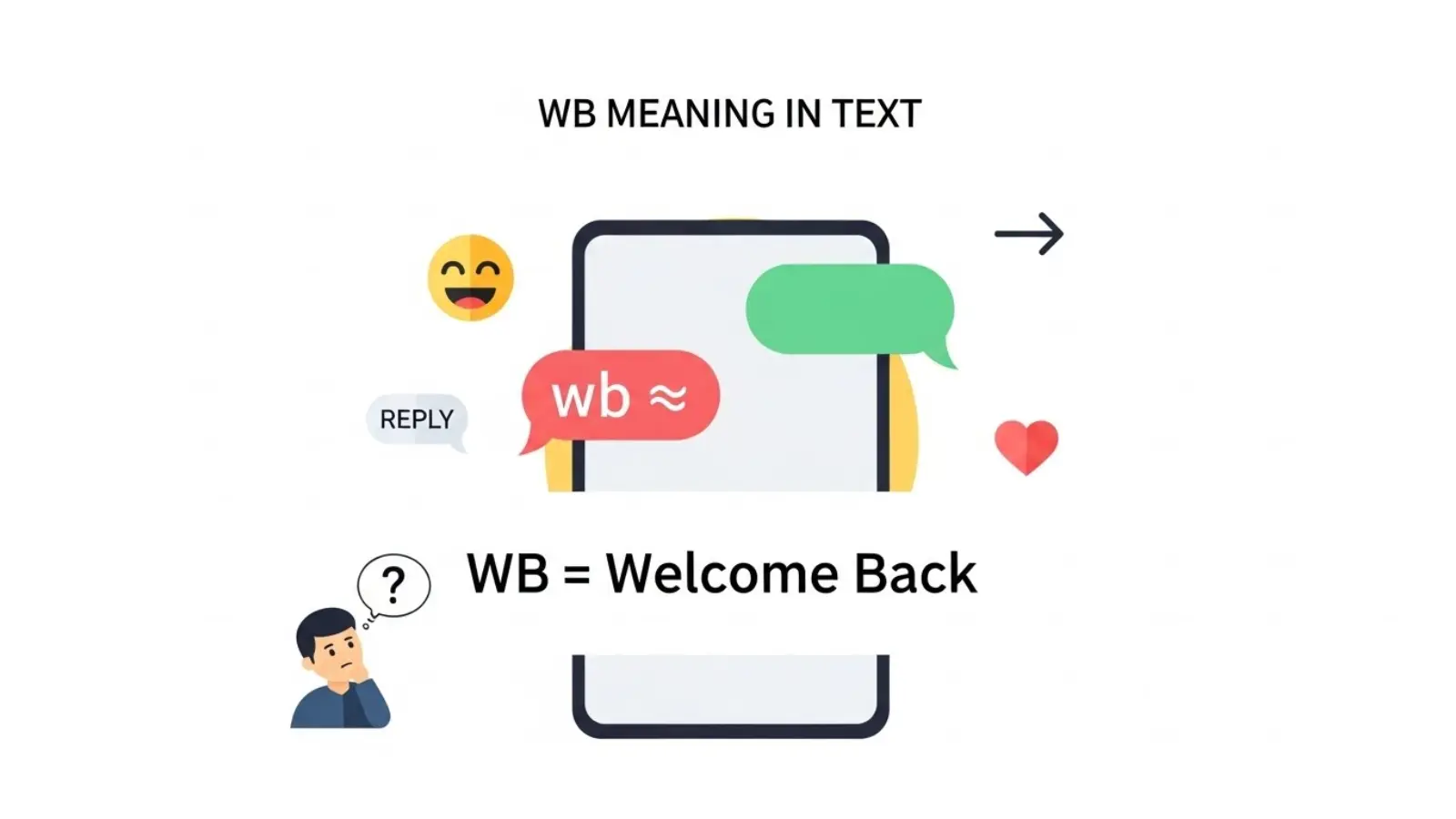
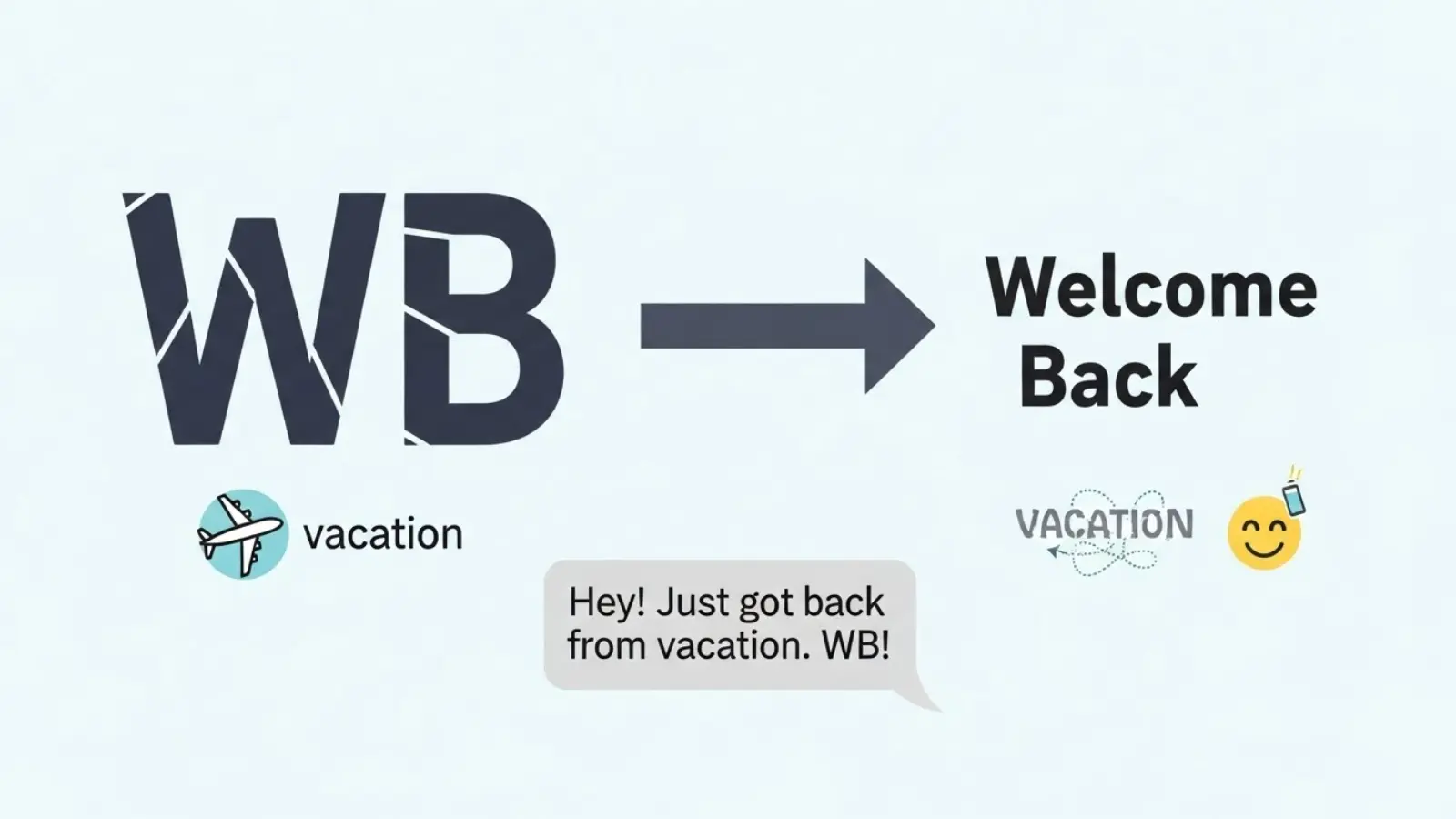
WB means “Welcome Back.” It’s a friendly, casual, and polite way of greeting someone who has returned to a chat, app, or conversation after being away.
🧠 What Does WB Mean in Text?
In text messaging and online communication, WB is an abbreviation for “Welcome Back.” People use it to acknowledge someone’s return after a break, absence, or period of inactivity.
This could mean:
- Someone was offline for a while
- Someone left a group chat and came back
- Someone returned after being busy
- Someone rejoined a game or conversation
Instead of typing the full phrase “Welcome back,” people shorten it to WB for speed and convenience.
Simple example sentence:
“wb! we were just talking about you”
In this case, WB expresses friendliness and makes the returning person feel included again.
In short:
WB = Welcome Back = a casual and friendly way to greet someone returning to a conversation.
📱 Where Is WB Commonly Used?
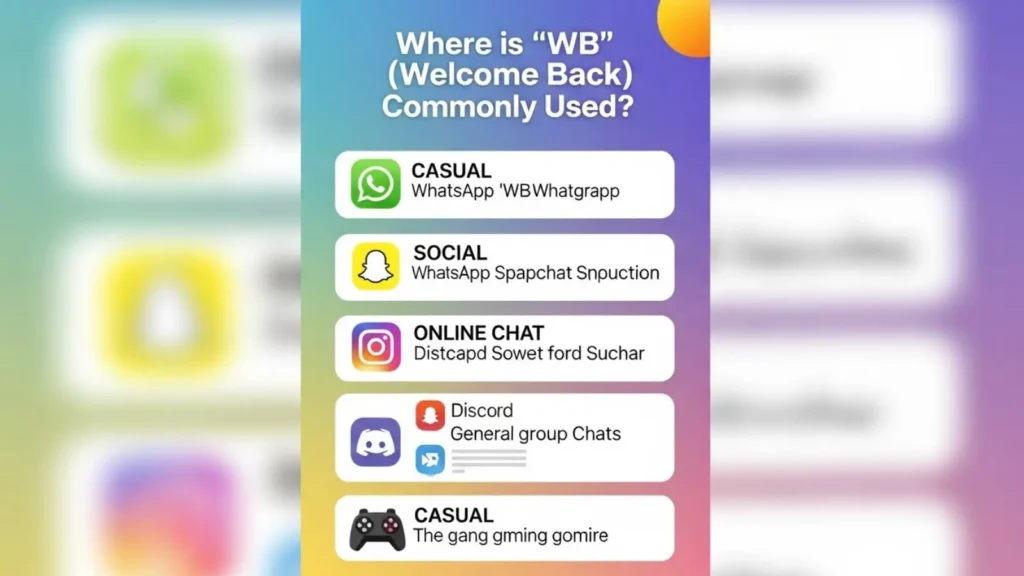
WB is mostly used in informal digital spaces where quick replies are common. You’ll rarely see it in professional writing, but it’s everywhere online.
Common places you’ll see WB:
- 💬 Text messages & WhatsApp chats
- 📸 Instagram, Snapchat, and Facebook DMs
- 🎮 Gaming chats (Discord, Twitch, in-game chat)
- 👥 Group chats with friends or online communities
- 🧑💻 Live streams, comment sections, and forums
Tone and style:
- ✔️ Casual and friendly
- ✔️ Relaxed and social
- ✔️ Easygoing and welcoming
- ❌ Not formal
- ❌ Not professional
Because of its tone, WB works best where emojis, slang, and short replies are already normal.
💬 Examples of WB in Conversation
To fully understand how WB is used, let’s look at realistic texting examples. These sound natural and match how people actually talk online.
1 Example
A: sorry i went quiet for a while
B: all good, wb!
2 Example
A: just got back online
B: wb 😄
3 Example
A: missed this chat lol
B: haha wb
4 Example
A: i was busy all day
B: wb, hope your day went well
5 Example
A: back after a long break
B: wb! we saved your spot
6 Example
A: reinstalled the game today
B: nice, wb to the squad 🎮
7 Example
A: hey everyone im back
B: wb ❤️
These examples show that WB feels warm, welcoming, and relaxed—never cold or rude.
🕓 When to Use and When Not to Use WB
Like all text slang, WB should be used in the right situation. Using it correctly makes you sound friendly, but using it in the wrong place can feel unprofessional.
✅ When to Use WB
- Talking with friends or family
- Group chats and casual communities
- Gaming or streaming conversations
- Social media comments or DMs
- Friendly, light-hearted situations
❌ When Not to Use WB
- Formal emails or business communication
- Professional client messages
- Serious or emotional discussions
- Academic or official writing
- Customer service replies
Context Comparison Table
| Context | Example Phrase | Why It Works |
|---|---|---|
| Friend Chat | “wb 😄” | Casual and friendly |
| Group Chat | “wb everyone!” | Welcoming tone |
| Gaming Chat | “wb, ready to play?” | Informal & social |
| Work Chat | “Welcome back. Hope you’re doing well.” | Professional |
| “Welcome back. Please review when available.” | Clear & formal |
If the conversation already includes emojis and slang, WB fits right in.
🔄 Similar Slang Words or Alternatives
If you don’t want to repeat WB too often, there are plenty of alternatives depending on tone and closeness.
| Slang / Phrase | Meaning | When to Use |
|---|---|---|
| Welcome back | Full phrase | Any situation |
| hey again | Friendly greeting | Casual chats |
| good to see you | Polite return greeting | Semi-casual |
| missed you | Emotional warmth | Close friends |
| you’re back | Casual acknowledgment | Friends |
| back at it | Playful return phrase | Informal chats |
Using different options helps your messages feel natural and less repetitive.
🤔 Is WB Casual, Flirty, or Formal?
Many people wonder about the tone of WB. Here’s a clear breakdown:
- Casual: ✅ Yes
- Friendly: ✅ Yes
- Flirty: ❌ Not by default
- Formal: ❌ No
WB itself is neutral. However, emojis, punctuation, and context can make it warmer:
- “wb 😊” → friendly
- “wb ❤️” → affectionate
- “wb!!!” → excited
The slang adapts to how you use it.
❓ FAQs About WB Meaning in Text
What does WB mean in texting?
WB means “Welcome Back.” It’s used to greet someone returning to a chat or conversation.
Is WB rude?
No. WB is polite and friendly, just informal.
Can WB be used with emojis?
Yes! Emojis are very common with WB and make it sound warmer.
Is WB okay in professional chats?
Only in very casual team chats. Avoid it in emails or formal work messages.
Does WB have other meanings in text?
In everyday texting, WB almost always means Welcome Back.
🧾 Final Thoughts
Understanding the WB meaning in text makes modern chatting much easier and less confusing. WB simply means “Welcome Back,” and it’s a friendly, casual way to greet someone who has returned to a conversation, chat, or online space after being away.
Whether you see it in a group chat, gaming message, or social media DM, WB shows warmth and acknowledgment without sounding formal. As long as you use it in relaxed, informal situations, it fits naturally and helps keep conversations friendly and engaging.

I’m Emma Collins, a writer passionate about decoding slang, emojis, and the ever-changing language of the internet. I enjoy turning confusing phrases into clear, easy-to-understand explanations. My mission is to help readers stay in the loop with today’s digital lingo. When I’m not writing, I love exploring social media trends and chatting with friends about new expressions. I’m here to make learning modern language fun and simple!