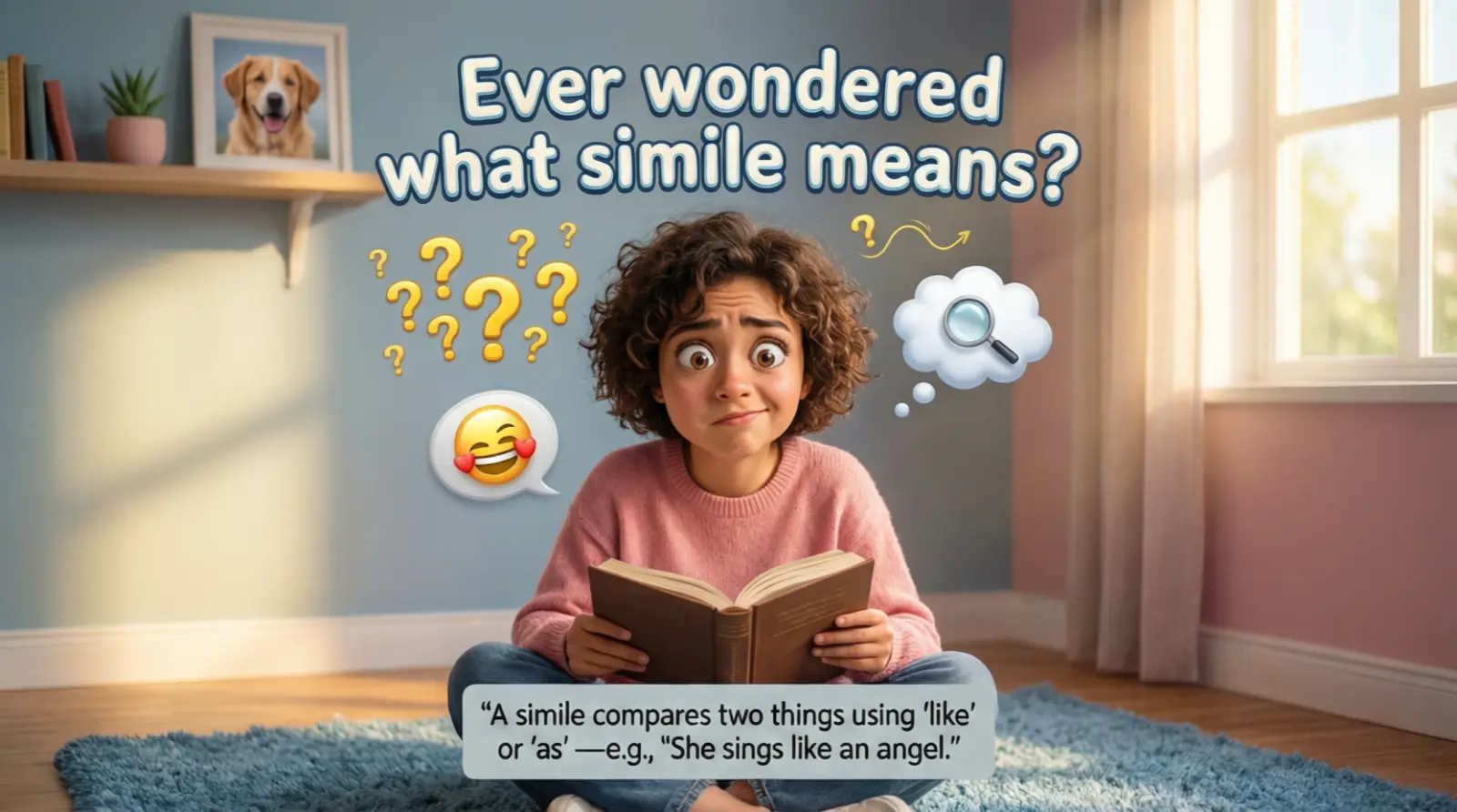
Have you ever been reading a text, story, or social media post and stumbled across the word simile and thought, “Wait… what does that even mean?” 😅
You’re not alone! At first, it might seem like just another fancy literary term, but once you get it, you’ll start spotting it everywhere — in songs, posts, and even casual chats.
Quick Answer:
Simile means “a figure of speech that compares two different things using words like ‘like’ or ‘as.’” It’s a friendly way to make your descriptions more colorful and relatable.
What Does Simile Mean in Text? 🧠
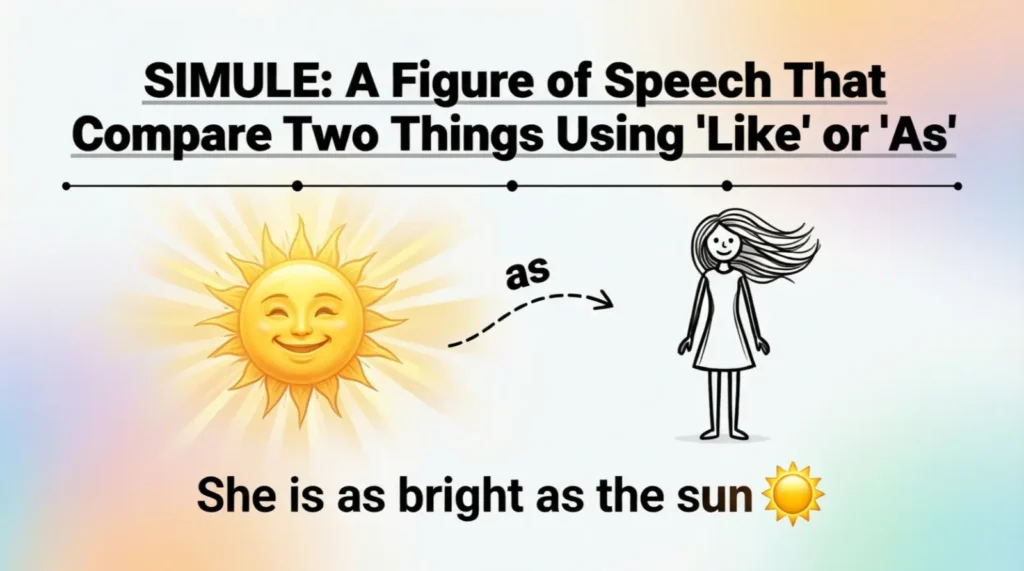
A simile is a way of describing something by comparing it to something else, usually using the words “like” or “as.” Unlike metaphors, which say something is something else, similes highlight similarity between two different things.
Example in text:
- “She was as bright as the sun today.” ☀️
Here, the person’s brightness (probably mood or energy) is being compared to the sun — a classic simile!
In short:
Simile = A figure of speech = Comparing two things using ‘like’ or ‘as’ to make language vivid.
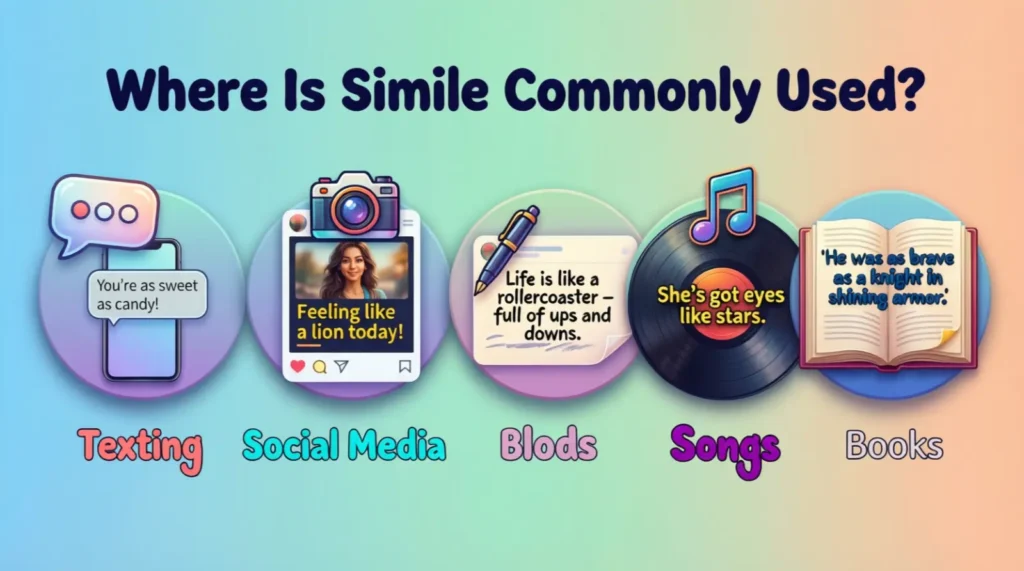
Where Is Simile Commonly Used? 📱
Similes aren’t just for textbooks! You’ll find them everywhere:
- Texting & DMs 💬 – Adding fun or exaggeration in casual chats
- Social Media Posts 📸 – Instagram captions, TikTok videos, or tweets
- Blogging & Articles ✍️ – Making content more engaging and relatable
- Song Lyrics 🎵 – To express feelings in a poetic way
- Storytelling & Books 📚 – Classic literature and short stories
Tone: Casual, friendly, and creative. While similes work well in social media and casual writing, avoid overloading formal emails or professional reports with them.
Examples of Simile in Conversation 💬
Here are some realistic ways similes can pop up in everyday chats:
Example 1
A: I’m so tired today 😩
B: Same here… I feel like a zombie 🧟♂️
Example 2
A: Your dress looks amazing!
B: Thanks! I feel like a queen 👑
Example 3
A: That exam was so hard 😭
B: Totally… it was like climbing a mountain 🏔️
Example 4
A: This pizza is delicious 🍕
B: Right? It’s as good as heaven 😋
Example 5
A: He ran so fast!
B: Like a cheetah 🐆
Example 6
A: My coffee is too strong ☕
B: As strong as a storm 🌩️
When to Use and When Not to Use Simile 🕓
✅ When to Use:
- Friendly chats with friends or family
- Casual social media posts
- Storytelling or writing for fun
- Song lyrics or creative captions
❌ When Not to Use:
- Formal business emails
- Legal or academic documents (unless analyzing literature)
- Serious announcements or emergency messages
| Context | Example Phrase | Why It Works |
|---|---|---|
| Friend Chat | “No worries, as easy as pie 😄” | Casual & friendly |
| Work Chat | “Please review the report.” | Polite & professional |
| “Kindly take your time reviewing this document.” | Formal & clear |
Similar Words or Alternatives 🔄
If you love using similes, there are a few other ways to spice up your texts:
| Slang/Word | Meaning | When to Use |
|---|---|---|
| Metaphor | Comparing two things without “like” or “as” | Creative writing & poetry |
| Analogy | Explaining something by comparing it to another situation | Teaching & storytelling |
| Hyperbole | Exaggerating for effect | Casual, funny chats |
| Idiom | A common phrase with figurative meaning | Everyday conversation |
| Comparison | General term for comparing things | Any descriptive writing |
FAQs About Simile ❓
Q1: What’s the difference between a simile and a metaphor?
A: A simile uses “like” or “as” to show a similarity, e.g., “as busy as a bee 🐝.” A metaphor directly says something is something else, e.g., “He’s a lion in battle 🦁.”
Q2: Can I use similes in texting?
A: Absolutely! Similes make your texts more colorful, fun, and relatable.
Q3: Are similes formal or casual?
A: Mostly casual and creative. Avoid them in strict professional or academic contexts unless analyzing literature.
Q4: Why are similes important in writing?
A: They help readers visualize and relate to your ideas. They make descriptions memorable and engaging.
Q5: Can emojis be combined with similes?
A: Yes! Emojis like 😄, 🐆, 🌞 can enhance the imagery of your similes in chats and posts.
Final Thoughts ✨
Understanding what does simile mean can make both your writing and texting much more colorful and relatable. A simile is simply a figure of speech that compares two different things using “like” or “as”. By using similes, you can describe feelings, objects, or situations in a way that’s vivid, fun, and easy for others to imagine.
Whether you’re sending a casual text, posting on social media, or writing creatively, similes are a simple tool to make your words stand out. So next time you want to say something is fast, bright, or amazing, think of a simile — it’s a friendly, expressive, and memorable way to communicate! 🌟

I’m Emma Collins, a writer passionate about decoding slang, emojis, and the ever-changing language of the internet. I enjoy turning confusing phrases into clear, easy-to-understand explanations. My mission is to help readers stay in the loop with today’s digital lingo. When I’m not writing, I love exploring social media trends and chatting with friends about new expressions. I’m here to make learning modern language fun and simple!