The first time I saw “yay” in a text, I paused for a second. Was it sarcasm? Was it serious? Or was someone just really excited?
It popped up after I shared some good news, and the reply simply said, “yayyy!!” Suddenly, the tone made sense. It felt cheerful and supportive.
If you’ve seen this word in chats or comments and wondered what it really means, you’re not alone.
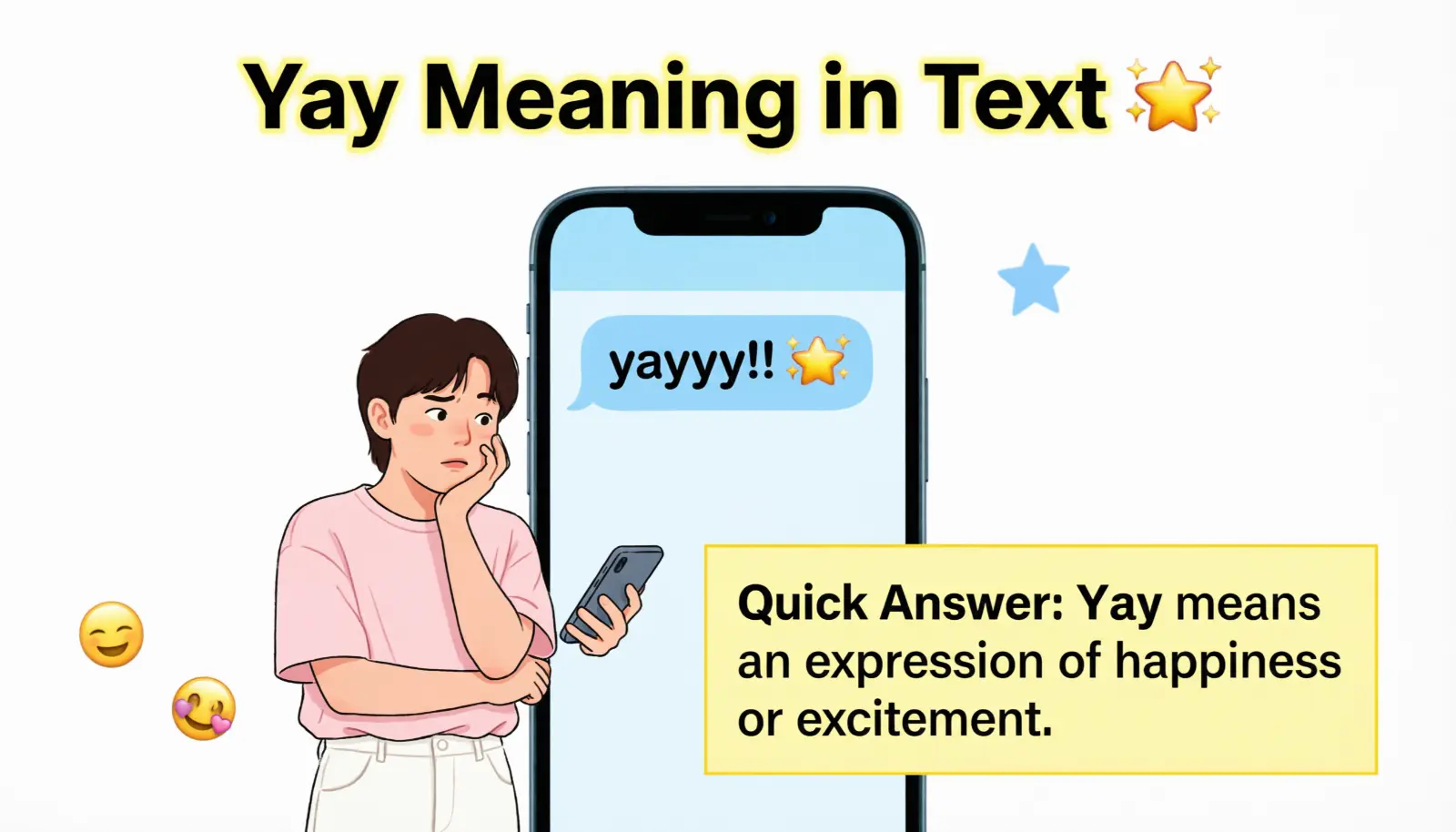
Quick Answer:
Yay means “an expression of happiness or excitement.” It’s a friendly and enthusiastic way of saying “I’m happy” or “That’s great!”
Let’s break it down and see how people actually use it in texts and social media.
🧠 What Does Yay Mean in Text?
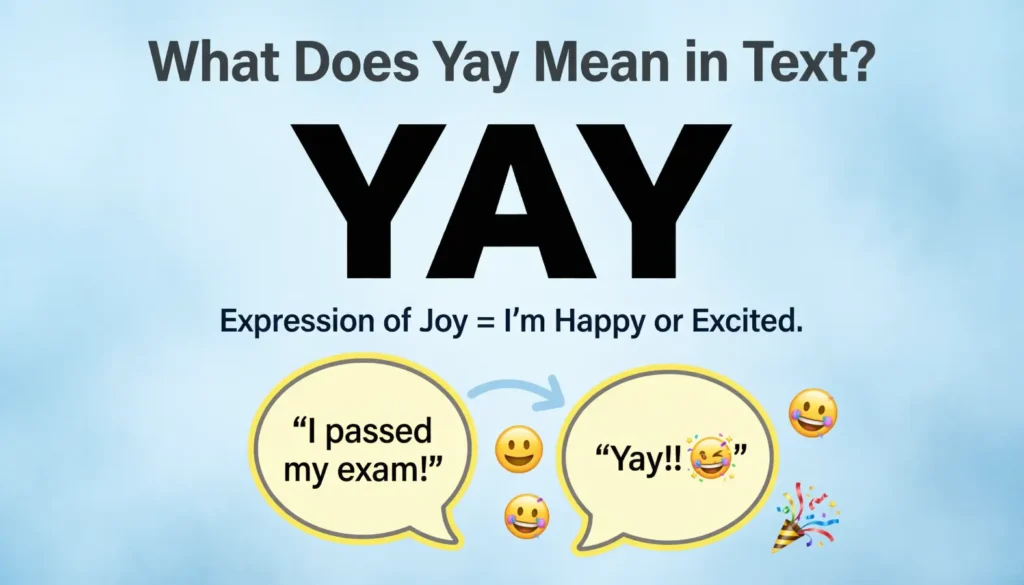
In texting, yay is an informal expression used to show happiness, excitement, celebration, or approval. It does not stand for a longer phrase. It is simply a joyful exclamation.
People use it when something good happens. It can react to achievements, plans, surprises, or even small wins.
For example:
“I got the job!”
“Yay! I’m so proud of you!”
You might also see it spelled as “yaay” or “yayyy” to show extra excitement.
In short: Yay = Expression of joy = I’m happy or excited.
It’s simple, positive, and very common in digital conversations.
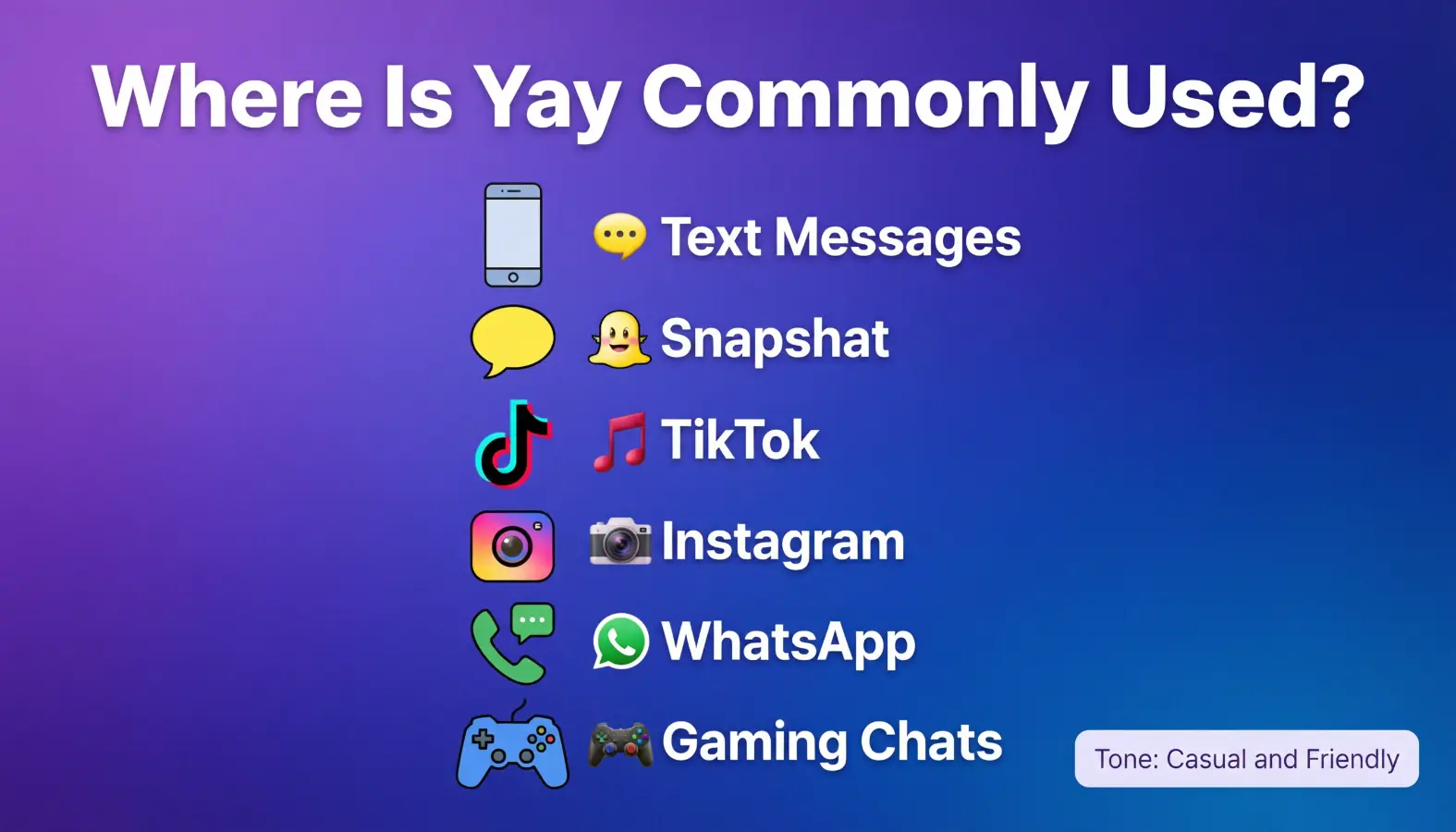
📱 Where Is Yay Commonly Used?
You’ll see “yay” almost everywhere online. It fits perfectly in casual and social settings.
Here’s where it’s most popular:
- 📱 Text messages – Quick reactions to good news.
- 👻 Snapchat – Replying to stories or snaps.
- 🎵 TikTok – Commenting on achievements or fun videos.
- 📸 Instagram – Celebrating milestones in comments.
- 💬 WhatsApp chats – Group excitement or personal wins.
- 🎮 Gaming chats – Winning a round or unlocking something.
Tone Check
- ✔ Casual
- ✔ Friendly
- ✔ Social-media–friendly
- ❌ Not formal
- ❌ Not professional
It works best in relaxed conversations with friends, family, or online followers.
💬 Examples of Yay in Conversation
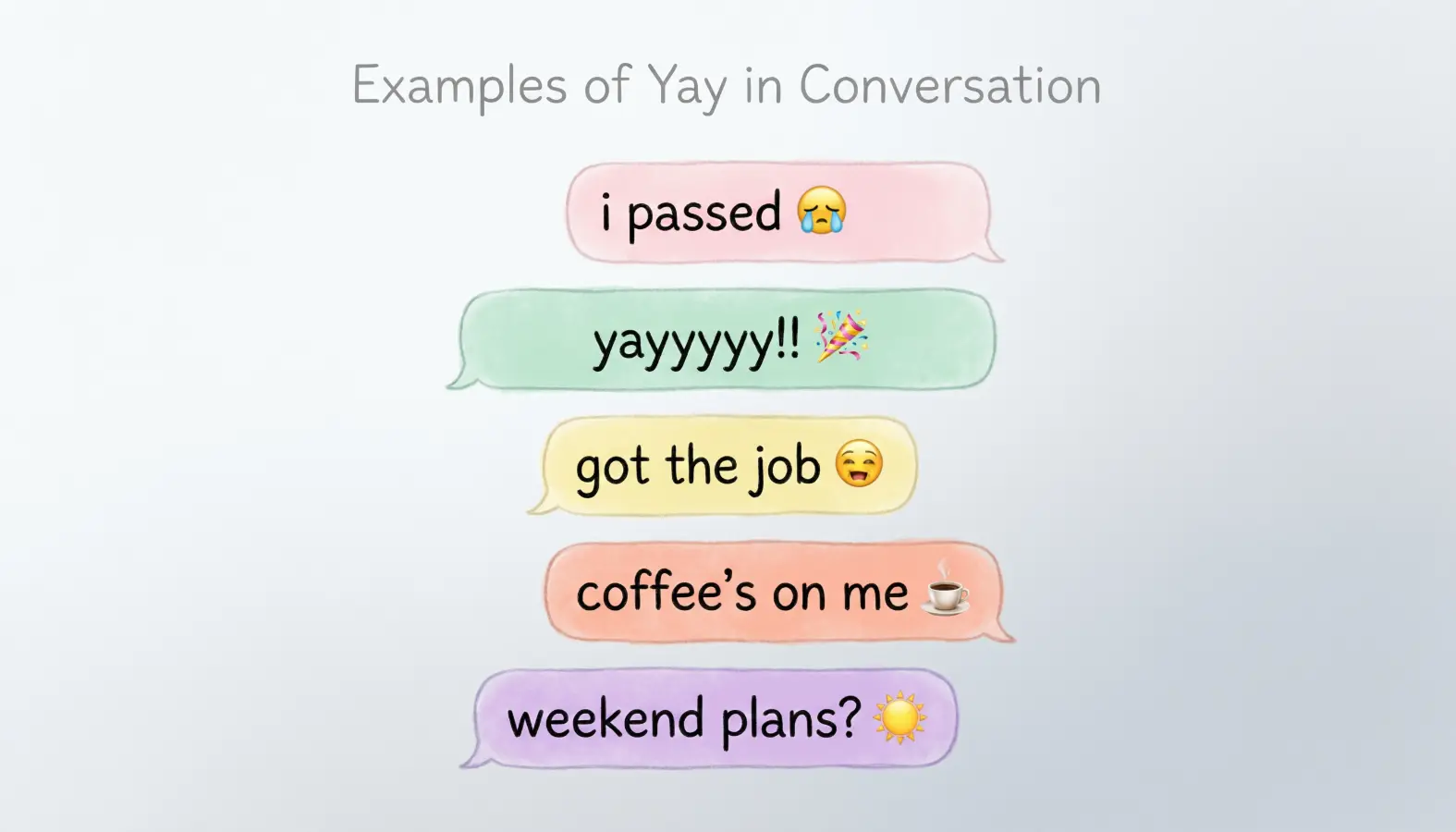
Here are some realistic texting examples so you can see how “yay” sounds in real life:
1
A: guess what? i passed my exam 😭
B: yayyyy!! i knew you would 🎉
2
A: we’re going on vacation next week
B: yay! where are you going? 😍
3
A: my package finally arrived
B: yay!! open it now lol
4
A: i finished all my assignments
B: yay 😄 now you can relax
5
A: she said yes!!
B: YAY!!! so happy for you 💕
6
A: movie night at my place?
B: yay, i’m in 🍿
Notice how the tone feels light, cheerful, and supportive. It adds positive energy to the conversation.
🕓 When to Use and When Not to Use Yay
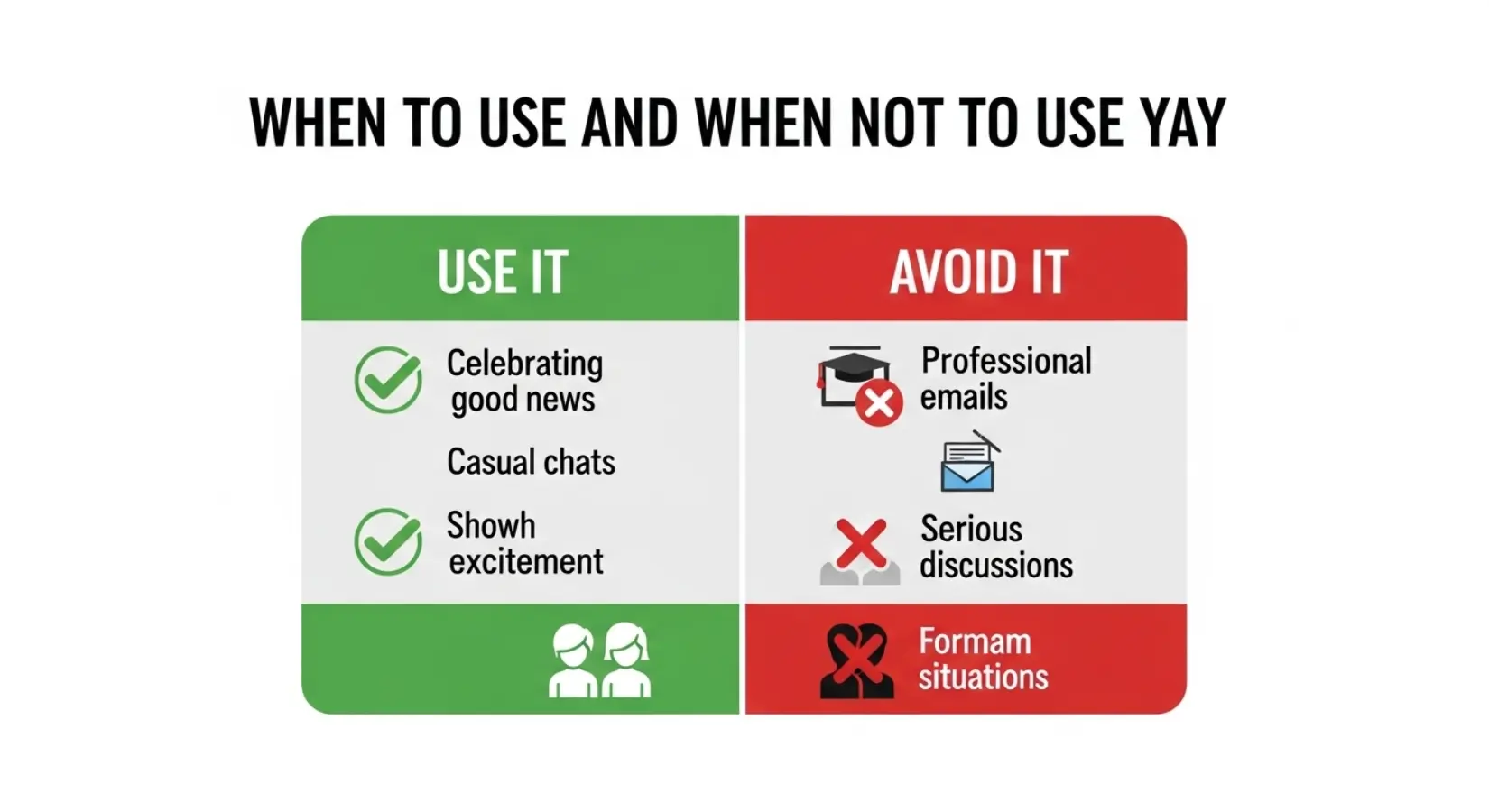
Like most slang, “yay” fits some situations better than others.
✅ When to Use Yay
- Celebrating good news
- Reacting to achievements
- Showing excitement
- Supporting a friend
- Casual chats
- Happy announcements
❌ When Not to Use Yay
- Serious discussions
- Professional emails
- Job interviews
- Formal work messages
- Sad or sensitive topics
Using “yay” in the wrong situation can sound immature or insensitive. Always match the tone of the conversation.
Context Comparison Table
| Context | Example Phrase | Why It Works |
|---|---|---|
| Friend Chat | “No way, yay!! 😄” | Casual & excited |
| Group Chat | “Yay, party time 🎉” | Fun & energetic |
| Work Chat | “That’s great news.” | Polite & professional |
| “I’m pleased to hear this update.” | Formal & clear |
In professional settings, replace “yay” with more polished phrases.
🔄 Similar Slang Words or Alternatives
Here are some other words people use to express excitement:
| Slang | Meaning | When to Use |
|---|---|---|
| Woohoo | Excited celebration | Big achievements |
| Yesss | Strong agreement | Happy reactions |
| OMG | Oh my God | Surprise + excitement |
| Let’s go | Ready & hyped | Plans or wins |
| Slay | You did amazing | Compliments online |
| Lit | Very exciting | Social media fun |
All of these are casual and social-media friendly. Choose one depending on the energy you want to show.
🎯 Is Yay Flirty?
“Yay” is not automatically flirty. It is mostly friendly and cheerful. However, tone changes everything. For example:
“yay, i get to see you tonight 😉”
Here, the wink emoji makes it playful or slightly flirty.
Without emojis, it usually just means happiness.
🌍 Why Is Yay So Popular?
“Yay” has been around for a long time. Even before texting, people said it out loud to celebrate.
Social media made it even more popular. It’s short, easy to type, and full of positive energy.
It also works across cultures. Many English speakers use it naturally. Even non-native speakers understand its happy tone.
Adding extra letters like “yayyy” shows stronger emotion. The more letters, the more excitement.
Example:
“yay” = happy
“yayyy!!!” = VERY happy
Simple but expressive.
🧩 Is Yay Sarcastic?
Sometimes, yes. Tone depends on context. If someone says:
“yay… another meeting.”
This could sound sarcastic. The dots or flat tone suggest boredom. But most of the time, “yay” is genuine and positive.
Always look at the full message before assuming sarcasm.
❓ FAQs About Yay Meaning in Text
1. Does yay stand for anything?
No. Yay is not an acronym. It is simply an expression of happiness.
2. Is yay childish?
Not really. It is casual and playful. Adults use it often in informal chats.
3. Can I use yay in professional emails?
It’s better not to. Use phrases like “That’s great news” instead.
4. What’s the difference between yay and yayyy?
Extra letters show extra excitement. “Yayyy” feels more energetic.
5. Is yay positive or negative?
It is usually positive. In rare cases, it can sound sarcastic depending on tone.
6. Can yay be used in romantic chats?
Yes. It can sound cute and enthusiastic. Emojis can make it flirty.
🎉 Final Thoughts
Now you know exactly what “yay” means in text messages. It is a simple expression of joy and excitement. It works best in casual and friendly conversations. You’ll see it often on Snapchat, TikTok, Instagram, and daily chats.
Remember the key idea:
Yay = happiness = celebration.
Use it when the moment feels positive. Skip it when the situation is serious or professional.
Next time someone texts you good news, you know what to reply.
Yay! 😄

I’m Emma Collins, a writer passionate about decoding slang, emojis, and the ever-changing language of the internet. I enjoy turning confusing phrases into clear, easy-to-understand explanations. My mission is to help readers stay in the loop with today’s digital lingo. When I’m not writing, I love exploring social media trends and chatting with friends about new expressions. I’m here to make learning modern language fun and simple!