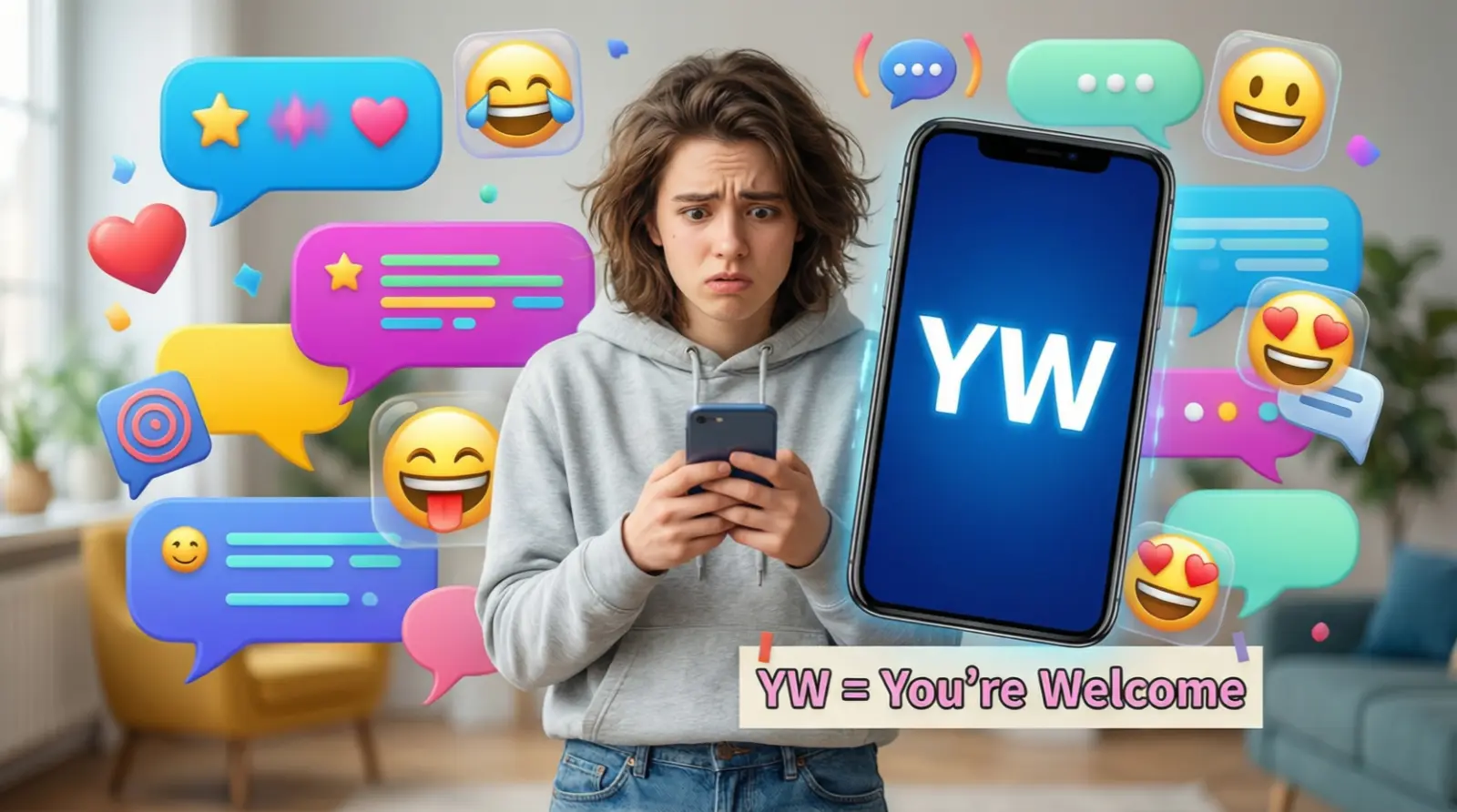
You’re chatting with someone, you say “thanks,” and they reply with just two letters: “yw.”
At first, it looks confusing. Is it a typo? A code? A secret slang? 😅
Almost everyone has that moment of confusion when they first see short text slang like this. But once you understand it, it becomes one of the easiest and most common replies you’ll ever use in texting and social media.
Quick Answer:
YW means “You’re Welcome.” It’s a friendly, polite, and casual way of replying when someone thanks you.
🧠 What Does YW Mean in Text?
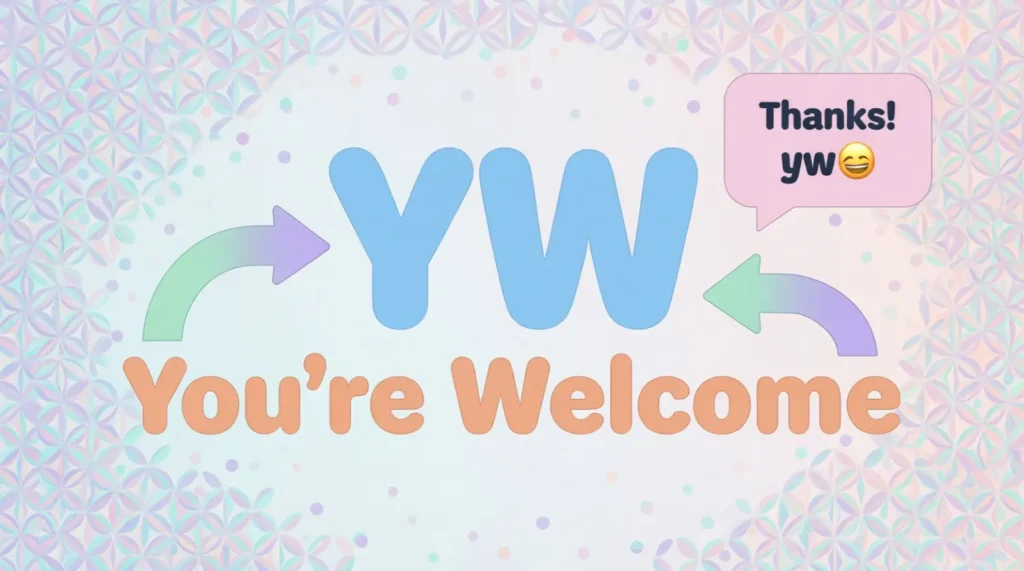
YW is simply the short form of “You’re Welcome.”
People use it to reply to “thanks,” “thank you,” or “thx” in chats.
Instead of typing the full phrase, people just write yw to save time and keep the conversation fast and natural.
Example:
“Thanks for helping me!”
“yw 😊”
In short:
YW = You’re Welcome = a polite reply to “thank you.”
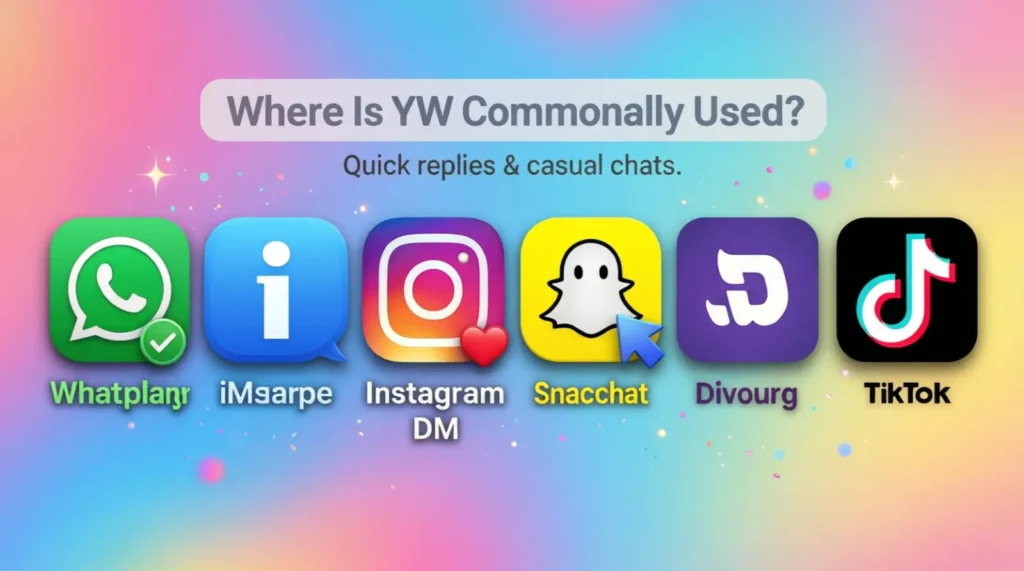
📱 Where Is YW Commonly Used?
You’ll see YW almost everywhere online because it’s simple and universal:
- 📱 Text messages (SMS, WhatsApp, iMessage)
- 💬 Instagram DMs
- 👻 Snapchat chats
- 🎮 Gaming chats
- 📲 Messenger & Discord
- 🎥 TikTok comments & replies
Tone check:
- ✔️ Casual
- ✔️ Friendly
- ✔️ Social-media–friendly
- ❌ Not formal
- ❌ Not professional writing
It’s perfect for everyday digital conversations, but not for official emails or formal messages.
💬 Examples of YW in Conversation
Here are realistic chat-style examples so you can see how it’s used naturally:
1 Example
A: thanks for the notes 🙏
B: yw!
2 Example
A: appreciate the help fr
B: yw 😊
3 Example
A: thx for the invite
B: yw, see you there 😄
4 Example
A: thanks for explaining it
B: yw anytime
5 Example
A: thank youuu
B: yw 💙
6 Example
A: thanks for waiting
B: yw no worries
7 Example
A: tysm
B: yw 😌
🕓 When to Use and When Not to Use YW
✅ When to Use YW
- Casual chats with friends
- Family conversations
- Social media replies
- Gaming chats
- Informal DMs
- Friendly texting
❌ When Not to Use YW
- Professional emails
- Office communication
- Formal business chats
- Customer support replies
- School emails to teachers
- Job-related messages
Context Comparison Table
| Context | Example Phrase | Why It Works |
|---|---|---|
| Friend Chat | “No problem, yw 😄” | Casual & friendly |
| Work Chat | “You’re welcome.” | Polite & professional |
| “You’re welcome. Happy to help.” | Formal & clear | |
| Social Media | “yw 💙” | Natural & social |
| Customer Support | “You’re very welcome.” | Respectful tone |
🔄 Similar Slang Words or Alternatives
Here are some popular alternatives to YW and when to use them:
| Slang / Phrase | Meaning | When to Use |
|---|---|---|
| np | No problem | Casual chats |
| nbd | No big deal | Friendly tone |
| anytime | Anytime | Polite & warm |
| sure | Sure | Neutral |
| ofc | Of course | Friendly replies |
| no worries | No worries | Relaxed tone |
❓ FAQs About YW Meaning in Text
What does YW stand for in texting?
YW stands for “You’re Welcome.”
Is YW rude?
No, YW is not rude.
It’s polite, friendly, and commonly used in casual conversations. However, in formal situations, writing the full phrase “You’re welcome” is better.
Can YW be used in flirty chats?
Yes 😄
It can sound friendly or cute in flirty chats, especially with emojis like:
- “yw 😏”
- “yw 💕”
- “yw anytime 😌”
Is YW professional?
No.
YW is informal and should not be used in professional emails or workplace communication.
What’s the difference between YW and NP?
- YW = You’re Welcome
- NP = No Problem
Both are polite, but NP sounds more casual and relaxed.
Can YW mean something else?
In normal texting and social media, YW almost always means “You’re Welcome.”
Other meanings are extremely rare and context-specific.
🧠 Final Thoughts
YW is one of the simplest and most useful slang terms in texting. It’s short, polite, friendly, and perfect for everyday digital conversations.
If someone thanks you in a casual chat, replying with “yw” feels natural, modern, and socially normal. But for professional or formal communication, always use the full phrase “You’re welcome.”
Now next time you see YW, you’ll know exactly what it means and how to use it confidently 😄

- I’m Casey Morgan, a writer who loves breaking down internet slang and modern lingo into simple, relatable explanations. I’ve spent years studying how digital communication shapes the way we talk. My goal is to make every confusing phrase easy to understand. When I’m not decoding trends, you’ll find me sipping coffee and browsing social media for the next viral term.